Nothing is more frustrating than dropping frames or having your stream buffer right in the middle of a clutch play. For South African gamers, unpredictable internet and an unexpected outage can make it even tougher. But don't blame your ISP just yet. Often, the key to a flawless broadcast is hiding in your settings or hardware. This guide will help you diagnose and fix streaming issues on your PC, ensuring your gameplay is as smooth for your viewers as it is for you. ✨
First, Pinpoint the Problem: Network or PC?
Before you start messing with OBS settings, you need to figure out where the bottleneck is. Is it your internet connection, or is your PC struggling to keep up?
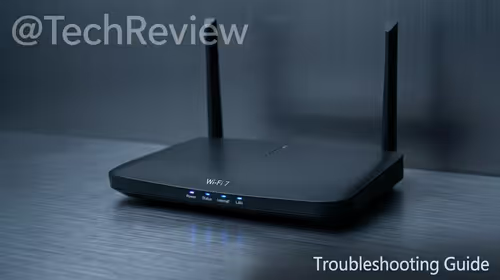
A simple speed test can tell you a lot. For a stable 1080p stream, you need a consistent upload speed of at least 6 Mbps. In South Africa, fibre is king, but even a solid LTE or 5G connection can work if the signal is strong. Run a test on a site like Speedtest by Ookla during peak hours to see your real-world performance.
If your upload speed is solid but your stream is still choppy, the problem likely lies with your hardware. This is where we need to dig into your PC's performance to solve your streaming problems.
Optimise Your Streaming Software
Your streaming software, like OBS Studio or Streamlabs, is command central. The right settings here can make a world of difference, especially if you're working with a more modest machine. If you're just starting out, you don't need a beastly rig; many excellent budget gaming PCs can handle streaming 720p or 1080p with the right tweaks.
Key Settings to Tweak:
- Encoder: You'll see options like x264 (CPU encoding) and NVENC/AMF (GPU encoding). If you have a modern NVIDIA or AMD graphics card, using the GPU encoder is almost always better. It takes the load off your CPU, leaving more power for your game.
- Bitrate: This determines the quality of your stream. Don't just max it out. A bitrate that's too high for your internet connection will cause dropped frames. For Twitch, a good starting point for 1080p at 60fps is between 4500 and 6000 Kbps.
- Resolution & FPS: Streaming at 1080p 60fps is the gold standard, but it's demanding. If you're experiencing issues, try dropping to 720p 60fps. The smoother frame rate is often more important to viewers than a slightly higher resolution.
Pro OBS Tip for SA Internet 🔧
In OBS, go to Settings > Advanced > Network. Enable "Dynamically change bitrate to manage congestion". This feature automatically reduces your bitrate if it detects your connection is struggling, preventing your stream from dropping completely. It's a lifesaver for anyone on a less-than-perfect connection!
Could Your Hardware Be the Culprit?
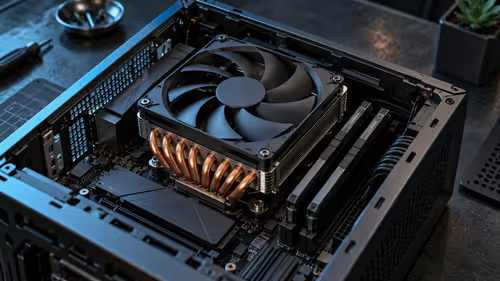
If you've optimised your software and still can't fix streaming issues on your PC, it might be time to look at your hardware. Streaming and gaming simultaneously is a heavy workload that pushes your components to their limits.
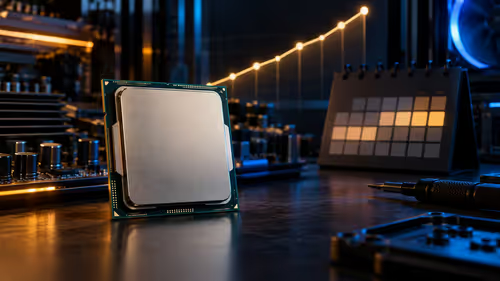
A powerful CPU is crucial, especially if you're using x264 encoding. Modern multi-core processors are designed for this kind of multitasking. For example, the latest Intel PC deals feature CPUs with both Performance-cores and Efficient-cores, which excel at handling background tasks like streaming.
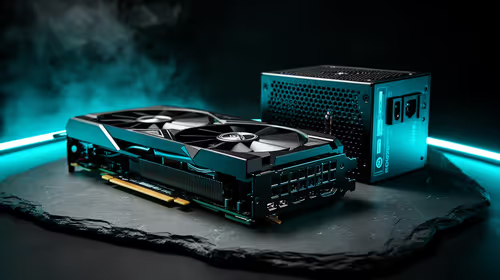
On the other side, a balanced system is key. Pairing a powerful GPU with a capable processor ensures neither component is holding the other back. The latest generation of AMD Ryzen PC deals offers incredible multi-threaded performance, making them a popular choice for creators who game and stream from a single machine. If your current setup is a few years old, a CPU or GPU upgrade could be the ultimate solution to your PC streaming problems. For a serious performance uplift, exploring the best gaming PC deals can give you a new baseline of power to work with. 🚀
Quick Fixes for Common Streaming Headaches
Sometimes, the solution is simpler than a full hardware overhaul. Before you give up, try these common fixes:
- Run as Administrator: Always run your streaming software and your game as an administrator. This gives them priority access to system resources, which can reduce stuttering and input lag.
- Close Background Apps: Shut down everything you don't need. Web browsers (especially with many tabs), Discord overlays, and other background processes can steal precious resources.
- Update Your Drivers: Ensure your graphics card drivers are up to date. New releases often include performance optimisations for the latest games and streaming applications.
If you're tired of troubleshooting and just want a machine that works perfectly out of the box, considering one of our pre-built PC deals can save you a lot of time. These systems are professionally assembled and tested to ensure all components work together flawlessly for tasks like gaming and streaming.
Ready for a Lag-Free Stream? Fixing streaming issues can be tricky, but having the right hardware foundation makes it a whole lot easier. If your current PC is holding you back, it might be time for an upgrade. Explore our massive range of PC deals and find the perfect machine to take your stream to the next level.