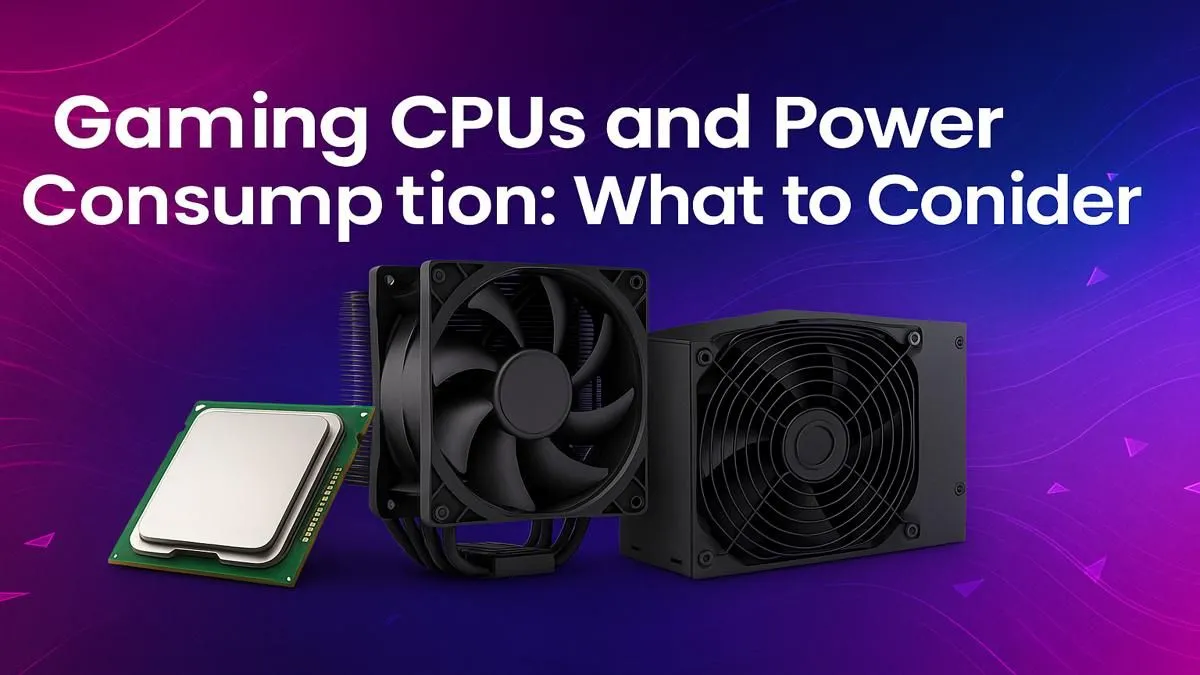
We feel your pain. While you're checking the schedule, have you ever thought about your PC's hungriest component after the graphics card? Your CPU. Understanding gaming CPU power consumption isn't just for overclocking fanatics; it's about saving Randelas on your electricity bill, keeping your rig cool, and maybe even squeezing extra minutes out of your UPS during an outage. Let's break it down, the South African way. ⚡
Decoding CPU Power Consumption Metrics
When you're comparing processors, you'll see a key spec called TDP, or Thermal Design Power. It's measured in watts (W), but here's the catch: it's not a direct measure of electricity use. Instead, TDP represents the maximum amount of heat a CPU generates at stock settings, which your cooler needs to dissipate.
However, power draw and heat are directly related. A CPU with a 125W TDP will almost certainly use more electricity under load than one with a 65W TDP. Modern CPUs also have boost states that can temporarily exceed the TDP significantly. For Intel, these are often called PL1 (base power) and PL2 (boost power). For AMD, it's PPT (Package Power Tracking). Think of it as a baseline power level and a temporary sprint mode for demanding tasks.
Why Your CPU's Power Draw Matters in SA
In South Africa, how much power a gaming CPU uses has real-world consequences beyond just benchmark scores.
- outage resilience: A more power-efficient CPU puts less strain on your Uninterruptible Power Supply (UPS). This could be the difference between safely shutting down your PC or getting a few more rounds in before the lights come back on.
- Running Costs: With electricity prices always on the rise, a power-hungry CPU can add a noticeable amount to your monthly bill, especially if you're gaming for hours every day.
- System Heat & Noise: More power means more heat. In a warm Durban summer or a stuffy Johannesburg office, a hot CPU forces your case fans to work overtime, creating more noise and turning your gaming den into a mini-sauna. Choosing an efficient chip means you might not need a massive, expensive cooler.
When you browse different CPU processors online, keep these local factors in mind.
Cool Tip for Lower Power Draw 🔧
Consider undervolting your CPU using your motherboard's BIOS UEFI settings. By slightly reducing the voltage sent to the processor, you can often lower power consumption and heat significantly with little to no impact on gaming performance. It's a fantastic free tweak for any PC builder!
Finding the Sweet Spot: Performance vs. Power
Does more power always equal a better gaming experience? Not always. The law of diminishing returns is very real. A top-of-the-line processor might draw 100W more than a mid-range model for only a 5-10% boost in frame rates, especially if your GPU is the main bottleneck.
For most gamers, the sweet spot is a processor that delivers excellent performance without needing its own personal power station. This is where efficiency—or performance-per-watt—becomes key. Often, newer generations deliver huge leaps in this area. For instance, many modern Intel CPUs in the Core i5 family offer incredible gaming performance that rivals older, more power-hungry i7s.
Similarly, the latest AMD Ryzen CPUs are renowned for their efficiency, making them a fantastic choice for a powerful yet sensible build. Ultimately, analysing your gaming CPU power consumption helps you build a smarter, more balanced PC that’s perfectly suited for our unique South African conditions. ✨
Ready to Find Your Perfect Processor? Choosing a CPU is about more than just clock speeds. It's about finding the right balance of power, efficiency, and price for your gaming needs. Explore our massive range of CPUs and build smarter today.