Quick Answer
South African consumers pay for gaming peripherals in rands but those peripherals are manufactured and priced internationally in US dollars or euros. When the rand weakens against the dollar, the local ZAR price of every imported keyboard, mouse, headset, and controller rises even if the international price stays flat. Understanding this relationship helps SA gamers time purchases strategically and budget more accurately.
How Import Pricing Works for SA Peripheral Markets
Virtually every major gaming peripheral brand sells its products in USD on the international market. South African retailers import these products, pay customs duties, and convert the cost to ZAR at the prevailing exchange rate plus a margin to account for rate volatility. When the rand trades at R18 to the dollar, a R600 headset priced at USD 30 internationally is at rough parity with import costs. When the rand weakens to R20 or beyond, that same headset''s landing cost rises, and the retail ZAR price follows within weeks. Most retailers buffer their pricing slightly to avoid constant repricing, but sustained rand weakness always catches up in the form of price increases across peripheral categories.
Which Peripherals Are Most Affected by Exchange Rate Swings
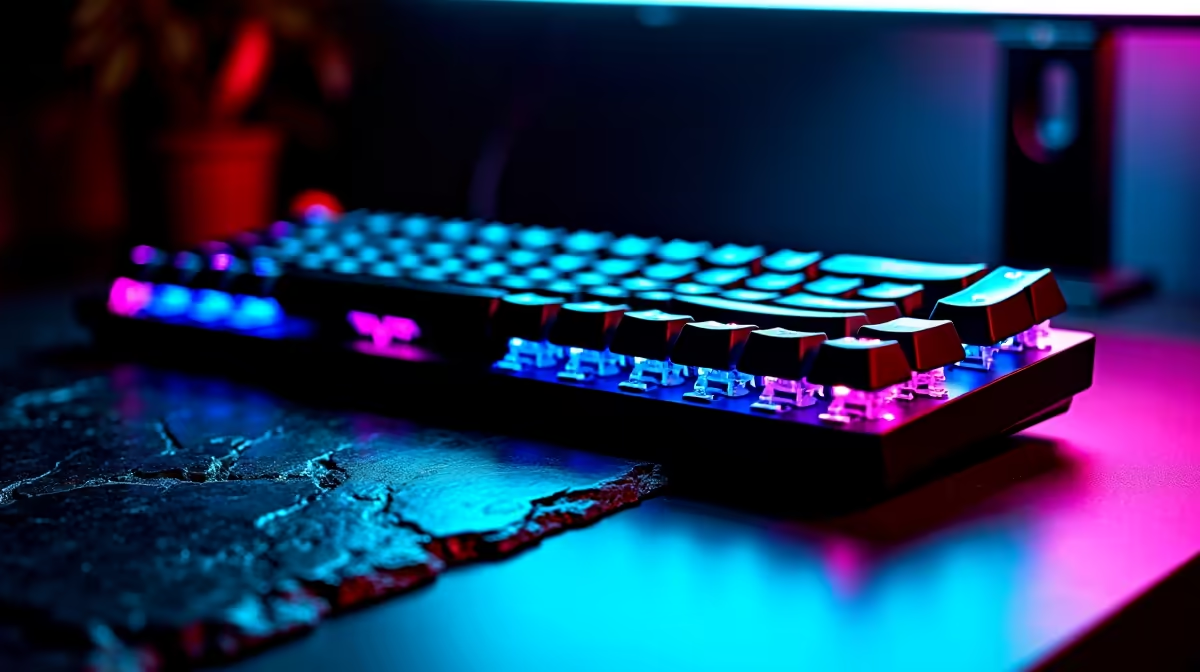
Not all peripherals respond equally to currency moves. High-end mechanical keyboards and premium gaming mice from Japanese and American brands see the sharpest price swings because they carry high USD base prices and are often imported in smaller quantities. Entry-level peripherals, particularly those manufactured in China and sold under regional pricing, sometimes absorb exchange rate volatility more gradually due to thinner margins and higher volume. Headsets from premium brands with USD retail prices above USD 100 are particularly sensitive. A 10 percent rand depreciation on a USD 150 headset translates to R300 or more in additional ZAR cost. For a student on a tight budget, that swing is meaningful. Conversely, a stronger rand period represents a genuine buying opportunity for high-ticket peripheral purchases.
Tariffs, VAT, and Hidden Import Costs
The exchange rate is only one layer of peripheral pricing in South Africa. Import duties and VAT at 15 percent are layered on top. Some peripheral categories, particularly audio products like headsets, attract specific import duty rates that add further cost beyond the conversion. Retailers and importers absorb some of these costs differently, which is why identical products can vary in price between stockists. Understanding that the sticker price reflects exchange rate, duty, shipping, and margin explains why South African peripheral prices often appear 40 to 60 percent above international USD equivalents when naively converted at the spot rate.
Smart Buying Strategies for SA Gamers
Given the exchange rate''s direct impact on peripheral prices, a few strategies help SA gamers get better value. First, watch the rand''s performance around major global events that typically strengthen it, such as positive trade data or commodity price increases. Second, buy peripherals during promotional periods when retailers absorb some margin to clear stock, as these discounts partially offset exchange rate pressure. Third, prioritize buying peripherals that represent long-term investments, such as a quality mechanical keyboard or a precision gaming mouse, rather than frequently replacing cheaper options. A R1,200 keyboard that lasts five years beats three R400 keyboards that wear out in under two years, regardless of exchange rate conditions. Finally, NSFAS students should note that peripheral purchases fall outside the R5,200 laptop allowance and need to be budgeted separately.
Frequently Asked Questions
Why do SA gaming peripheral prices change even when I see no price change overseas? Overseas prices are set in USD or EUR. If the rand weakens against those currencies, your local retailer''s cost in rands increases even though the international price is unchanged, leading to ZAR price increases.
Does a stronger rand mean peripheral prices will drop immediately? Not immediately. Retailers often hold inventory purchased at a weaker rand rate and price that stock at landed cost. As new stock is purchased at stronger rand rates, prices may gradually decrease over weeks to months.
Which peripheral categories have the highest price markup due to import costs in SA? High-end mechanical keyboards, premium headsets, and specialty gaming mice tend to show the highest percentage markup relative to international pricing due to import duties, smaller order quantities, and higher base USD prices.
Should I wait for a better rand rate before buying peripherals? If you need the peripheral for imminent use, buying now is usually better than waiting on currency speculation. If the purchase is non-urgent and the rand is at a historically weak point, waiting for a recovery period can save a meaningful amount on higher-priced items.
Ready to Find Your Perfect Match? Browse gaming peripheral deals at Evetech