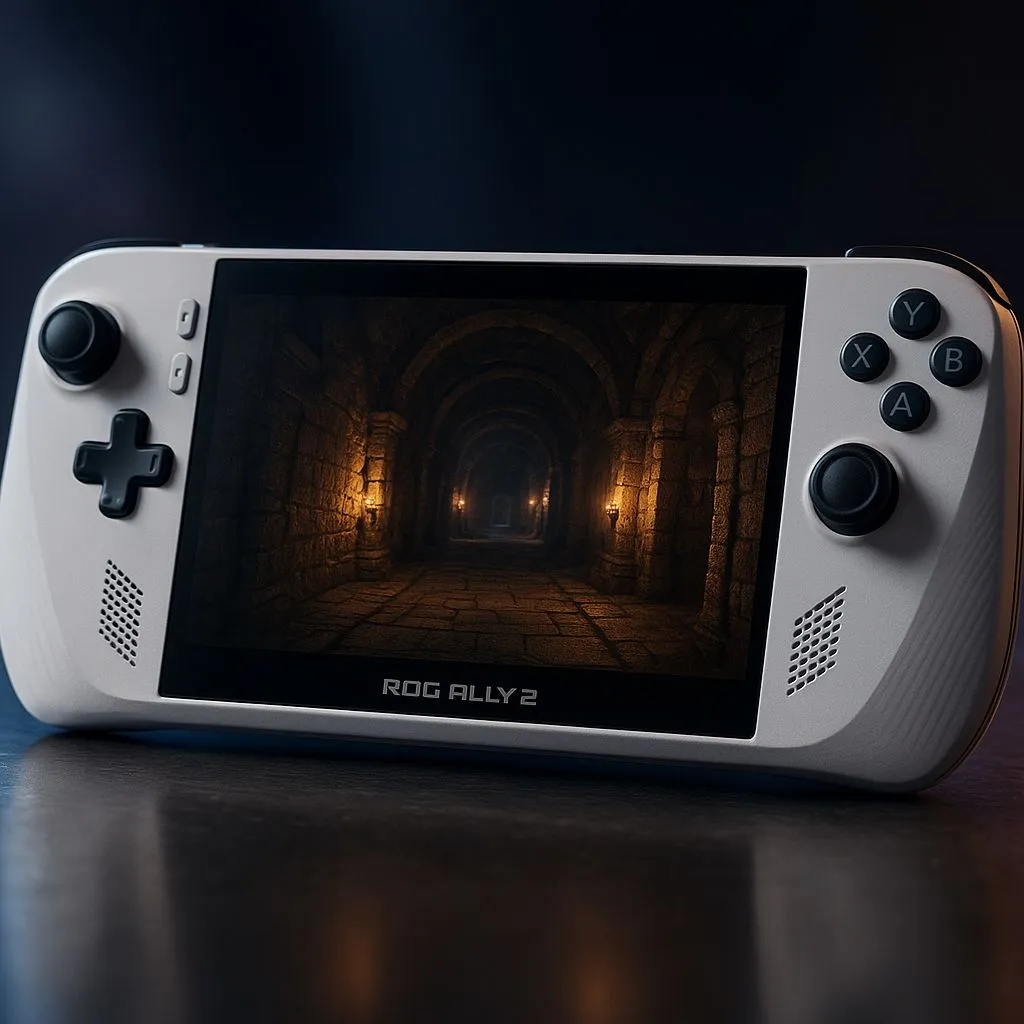
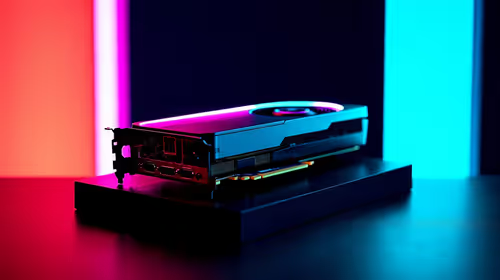
The dream of true photorealism in the palm of your hands is closer than ever. But is ROG Ally 2 path tracing a technical reality or just ambitious marketing? For South African gamers craving next-gen lighting on the go, the answer lies deep within the silicon. Let’s investigate whether modern integrated graphics can finally shoulder the immense computational load of full ray tracing without melting your battery. 🚀
The Heavy Cost of Light Simulation
Path tracing is essentially "ray tracing turned up to eleven." It simulates the physics of light for every single pixel... a task that makes even massive desktop GPUs sweat. Asking a portable device to handle this seems unfair. However, the rapid evolution of handheld gaming consoles suggests we are reaching a tipping point.
The challenge isn't just raw power; it is efficiency. If a UPS is required, size it for a controlled shutdown against the measured load of the complete setup. To make path tracing viable, the hardware needs to be smarter, not just stronger.
ASUS and the AMD Advantage
The current iteration of the ROG Ally utilises the AMD Z1 Extreme chip. It is a beast for rasterisation, but ray tracing is heavy. Rumours surrounding the successor suggest a shift towards RDNA 3.5 or RDNA 4 architecture. This leap is crucial.
The ASUS engineering team has focused heavily on cooling and power management. If the ROG Ally 2 can leverage improved AI cores for upscaling, we might see "Cyberpunk 2077" running path tracing at a stable 30 FPS. It won't be native 1080p, but on a 7-inch screen, upscaled 720p looks surprisingly crisp.
Optimisation Pro Tip ⚡
When chasing high-fidelity graphics on a handheld, always prioritise upscaling tech like FSR (FidelityFX Super Resolution). Set it to 'Balanced' or 'Performance' mode. This renders the game at a lower resolution and uses AI to sharpen the image, freeing up the GPU resources needed for expensive effects like path tracing.
How the Competition Stacks Up
ASUS isn't running this race alone. The market has exploded with high-performance alternatives. For instance, Lenovo offers the Legion Go, which boasts a larger screen and faster RAM. Higher memory bandwidth is critical when an APU is trying to stream high-resolution textures and calculate light bounces simultaneously.
On the other side, we have MSI utilising Intel architecture in the Claw. Intel's XeSS upscaling is formidable, often providing better image stability than FSR in motion. The ROG Ally 2 will need to outperform these rivals not just in raw frame rates, but in the visual stability of ray-traced images.
The Verdict: Playable or Gimmick?
So, can it conquer modern graphics? Technically, yes. Practically, it comes with caveats.
ROG Ally 2 path tracing will likely be a "showcase" feature rather than a standard setting for competitive gaming. You will turn it on to marvel at the neon reflections in a rainy city, snap a screenshot, and likely turn it off to get that smooth 60 FPS back. However, for turn-based RPGs or slower-paced narrative games, the visual upgrade is undeniable.
As hardware prices in ZAR fluctuate, getting this level of fidelity in a device that costs a fraction of a high-end gaming laptop is impressive. We aren't quite at the "desktop replacement" stage for ray tracing, but the gap is closing fast. ✨
Power in Your Pocket
Whether you are Team Red or Team Blue, the era of high-performance portable gaming is here. Don't compromise on your on-the-go experience. Check out our deals on handheld gaming consoles and find the perfect travel companion for your next adventure.