You’re live. The chat is buzzing, you’ve just pulled off a clutch play, and everything is flowing… until it isn’t. Your game hitches, OBS drops frames, and the immersion shatters. What’s the culprit? It might not be your internet or GPU. It could be your storage. The classic SSD vs HDD for gaming debate isn’t just about load times anymore; for streamers, it’s about broadcast quality. Let's settle this for good.
Storage 101: The Spinner vs The Sprinter
Before we dive into the speed test, let's quickly break down the two contenders. Understanding the core difference is key to seeing why one is better for high-performance tasks like streaming.
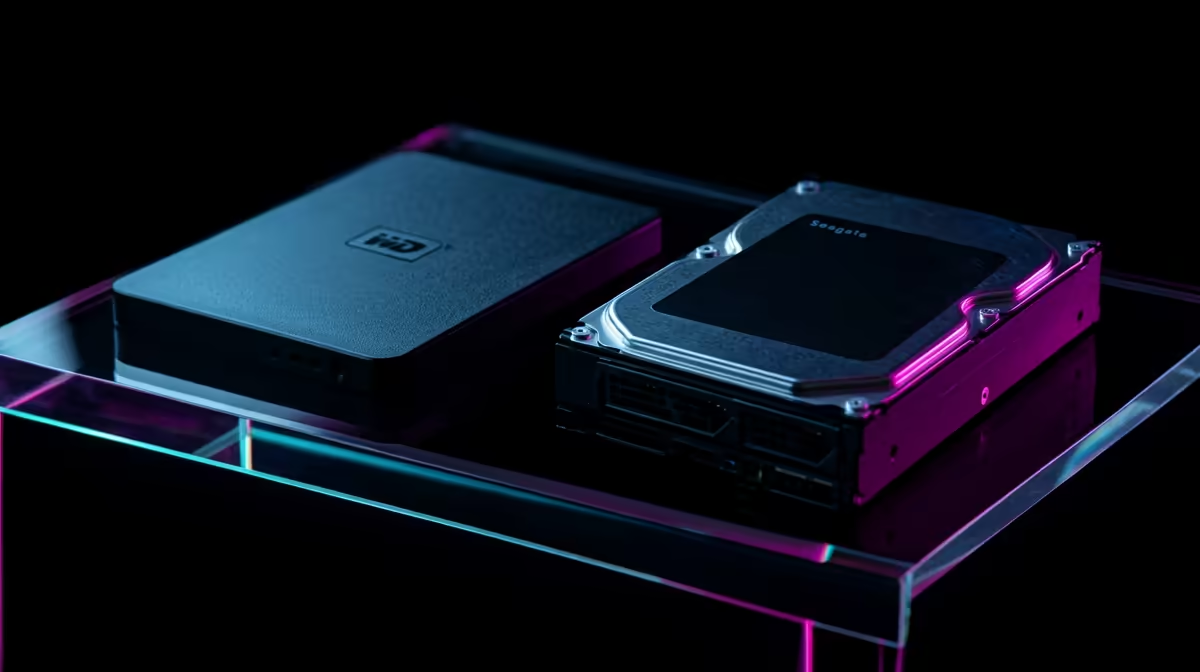
An HDD, or Hard Disk Drive, is the old-school workhorse. It uses a spinning magnetic platter and a mechanical arm to read and write data. Think of it like a vinyl record player. It’s reliable for storing massive amounts of data cheaply, making a high-capacity traditional hard drive perfect for archiving your past stream VODs and finished projects.
An SSD, or Solid-State Drive, has no moving parts. It uses flash memory chips to store data, accessing it almost instantly. This fundamental difference makes the entire family of SSDs faster, more durable, and more efficient. ⚡
The Ultimate Speed Test: Where it Matters for Streamers
Okay, theory is one thing, but how does the SSD vs HDD for gaming battle play out when you're live? The difference is massive, and it affects more than just loading screens.
Game Load Times & Asset Streaming
This is the most obvious win for an SSD. Loading into a map of Warzone or Apex Legends can be seconds faster on an SSD. For a streamer, this means less "just waiting for the game to load, guys..." on stream and more action. More importantly, in open-world games like Starfield or Cyberpunk 2077, an SSD prevents texture pop-in and stuttering as the game constantly streams assets from your drive. A smooth visual experience for your viewers is non-negotiable.
Recording, Replays & Multitasking 🚀
Here’s where the debate ends for streamers. Your streaming software (like OBS or Streamlabs) is constantly writing data to a temporary file, especially if you use an instant replay buffer. An HDD’s mechanical nature can struggle to keep up with this constant, high-speed writing while the game is reading its own assets. This bottleneck can cause encoding overload, dropped frames, and a laggy stream... even with a powerful CPU and GPU.
The incredible write speeds of modern NVMe SSDs handle this background recording effortlessly, ensuring your gameplay and stream remain silky smooth.
Pro Streamer Tip 🔧
Install your Operating System (Windows), streaming software (OBS), and your primary game on your fastest NVMe SSD. This ensures your core system and broadcast tools have the absolute fastest data access possible, reducing potential bottlenecks that could impact stream quality. Use other drives for everything else!
Building the Perfect Streamer Setup on a SA Budget
So, do you need a massive, expensive SSD for everything? Not necessarily. The smartest approach for South African gamers is often a hybrid one that balances speed and cost.
- Primary Drive (NVMe SSD): A 500GB or 1TB NVMe SSD for your OS, software, and the one or two games you stream most often.
- Secondary Drive (SATA SSD): A larger, more affordable 2.5-inch SSD is perfect for the rest of your active game library. You still get fantastic load times without breaking the bank.
- Archive Drive (HDD): A large 4TB+ HDD for mass storage. This is where you dump old recordings, clips for YouTube, and games you aren't currently playing.
This tiered setup gives you lightning-fast performance where it counts without needing to spend tens of thousands of Rands on all-flash storage.
The Verdict: Is an SSD Worth the Rands for Streaming?
Absolutely. The SSD vs HDD for gaming discussion has a clear winner for content creators. While an HDD is still fantastic for bulk storage, relying on one for your live game and recording is asking for trouble.
An SSD is more than a quality-of-life upgrade; it's a core component for professional-quality streaming. It reduces your load times, eliminates in-game stuttering, and—most critically—provides the stable write performance needed for flawless recording. It's an investment in your content and your community. Ready to make the jump? You can often find some incredible SSD deals that make the upgrade more affordable than you think. ✨
Ready to End the Lag for Good?
The right storage is the foundation of a smooth gaming and streaming experience. Stop letting slow drives bottleneck your performance. Explore our massive range of PC components and build the ultimate rig to conquer your world.