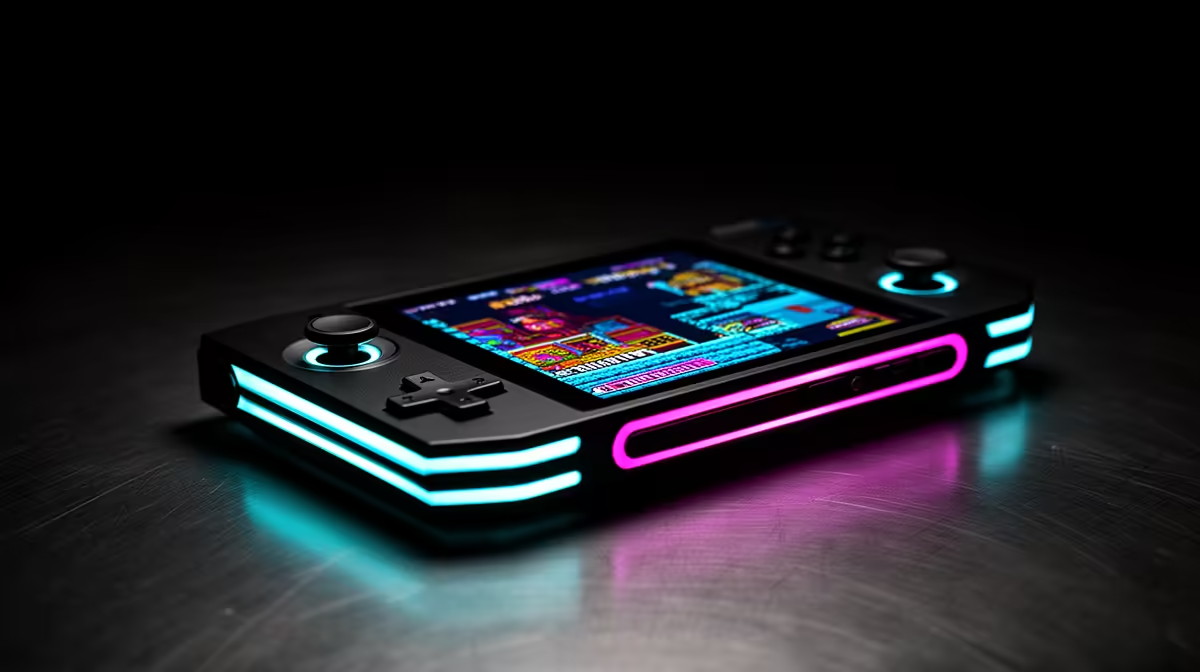
The choice between an Android retro handheld and a Linux one is really a choice between two philosophies: one wants to be a tiny do-everything gaming computer, the other wants to switch on, run your ROMs, and never bother you with updates. By 2026 the gap between them is sharper than ever, because Android devices have pulled in cloud streaming and app stores while the best Linux handhelds have doubled down on lean, offline emulation. The right pick depends entirely on what your library looks like.
Quick Answer
Pick Android if your library spans modern systems and you want Game Pass, Steam Link, or Play Store apps on the device, as on something like the Retroid Pocket 6. Pick Linux, such as a Miyoo Mini Plus running OnionOS, if you mostly emulate 8-bit to PlayStation-era classics and want a simple, fully offline device that boots straight to your games.
What Android handhelds give you in 2026
Android is the maximalist option. Devices like the Retroid Pocket 6 run a full Android build, so beyond local emulators you get the Play Store, cloud streaming through Xbox Game Pass, and Steam Link or Moonlight to stream PC games from a rig elsewhere in the house. That turns a retro handheld into a flexible front-end for far more than old ROMs.
The trade-offs are real, though. Android handhelds cost more, the interface has more moving parts to configure, and battery life takes a hit when you push newer systems or stream. The streaming features in particular only shine on a solid local fibre connection, because cloud play is only as good as your broadband. On a flaky link, Game Pass streaming stutters in a way local emulation never does.
What Linux handhelds do better
Linux devices take the opposite approach. A Miyoo Mini Plus running OnionOS, or a similar device on a custom firmware, boots almost instantly into a clean menu of your games and nothing else. There is no app store to manage, no account to sign into, and no streaming layer to depend on. For emulating NES, SNES, Game Boy, Mega Drive, and up to PlayStation-era titles, this simplicity is the whole appeal.
That focus brings genuine advantages. These devices are cheaper, their batteries last longer because they are not running a heavy OS or radios constantly, and crucially they work fully offline regardless of your connection. For a commute, a load-free evening, or a child who should not be near an app store, a Linux handheld is the calmer, more predictable choice. The ceiling is lower, since demanding systems like later PlayStation Portable or Nintendo DS titles can strain the cheaper hardware, but for classic libraries that ceiling rarely matters.
How South African buyers should decide
The streaming question is where SA context bites hardest. Android's headline features, Game Pass and PC streaming, depend on consistent, low-latency broadband, so they reward homes with good uncapped fibre and frustrate those without it. If your connection is solid, Android's flexibility is worth the higher price. If it is patchy, you are paying for features you cannot reliably use, and a Linux device that never touches the internet delivers a better day-to-day experience.
Either way, it pays to look at full systems rather than only handhelds when you are weighing portability against a stronger gaming setup at home, and the handheld gaming consoles at Evetech sit alongside that broader picture. For buyers who want a sense of what is moving and well-supported locally, the best-selling gaming PCs at Evetech are a useful reference point for the kind of rig you would stream from to an Android handheld.
Frequently Asked Questions
Which is better for beginners, Android or Linux?
Linux handhelds are easier for absolute beginners because they boot straight into a games menu with little to configure. Android offers far more once set up, but the extra apps, accounts, and settings mean a steeper learning curve.
Can a Linux handheld run modern game streaming?
Generally no. Lightweight Linux firmware like OnionOS focuses on offline local emulation and lacks the app ecosystem for Game Pass or PC streaming. If streaming matters to you, an Android device is the right tool.
Do Android handhelds need an internet connection to work?
Only for streaming and store features. Local emulation runs fully offline, but Game Pass, Steam Link, and Play Store downloads all need a connection, and streaming in particular needs a stable, low-latency one to feel smooth.
Which has better battery life?
Linux handhelds typically last longer because their lean firmware and lack of constant radios draw less power. Android devices use more battery, especially when streaming or emulating newer systems that push the chip harder.
Is an Android handheld worth the higher price?
It is worth it if you will actually use the streaming and app features and have the broadband to support them. If you mainly play classic systems offline, a cheaper Linux handheld delivers a better focused experience for the money.
Decide which philosophy fits your library and your connection before you spend, then browse the handheld gaming consoles at Evetech to match a device to the games you actually play most.