Quick Answer
For backup and storage planning, a gaming keyboard matters mainly for daily comfort, not data safety. Skip it as a backup priority and put R600 to R1,200 toward an external drive first; a mechanical board is a comfort upgrade, not protection.
Where The Keyboard Fits A Storage Plan
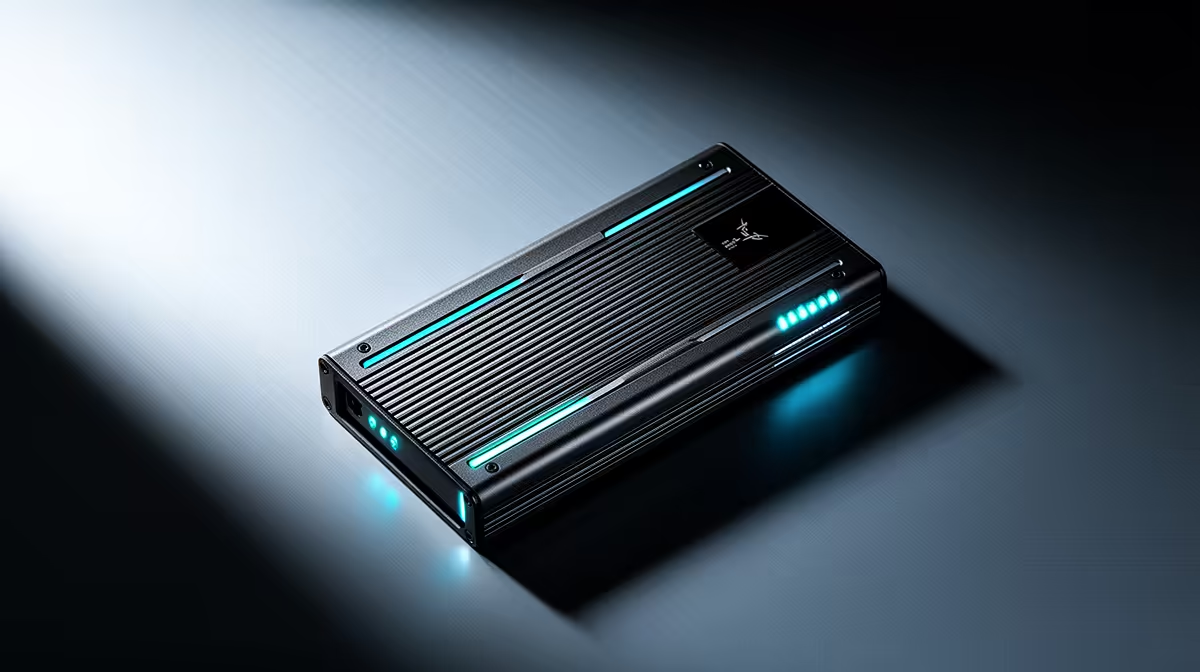
A keyboard does nothing for your backups, so on a storage-planning list it sits well below drives and software. If your goal is protecting saves, projects, and media, the spend belongs on an external SSD or HDD and an automated backup routine. Buy the keyboard only once your data is actually safe.
That said, when you do reach the keyboard, a quality mechanical board with hot-swap switches lasts years and survives spills better than a cheap membrane unit, which protects your investment in a different sense. A keyboard with onboard memory for macros also means your layout survives a system reinstall.
Building The Plan In The Right Order
Set up your backup first: a 1TB+ external drive plus a scheduled backup of your critical folders, and ideally a second copy in cloud storage for the irreplaceable files. Once that is running, treat the keyboard as the comfort upgrade it is, choosing switches and a layout that suit how you type and play.
FAQ
Does a gaming keyboard help with backups?
No. A keyboard is an input device and plays no role in protecting data. Backups depend on storage drives and a routine that copies your files regularly.
What should I prioritise for storage planning?
Buy a reliable external drive and set up automated backups first, then add a cloud copy of irreplaceable files. Peripherals come after your data is safe.
Is onboard keyboard memory useful?
Yes, in a small way. Onboard profiles keep your macros and lighting after a reinstall, so your setup survives the kind of system rebuild a backup plan may involve.
Set up an external drive and automated backups first, then choose a gaming keyboard as a comfort upgrade once your data is protected.