Plug a good set of headphones into a phone and again into a dedicated amp with a 4.4mm jack, and the difference can be striking. A lot of that gap comes down to balanced versus single-ended wiring, which is simply how each channel's signal travels from the source to the driver. It sounds like audiophile jargon, but the underlying idea is straightforward and worth understanding before you spend on cables or gear.
Quick Answer
Single-ended connections, the familiar 3.5mm and 6.35mm jacks, share one ground return between the left and right channels. Balanced connections, typically 4.4mm or dual XLR, give each channel its own dedicated conductors. The payoff is more power output and a lower noise floor, which matters most for hard-to-drive headphones.
How the Two Wiring Schemes Differ
In a single-ended setup, each channel carries a signal wire and they share a common ground. That shared ground is the catch: it can let a little crosstalk and noise sneak between channels. For most headphones plugged into a phone or laptop, this is completely inaudible and nothing to worry about.
A balanced connection runs each channel on its own pair of conductors with no shared ground. This separation gives the amplifier more flexibility to push power and tends to keep the background quieter. The extra conductors are exactly why balanced plugs like the 4.4mm Pentaconn have more contacts than a standard 3.5mm jack.
When Balanced Actually Matters
The honest answer is that it matters in specific cases, not universally:
- Power-hungry headphones: high-impedance or hard-to-drive open-back models benefit from the extra output a balanced connection can deliver.
- Quiet, detailed listening: if you listen at low volumes and chase the last bit of clarity, the lower noise floor is noticeable.
- Everyday wireless or efficient headphones: here you will likely hear no difference at all, and single-ended is perfectly fine.
If your headphones are easy to drive and you mostly listen on the go, a balanced setup is not going to transform your sound. Save the spend.
Practical Things to Know
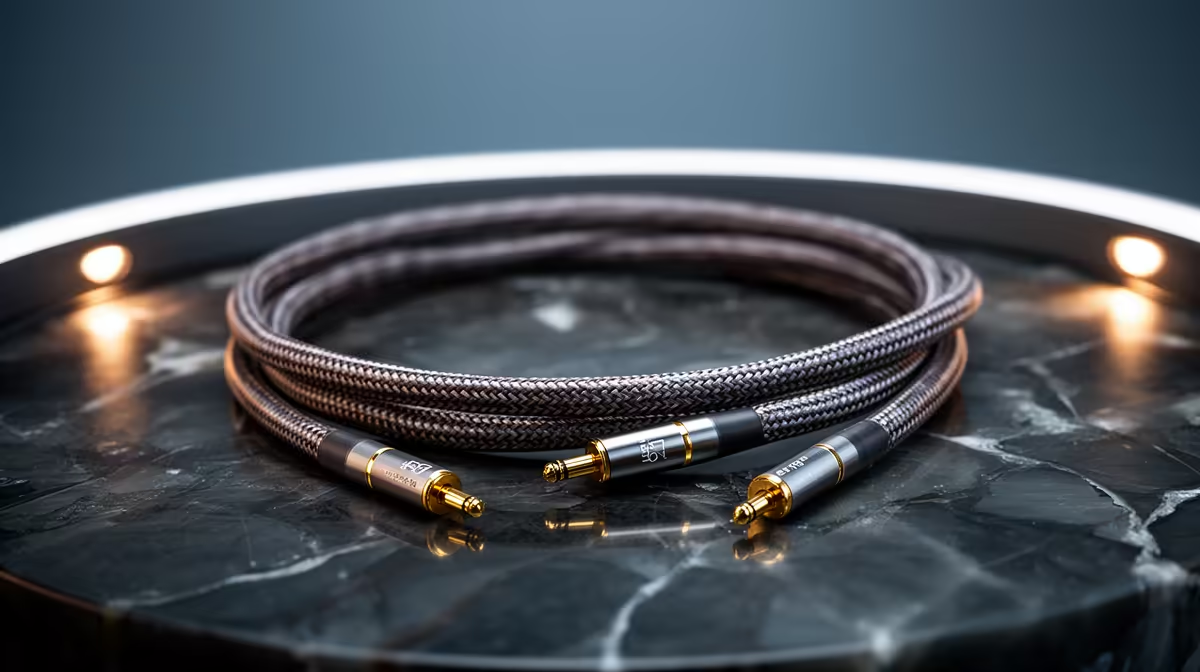
You need both ends to support balanced for it to do anything: a source or amp with a balanced output, and headphones with a balanced cable terminated in the matching plug. Many higher-end headphones ship with a standard cable and offer a balanced one separately. A 4.4mm jack on a portable player or desktop amp is the most common balanced format you will meet today. If you are weighing up where the money is best spent, a properly matched amp and headphone pairing usually beats chasing cables, and the headphone and headset range is a good place to see which models even offer balanced support. For a quick read on what other buyers are gravitating toward, scan the top-rated audio picks before you commit.
Frequently Asked Questions
Is balanced always better than single-ended?
No. Balanced offers advantages with demanding headphones and in quiet listening, but for efficient or wireless headphones the difference is usually inaudible. Better is situational, not automatic.
What is the 4.4mm jack I keep seeing?
It is the Pentaconn balanced connector, now the common standard for balanced headphone output on portable players and desktop amps. Its extra contacts carry the separate conductors a balanced signal needs.
Can I plug a balanced cable into a single-ended jack?
Not directly, the connectors differ. You can use adapters in some cases, but plugging a balanced plug into a single-ended socket does not give you balanced operation, it just changes the physical fit.
Will balanced make my headphones louder?
It often increases available power, which can mean more headroom and volume, especially for high-impedance models. Whether you need that depends on how hard your headphones are to drive in the first place.
Sound quality starts with the right headphones and a source that suits them. Browse the headphone and headset range at Evetech to find a pairing that matches how you actually listen, balanced or not.