Quick Answer
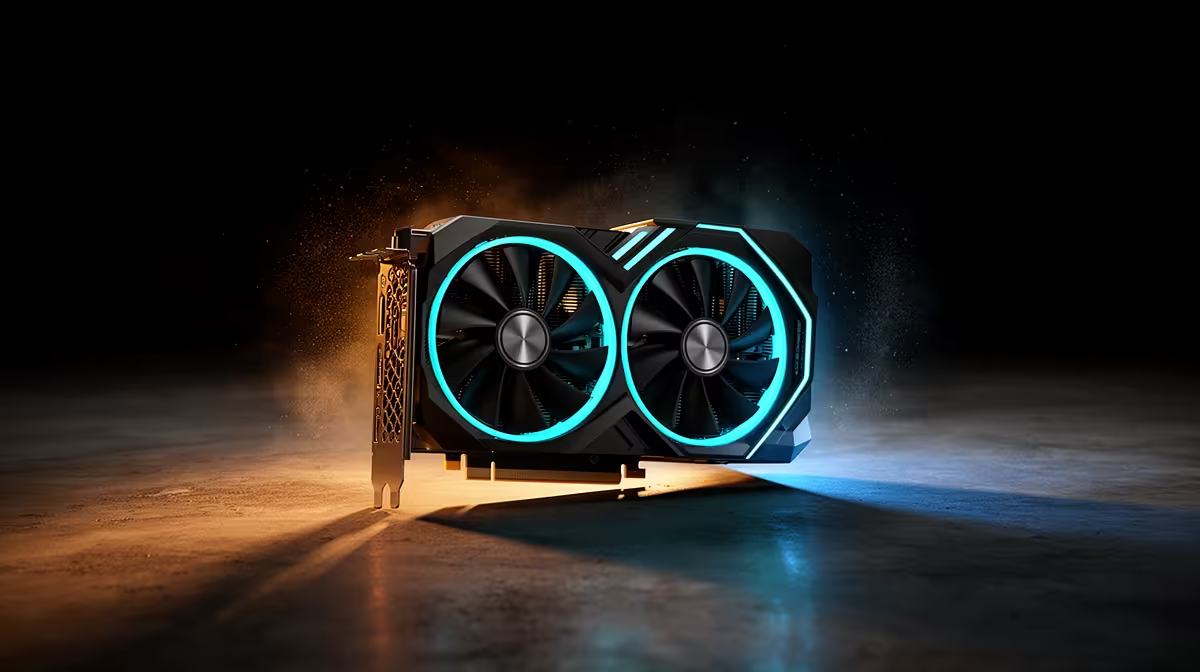
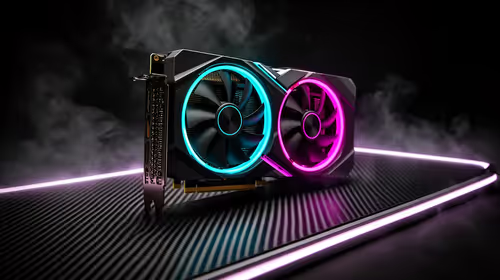
Second-hand GPUs are risky for SA buyers because warranty status, mining history, fan wear and hidden instability are hard to prove before money changes hands. A used card can be good value, but only if the seller allows stress testing and the price is far below a new card with support. For most buyers, a new RTX 4060, RTX 5060, RX 7600 or similar card is the cleaner long-term choice.
Why the shelf price climbs
Graphics cards are imported, priced against exchange-rate risk, and affected by global chip supply. SA buyers also pay for local warranty handling and courier logistics, which matters outside major hubs. When launch demand is high, the first stock can sit above the later value point, so waiting a few weeks may improve the basket.
Buy by resolution
A 1080p player can target RTX 4060, RTX 5060 or RX 7600-class performance and still hit 100+ fps in many esports games. A 1440p player should look higher, with RTX 5070 or RX 9070 XT-class cards making more sense. A 4K buyer needs a premium GPU, a strong PSU and a monitor that justifies the spend.
Avoid false savings
A cheap used card can become expensive if it needs fans, crashes under load or has no proof of purchase. Ask for a 20-minute stress test, temperature screenshots and visible serial numbers. If the saving is only R1,000-R2,000 against a new card, local support is usually worth more.
FAQ
Why are GPUs expensive in SA?
Import costs, exchange rates, VAT, stock timing and warranty logistics all add pressure. Pricing also rises when a new GPU generation has limited early supply.
When should I upgrade my GPU?
Upgrade when your current card misses the monitor target you use every day. A 1080p 60Hz screen does not need the same GPU as 1440p 165Hz.
Is a used GPU worth it?
Only when it is much cheaper, testable and has clear history. Without that, a new card with support is the safer buy.
GPU check
Choose the monitor target first, then price the GPU; it prevents paying 4K money for a 1080p setup.