


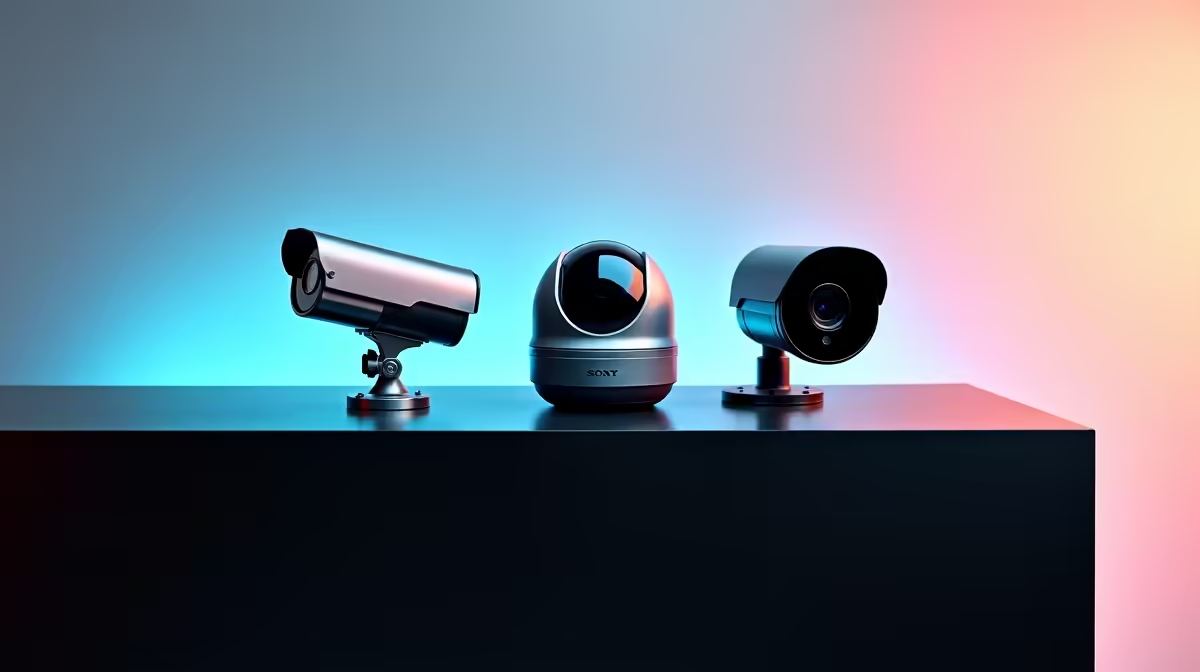
Three camera shapes dominate every security range, and the turret camera quietly solves a problem the other two create. Dome housings can bounce their own infrared light off the glass at night, washing footage in haze. Bullet cameras avoid that but trade away the discreet, vandal-aware profile. Turrets sit in between, with the open lens of a bullet and the compact body of a dome, which is why they win more SA installs than people expect.
Quick Answer
For most South African home setups, a turret is the safest default: it gives the cleanest night vision because there is no dome glass to reflect the IR LEDs back at the lens. Pick a bullet for long, narrow views like driveways and fence lines where its sunshade and bigger lens shine, and pick a dome where vandal resistance matters most, since its tough bubble shrugs off knocks and tampering far better than an exposed lens.
How each shape performs at night
Night-vision clarity is where the shapes genuinely diverge. A dome camera fires its infrared LEDs from behind a clear cover, and that cover can reflect some of that light straight back into the lens, producing glare or a haze that softens the image. Dirt or scratches on the bubble make it worse, so domes need occasional cleaning to keep footage sharp.
A turret has no cover in front of the lens, so there is no internal reflection and no IR halo. Turrets also tend to use larger sensors and wider apertures, which lifts low-light performance further. For a perimeter that matters most after dark, which describes most home security, that open-lens design is a real advantage. The current smart home and security range at Evetech lists turret options alongside the other shapes so you can compare night-vision specs directly.
Deterrence, placement and vandal resistance
Shape also changes how a camera behaves on a wall. A bullet's long body holds a bigger lens and a built-in sunshade, making it the natural choice for watching a driveway, a long fence line or a gate from distance. Its visible, pointed profile reads as an obvious deterrent on a boundary wall, which is part of the appeal for SA properties where seeing the camera is half the job.
Vandal resistance is the dome's territory. The clear polycarbonate bubble lets domes earn high impact ratings, so they resist blows, twisting and spray-paint better than an open turret, whose exposed lens is easier to grab or smear if mounted within reach. Turrets can be fully weather-sealed for the elements, but for tamper-prone spots, mount them high or choose a dome. Under eaves and tucked into corners, the turret's glare-free clarity usually wins; on exposed boundary walls, the bullet's reach and visibility do.
Choosing for a typical SA home
Map the shape to the spot. Driveway or long fence line, watching from distance: bullet. Reachable wall, entrance or anywhere tampering is a concern: dome. Under the eaves, covered patio or general perimeter where clean night footage is the priority: turret. Many homes mix all three, using bullets to cover the long approaches and turrets under cover for sharp after-dark images. Mounting hardware, cabling and power gear to finish the install turn up in the accessories best sellers.
Frequently Asked Questions
Why do dome cameras get IR glare at night?
Their infrared LEDs sit behind a clear cover, and some of that light reflects off the cover straight back into the lens, causing glare or haze. A turret has no cover in front of the lens, so it avoids the problem entirely.
Which shape has the best night vision?
Turrets generally do, because there is no dome glass to reflect IR and they often use larger sensors and wider apertures for better low-light capture. That makes them a strong default for perimeters that matter most after dark.
When is a bullet camera the right choice?
For long, narrow views such as driveways, gates and fence lines watched from distance. Its extended body holds a bigger lens and a built-in sunshade, and its visible profile works as an obvious deterrent on a boundary wall.
Are domes better for vandal resistance?
Yes. The clear polycarbonate bubble lets domes earn high impact ratings, resisting blows, twisting and spray-paint better than a turret's exposed lens. For reachable, tamper-prone locations, a dome or a high-mounted turret is the safer pick.
Match each camera to its spot, turret under cover for clean night footage, bullet for long approaches, dome where tampering is a risk. Browse the smart home and security range at Evetech to spec the right mix for your property.










