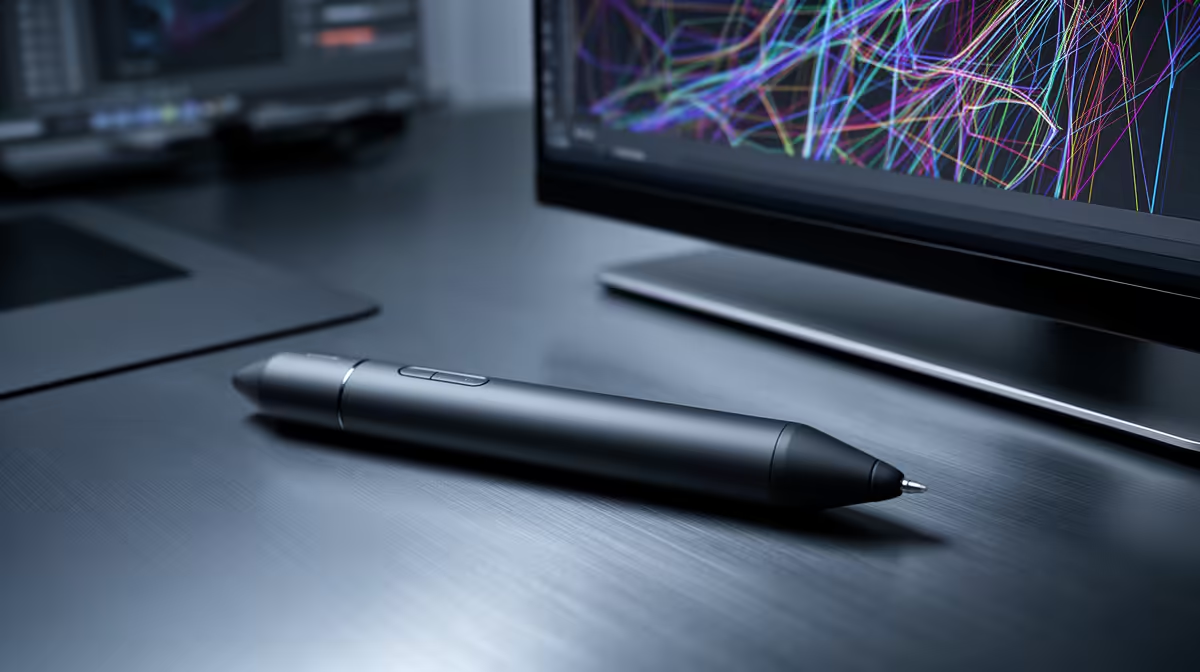
Getting tilt sensitivity for realistic shading in digital art right is mostly about the first ten minutes of setup. Confirm tilt sensitivity, make 4096 pressure levels easy to reach, and keep 1 mm stroke alignment visible for normal document markup.
Quick Answer
Choose tilt sensitivity for realistic shading in digital art around the job it must handle: document markup. tilt sensitivity, 4096 pressure levels and 1 mm stroke alignment should support cleaner lines; anything else is secondary until the basics are proven.
Set Up Tilt Sensitivity for Realistic Shading in Digital Art Without Guesswork
The first check for tilt sensitivity for realistic shading in digital art is not colour or packaging; it is how the product behaves in document markup. Use tilt sensitivity as the baseline, then confirm 4096 pressure levels before assuming the feature will work everywhere. 1 mm stroke alignment should be simple to understand from the listing. If worn nibs is already your main annoyance, avoid any model that makes that weakness harder to diagnose.
How Tilt Sensitivity Changes The First Session For Tilt Sensitivity for Realistic Shading
Build quality for tilt sensitivity for realistic shading in digital art is the way the details hold up under ordinary use. With lecture notes, the weak point may be tip offset, not the headline spec. Confirm 1 mm stroke alignment, then check whether tilt sensitivity and 4096 pressure levels still make sense when the product is packed away, moved or shared. For tilt sensitivity for realistic shading in digital art, a cleaner daily routine is a stronger signal than louder wording on the box.
Keep The Setup Easy To Repeat For Tilt Sensitivity for Realistic Shading
If two products remain close, choose the one with fewer hidden compromises for tilt sensitivity for realistic shading in digital art. Clear support for tilt sensitivity, honest wording around 4096 pressure levels and a sensible approach to 1 mm stroke alignment are better than a dramatic claim. In document markup, the winning stylus should reduce worn nibs. That is the practical sign that cleaner lines will last.
sensitivity for realistic shading in digital art, ignore extras until tilt sensitivity and 4096 pressure levels are clear. The best tilt sensitivity for realistic shading in digital art choice should make cleaner lines easier in normal use.
FAQ
What is the first setup step for Tilt Sensitivity for Realistic Shading in Digital Art for Document Markup?
Confirm tilt sensitivity on the main device before changing anything else. Then adjust 4096 pressure levels and 1 mm stroke alignment around the way you use document markup.
How do I know Tilt Sensitivity for Realistic Shading in Digital Art is set up correctly in Document Markup?
Tilt sensitivity for realistic shading in digital art is set up correctly when cleaner lines feels repeatable and worn nibs is not showing up during normal document markup.
Should I keep the setup simple for Tilt Sensitivity for Realistic Shading in Digital Art with 4096 Pressure Levels in Document Markup?
Yes. Add extra features only after tilt sensitivity, 4096 pressure levels and 1 mm stroke alignment are working cleanly in lecture notes.