


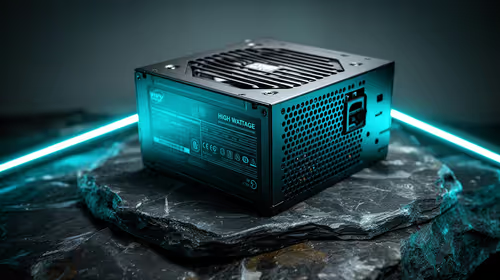
550W PSU Planning for RTX 5080 Super Builds in SA
550W for RTX 5080 Super needs a full-build check, not a simple yes. Review GPU guidance, CPU draw, transient load, connectors, PSU quality, and upgrade plans before deciding.
Read moreChoose PLA by the object's job. ELEGOO Galaxy PLA suits visible surfaces with gloss and dynamic colour shifts, while functional parts and prototypes need their own requirements checked. The 1kg, 1.75mm spool costs R499.

A display model, working component and early prototype may share a file format while demanding very different material decisions. Choosing PLA filament by project keeps appearance from overruling the job. ELEGOO Galaxy PLA has an obvious place in the discussion because its changing glossy finish is designed to be seen.
Use finish-led PLA for visible models, and define mechanical or validation needs separately for functional parts and prototypes. A 1kg spool of ELEGOO Galaxy PLA costs R499 and contains 1.75mm plant-based material with dynamic shimmer. It suits exposed work when the printer accepts the diameter and PLA family.
Display models can make gloss and angle-dependent colour part of their visual language. Curves, armour panels, decorative shells and faceted surfaces provide paths for the galaxy effect to move. Orientation matters because a face hidden against a wall cannot show the same response as one turned towards the room.
Print a small section containing the model's main surface types. Turn it under the intended lighting before deciding that the complete piece deserves the spool. Evetech's 3D printer filament range can help assemble alternatives for that test.
A functional part begins with what it must do, how it will be loaded and where it will operate. Assess those mechanical and environmental demands independently from diameter, spool quantity, finish and formulation. Select around the duty rather than assuming all PLA is interchangeable.
For a purely visual functional object, surface effect may still matter. A control cover or exposed organiser can combine use and appearance, provided the material choice satisfies the actual task. Keep those two decisions visible in the project notes.
A fit prototype should reveal dimensions, clearances or assembly sequence without carrying every final aesthetic choice. A presentation prototype may need the opposite: a finish close to the intended object so stakeholders can judge form under light. Decide which question the prototype must answer before choosing material.
The machine also shapes the result. Compare feed formats and printing approaches in Evetech's 3D printer category, then use the actual printer's guidance for the first sample. One spool can serve several project types, but the reason for choosing it should change with the job.
Create one short record for display work, another for fit prototypes and a third for functional parts. Each should name the question being answered, the relevant geometry and the reason the material was accepted or rejected. This prevents a beautiful display result from becoming false evidence for an unrelated working component.
When a mixed-use object moves from prototype to presentation, note which dimensions or surfaces changed. The final Galaxy print should inherit proven geometry without inheriting assumptions about material behaviour that were never tested. A project-role notebook may seem excessive for one spool, but it becomes valuable when several models, makers or machines share the same workspace.
At the end of the project, identify which decision the prototype resolved and which visual choice the display material improved. If neither answer is clear, the material workflow may have been more complicated than the object required. This retrospective makes the next project leaner and helps a maker choose when one PLA is enough and when separate prototype and presentation stages genuinely add value.
Display models are the clearest match for this spool because their exposed geometry can reveal deep-space lustre, glossy depth and colour changes as people move around them. The user-friendly PLA behaviour also makes small presentation prototypes practical before committing the full design. A functional part needs a different decision: its load, environment and fit come first, and the Galaxy surface should count only if appearance remains relevant after those requirements pass.
For ordinary prototypes, a decorative kilogram may still make sense when the same spool will later produce the approved display version. Otherwise, reserve the R499 Galaxy material for pieces that can use its reflections and choose a simpler PLA for hidden iterations.
Visible models with curves, facets or broad exposed faces can show its gloss and shifting colour from several viewpoints.
No. The part's duty and required material behaviour must be defined before appearance enters the decision.
Use it when the prototype must communicate final surface character. A simple fit check may not benefit from galaxy shimmer.
It offers 1kg of 1.75mm ELEGOO Galaxy PLA for R499 with a glossy, biodegradable plant-based formulation.
Ready to assign material by project purpose? Explore Evetech's filament and 3D printer categories, then choose separately for display impact, functional duty or prototype learning.
Visible models with curves, facets or broad exposed faces can show its gloss and shifting colour from several viewpoints.
No. The part's duty and required material behaviour must be defined before appearance enters the decision.
Use it when the prototype must communicate final surface character. A simple fit check may not benefit from galaxy shimmer.
It offers 1kg of 1.75mm ELEGOO Galaxy PLA for R499 with a glossy, biodegradable plant-based formulation.
550W for RTX 5080 Super needs a full-build check, not a simple yes. Review GPU guidance, CPU draw, transient load, connectors, PSU quality, and upgrade plans before deciding.
Read more
8000Hz polling is overrated for most SA gamers because gains can be tiny next to battery drain and monitor limits. Mbombela players should weigh mouse feel, game support, and system stability before chasing the number.
Read more
Magnetic switches are taking over SA gaming keyboards because actuation can be tuned. For Sandton gamers, rapid trigger, reset control, and profile depth can help, but layout, key feel, and software quality still matter.
Read more
Polokwane oled monitor value questions need cautious SA context because pricing can move with availability, exchange rates, specs, and warranty support. Treat the trend as a planning signal, not a fixed price promise.
Read more
Arc B580 budget builds for Midrand gamers can shift with exchange rates, supply, specs, and model tier. Treat the title as a buying prompt, then compare SA warranty, timing, and build priorities.
Read more
ROG Ally X may beat the LCD Steam Deck for SA gamers who value stronger handheld performance, more memory, and Windows flexibility. Compare battery life, controls, game libraries, and Polokwane support needs before deciding.
Read more
Minisforum's M2 Pro pairs Core Ultra X7, Arc B390 graphics and 32GB onboard memory in 1.8 litres. SA buyers should weigh its fixed memory and $1,439 launch offer against local mini PCs.

Lenovo says Legion Go failures linked to BIOS N3CN42WW are not user error. Affected SA owners should stop retrying the update, preserve proof and open a support case.

Smart monitors can add apps and convenience, but they also add privacy settings and unwanted-software risk. SA buyers should audit the operating system before paying for extras.

A fake 113GB GTA VI ISO reportedly used empty padding around a small malware payload. SA gamers should delete unofficial builds, keep Windows security active and wait for official channels.

ASUS calls the ROG GT-BN98 the first Wi-Fi 8 gaming router. SA buyers should fix coverage and client limits before paying for a future wireless standard.

Apple's M6 Mac mini adds faster AI, graphics and networking in the same compact format. SA buyers should wait for a rand listing before comparing value.

The Vulcan II XP adds hot-swappable switches, sound damping and gaming controls to a full-size wired board. SA buyers should compare feel before features.

Microsoft says Windows on Arm now has over 7,000 verified apps and games. SA buyers should still check each driver, game and work tool before switching.
550W for RTX 5080 Super needs a full-build check, not a simple yes. Review GPU guidance, CPU draw, transient load, connectors, PSU quality, and upgrade plans before deciding.
Skyrim HD texture packs that actually run on RX 9070 helps SA readers plan hardware, settings, compatibility, and upgrade trade-offs. Check GPU, CPU, RAM, storage, monitor, and stability needs without risky performance claims.
8000Hz polling is overrated for most SA gamers because gains can be tiny next to battery drain and monitor limits. Mbombela players should weigh mouse feel, game support, and system stability before chasing the number.

Wi-Fi 7 or Wi-Fi 6e for streaming on twitch and youtube should be judged by fit, not a single winner. Compare compatibility, latency, capacity, upgrade path, cost planning, and South African setup needs.