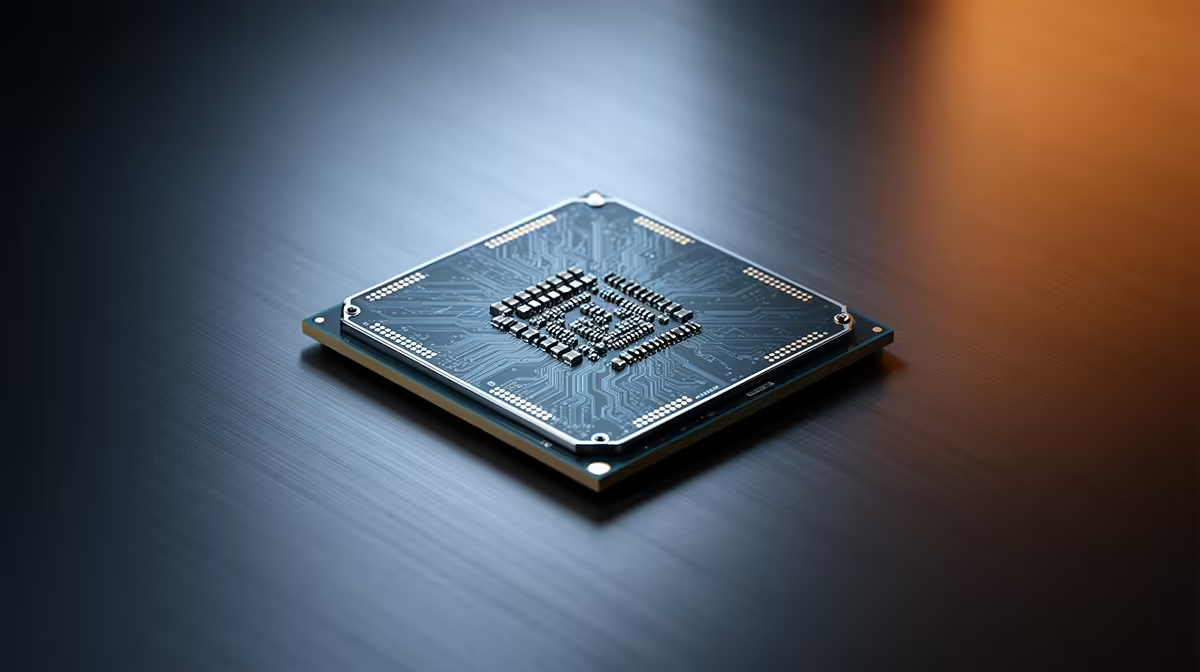
A Core i9-14900K can be a reliable, very fast processor when it runs current motherboard firmware and Intel's default settings. The important caveat is history: microcode updates are preventative mitigation for the Vmin Shift issue. They cannot prove that a particular used or previously unstable CPU has no damage.
Quick Answer
For a new or existing 14900K system, install the motherboard maker's latest stable BIOS containing Intel's current microcode guidance and load Intel Default Settings. Stress-test the machine at stock. If it has repeated crashes or hardware errors, use Intel's current support information and the seller's warranty process rather than trying to tune around the fault.
Compare AMD desktop processor alternatives with current Intel CPU choices. Use a named boxed product, board compatibility and current warranty terms for the purchase.
What the Updates Address
Intel identified elevated voltage requests as part of the instability affecting some 13th- and 14th-generation desktop processors. BIOS releases carrying newer microcode changed the conditions that could drive Vmin Shift over time. Intel has continued updating its public Vmin Shift support article, so follow that page and your motherboard maker's notes for the current version.
A BIOS label alone does not certify the past life of a processor. A chip that ran for months under older firmware may need a different level of scrutiny from a new part installed after the mitigations arrived.
Configure Stock Before Testing
Update the BIOS using the board maker's instructions, load defaults and select Intel Default Settings where offered. Avoid old multi-core enhancement profiles or an automatic overclock during the baseline.
Install current chipset and management drivers. Then run a memory test, sustained CPU workload and several games known to expose instability. Watch for application crashes, decompression errors, blue screens and corrected hardware events.
Memory overclocking can create its own faults. Test standard settings first, then enable XMP and repeat. This separates a CPU concern from an ambitious memory profile.
The 14900K Still Needs Serious Cooling
The processor combines eight P-cores and 16 E-cores for 24 cores and 32 threads. Intel lists 253W maximum turbo power, while board behaviour and workload change the lived draw.
Use a capable cooler, strong case airflow and a suitable motherboard. Temperature alone does not prove degradation, but throttling can hide performance and make a stable system noisy.
The 14900K remains a powerful gaming and productivity CPU. Buy or keep it with current firmware, stock configuration and evidence from your own stability test. Treat any persistent fault as a support case.
FAQ
Did microcode fix every unstable 14900K?
The updates mitigate the conditions linked to Vmin Shift. They cannot reverse physical degradation that may have occurred earlier.
Which BIOS should I install?
Use the latest stable release for your exact motherboard and check that maker's notes against Intel's current Vmin Shift guidance.
Should I undervolt the CPU for safety?
Begin with Intel Default Settings and prove stability. Any tuning adds variables and should come after a clean stock baseline.
Update the exact motherboard, load Intel Default Settings and prove the Core i9-14900K stable at stock before changing any tuning.