Quick Answer
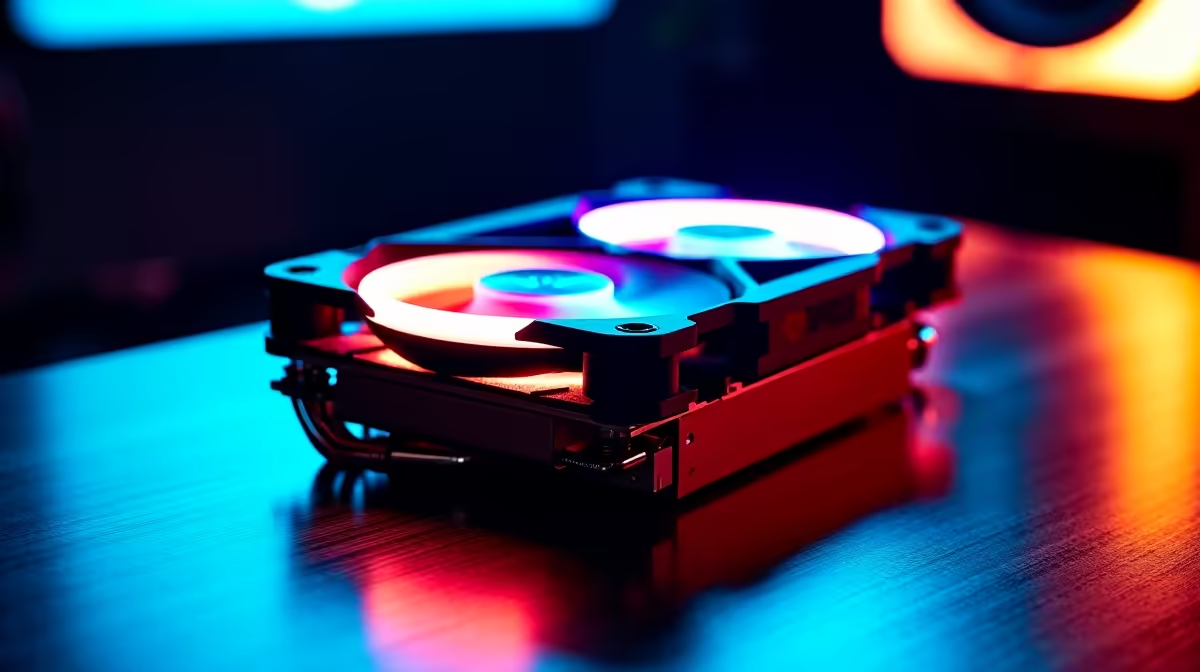
For console gamers moving to PC, CPU cooler cooling capacity is worth paying for if your CPU runs hot or you want quiet, sustained performance; a capable air cooler near R600-R900 or a 240mm AIO around R1,800 keeps a mid-to-high CPU in the 60s-70s C. For a cool-running mid-range chip, a R450 cooler is enough. Match cooling capacity to your CPU's heat, not to the biggest cooler available.
When cooling capacity is worth paying for
Cooling capacity matters when your CPU produces real heat. A higher-core or higher-wattage chip, or one you push hard, benefits from a strong air cooler near R600-R900 or a 240mm AIO around R1,800 that holds temperatures in the 60s-70s C under sustained load. For a console switcher building a capable rig, paying for adequate cooling prevents throttling and keeps the system quiet because fans spin slower to hit the target.
When a basic cooler suffices
If your build uses a cool-running mid-range CPU drawing under 100W, a quality air cooler near R450 keeps it comfortably in check, and extra cooling capacity is wasted money. Console switchers often start with mid-range chips, so right-size the cooler to the CPU rather than overbuying. Confirm your CPU's typical heat output before deciding.
Matching cooler to CPU
Check your CPU's power rating and reviews for typical temperatures. A 65W chip is happy on a modest tower cooler; a 105W-plus chip or an overclock wants a larger air cooler or AIO. Ensure the cooler clears your RAM and case, and that the case has good airflow, since even a strong cooler struggles in a stuffy case. Quiet performance comes from adequate, not excessive, cooling.
FAQ
How much cooling capacity does a console-switcher PC need?
Match it to your CPU. A cool mid-range chip under 100W is fine on a R450 cooler, while a higher-wattage or overclocked CPU wants a R600-R900 tower or a 240mm AIO. Right-size to the CPU's heat rather than buying the biggest cooler.
Is a 240mm AIO necessary for a first PC?
Only for hot, high-core-count CPUs or overclocking. Most console switchers start with mid-range chips that a good air cooler handles, so an AIO is often unnecessary. Save it for a CPU that genuinely runs hot under sustained load.
Does better cooling make a PC quieter?
Yes. Adequate cooling capacity lets fans spin slower to hit the same temperature target, so the system runs quieter. An under-sized cooler forces fans to ramp loudly, while an appropriately sized one keeps both temperatures and noise low.
Check your CPU's wattage and typical temps first; fit a R450 tower for a cool mid-range chip or a R600-R900 cooler for a hotter CPU, ensuring good case airflow either way.