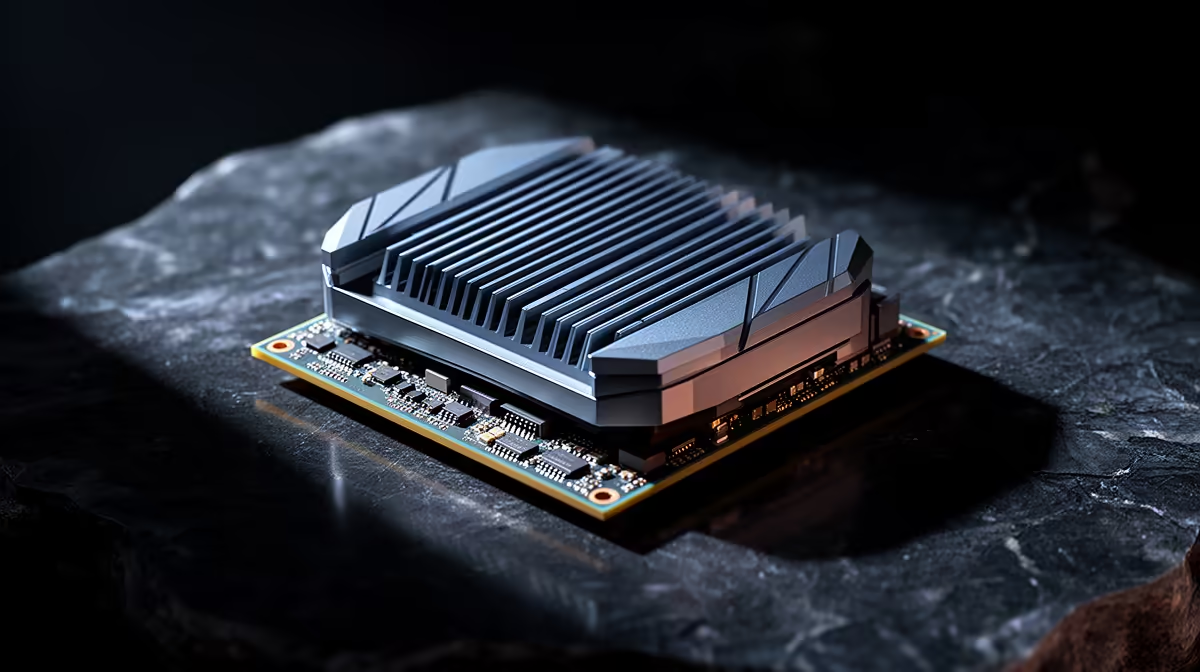
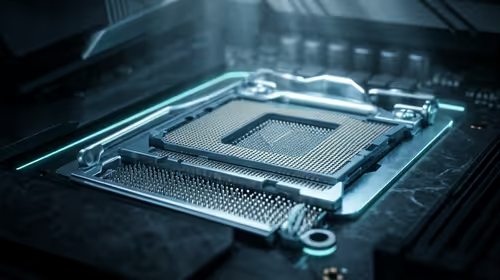
Competitive games at 1080p can turn the CPU into the frame-rate ceiling. Low graphics settings let the GPU finish quickly, while the processor still has to handle game logic, player updates and draw calls. A CPU upgrade can matter when you are chasing 240Hz or more.
Quick Answer
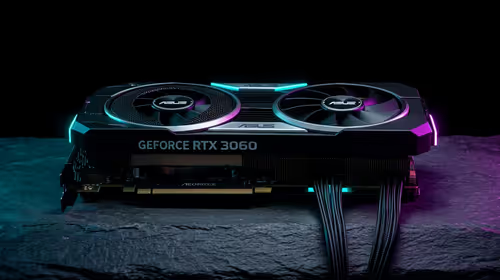
Prioritise the CPU when graphics utilisation falls below full load and lower resolution does not raise the frame rate. Prioritise the GPU when it remains saturated or you need cleaner image settings to spot targets. Ranked performance depends on stable rendered frames, latency and the whole system.
Compare AMD gaming processors with Intel desktop CPUs. Use tests from your exact esports title because engine behaviour varies.
Why High Refresh Exposes the Processor
At 300fps, the system has around 3.3 milliseconds to prepare and display each frame. The CPU must complete simulation and submit work to the GPU within that window. One busy main thread can set the limit even when total CPU use looks low.
Large cache and fast per-core performance can improve lows. Core count helps background work, but unused cores do not raise the game's main-thread ceiling.
Test a Real Match
Use a busy map, smoke, players and the settings you compete with. Capture a frame-time trace and inspect graphics-card load. Built-in practice ranges can be lighter than a full match.
Lower resolution. A flat result with spare GPU capacity points to CPU, memory or engine limits. A strong increase shows the graphics card still has work to do.
Keep Latency in the Picture
Aim for a rendered frame rate the PC can hold. Generated frames improve motion presentation but do not add fresh game-state updates at the same rate. Use the game's latency reduction tools and avoid pinning the GPU at a load that creates a long render queue.
Memory configuration, background apps and thermal clocks affect lows. Confirm dual-channel RAM, stable profiles and clean cooling before replacing the processor.
Match the Monitor
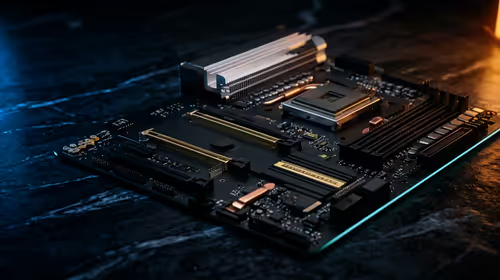
A CPU that raises 300fps to 450fps gives little value on a 165Hz screen unless lows or latency improve. Set the display target, then compare the complete CPU, board and memory cost with a GPU or monitor change.
Keep the network result separate. Packet loss, server tick rate and wireless interference can make a fast PC feel delayed without changing local render time. Test offline aim movement and a stable wired match before assigning every hitch to the CPU. The upgrade should fix a frame-time problem you can reproduce on the machine itself.
FAQ
Is the CPU more important at 1080p?
It has more chance to set the limit because the GPU handles fewer pixels. Game, settings and card speed still matter.
Do I need eight cores for esports?
Strong per-core speed and cache can matter more. Extra cores help background apps and some engines.
Should I use frame generation in ranked play?
Raw rendered frames and low input delay are the safer priorities. Test any feature in the exact game before using it competitively.
Capture a busy 1080p match, check GPU load and frame-time lows, then upgrade the part holding back your monitor target.