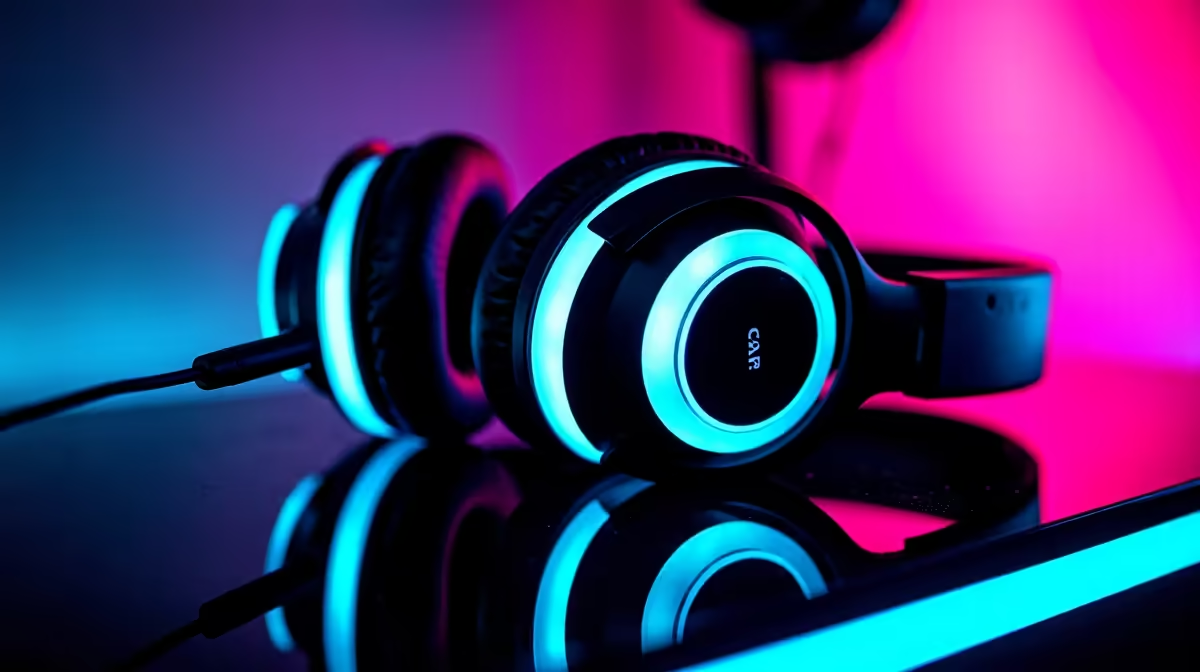
A gaming setup that looks good on stream and at the desk has moved well beyond RGB keyboard and mouse strips. The microphone now sits centre-stage on a boom arm, visible in frame during every session, and customising RGB lighting on gaming audio peripherals has become a genuine part of the visual setup rather than an afterthought.
Quick Answer
Most gaming mics offer 8 or more RGB presets including static, breathing, rainbow wave, and audio-reactive modes, all configurable through a desktop companion app. Per-zone colour picking lets you match a specific hex value to your stream overlay or headset, with settings stored to onboard memory so the palette survives a reboot.
🎮 What RGB Modes Gaming Mics Actually Offer
The range of lighting effects available on a mid-to-high-end gaming microphone has expanded significantly. Static mode locks the ring or body to one solid colour and is the most useful for maintaining a consistent aesthetic on stream. Breathing mode pulses brightness slowly, fading in and out at an adjustable speed.
Rainbow wave cycles through the full spectrum continuously. It is visually energetic and popular for content that emphasises the gaming aesthetic, though it does not complement a strict two or three-colour palette if you are trying to match a specific stream overlay theme.
Audio-reactive mode is the most technically interesting. The LED brightness responds to input level, pulsing brighter as your voice crosses a threshold, typically around 70 percent of the input gain. At normal speaking volume the ring glows at a moderate intensity. As your voice rises, the glow increases. For a stream where the mic is in frame, it provides a visible, real-time indication of mic activity that also looks intentional.
🔆 Per-Zone Colour and Hex Matching
Basic RGB peripherals offer a fixed set of colour presets, usually named options like red, blue, cyan, or purple, with no ability to fine-tune the exact shade. Higher-quality gaming mics with proper companion software allow full hex-code input, which is where the aesthetic control becomes genuinely useful.
Picking a specific hex value means you can match your mic ring precisely to the accent colour in your stream overlay, the glow on a headset with compatible software, or the keyboard backlight. Visual cohesion across the desk photograph or stream screenshot is noticeably cleaner when the RGB values align rather than approximate.
Saving the chosen settings to onboard memory is an important step. Without this, the lighting configuration is stored in the desktop app and resets every time the mic is unplugged or the PC reboots. Onboard memory stores the settings directly to the mic hardware, so the correct palette loads immediately when you power up, without the app needing to launch first.
✨ Syncing Across Peripherals and the Cross-Brand Reality
Syncing RGB across multiple peripherals from the same brand is straightforward when a shared control hub exists. CORSAIR iCUE, Razer Synapse, and SteelSeries GG each manage their own ecosystem, and a mic, headset, and keyboard from the same brand can be synchronised to breathing in unison or cycling through the same wave pattern simultaneously.
Cross-brand synchronisation is a messier story. Two devices from different manufacturers do not share a control protocol unless a third-party hub is involved, and even then support is patchy. If your microphone is from a different brand than your keyboard or headset, matching them means manually setting each to the same hex value and the same static mode. You cannot synchronise animations between brands without dedicated hub software.
For most South African gaming setups where the peripheral collection has grown organically over time, manual hex matching across brands is the practical path. It takes longer to set up but produces the same end result for static colour schemes, and it does not require any new hardware.
Frequently Asked Questions
How many RGB modes do gaming mics typically offer?
Most mid-to-high-end gaming microphones include 8 or more presets spanning at least static, breathing, rainbow wave and audio-reactive modes. Higher-end models add variations like pulse, double-flash, and custom animation sequences via the desktop app. The exact count varies by model, but 8 presets is a common baseline above the entry price range.
Can RGB on a mic react to my voice?
Yes. Audio-reactive mode links LED brightness to input level, increasing the glow as your voice reaches a set threshold, typically around 70 percent of the gain input. At normal speaking volume the ring holds a moderate brightness. During louder commentary or when you raise your voice, the brightness increases proportionally. The effect is visible in frame during a stream.
Does RGB lighting affect the microphone's audio quality?
No. The LED ring draws from a separate power rail inside the mic and is physically isolated from the capsule and the audio circuit. The light output has no effect on the electrical signal path. You can run any lighting mode at any brightness without any change to recording quality, noise floor, or frequency response.
Will the RGB sync with my headset if it is a different brand?
Not automatically. Cross-brand synchronisation requires both devices to share a compatible control protocol or a common hub, which is rare. If they use different software ecosystems, you can achieve visual matching by manually setting both to the same hex value in static mode, but animated modes cannot synchronise across brands without dedicated third-party hub software that supports both.
Is RGB worth prioritising on a streaming mic budget?
It is cosmetic and should be deprioritised against audio quality. A microphone with an excellent capsule, good SNR, and a solid polar pattern will always produce better results than a visually impressive one with an inferior signal chain. If two mics at the same price point are close on audio specs, RGB features are a reasonable tiebreaker. If the budget forces a choice, spend on the capsule and the boom arm first.
Ready to build a gaming setup that looks as good as it sounds?
Browse the RGB gaming microphone range at Evetech and find the model with the lighting modes, onboard memory, and capsule quality to match your desk aesthetic and your stream.