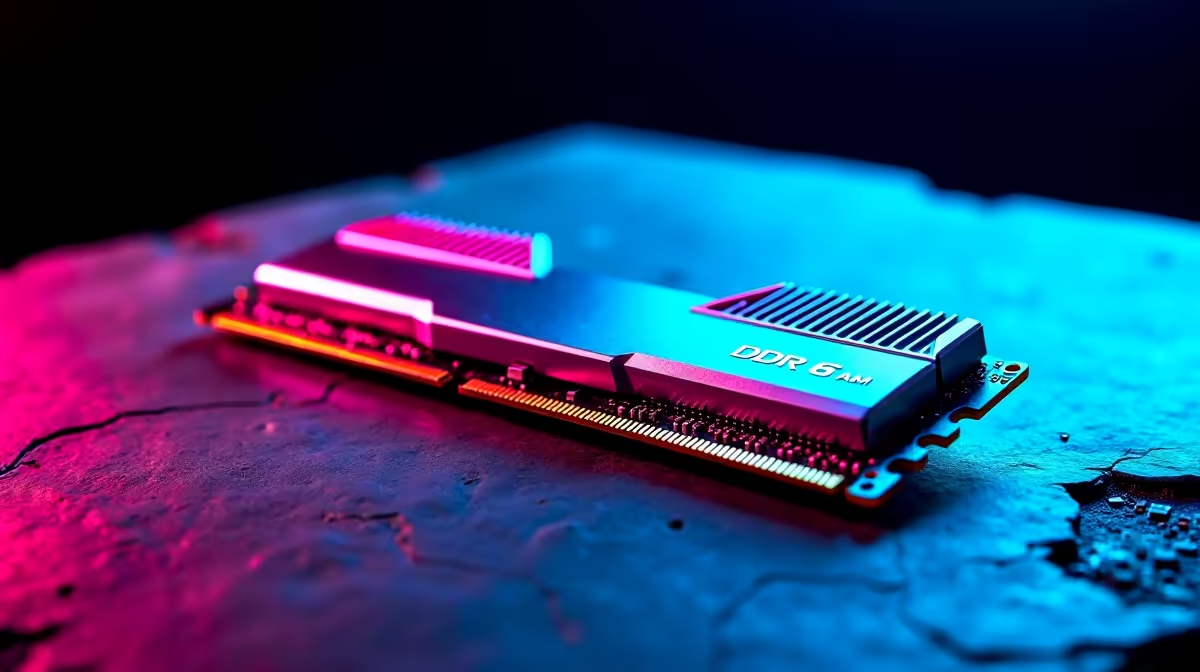
DDR6 is coming, and the headline spec sounds like a gaming revolution: roughly double the memory bandwidth of DDR5. But before you pencil it into a future build as a frame-rate booster, the honest picture is more modest. DDR6 for gaming delivers a real bandwidth jump, yet most games are limited by the graphics card, not memory speed, so the average frame-rate uplift from memory alone will be small for the majority of titles.
Quick Answer
DDR6 roughly doubles DDR5 bandwidth, but gaming is mostly GPU-bound, so the real-world frame-rate gain from faster memory alone is modest in most games. It helps most in CPU-heavy titles such as large strategy games and simulations, and in high-refresh esports where the CPU feeds frames fastest. For most gamers, the graphics card remains the upgrade that moves the needle.
Why More Bandwidth Does Not Mean Big Frame Gains
Memory bandwidth is how fast data moves between the RAM and the CPU. DDR6 doubling it is a genuine technical leap, but in a typical game the graphics card is the part doing the heavy lifting and setting the frame rate.
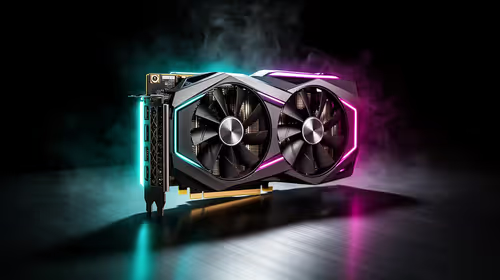
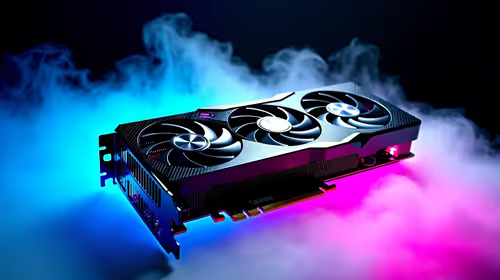
When the GPU is the bottleneck, which it is in most modern games at normal settings, feeding the CPU faster does not raise the ceiling. The card is already working flat out, so quicker memory leaves frame rates largely unchanged. That is why a faster GPU, not faster RAM, is where gaming performance actually comes from.
Where DDR6 Will Genuinely Help
There are real cases where memory bandwidth matters, and they are worth knowing.
CPU-bound games are the first. Large strategy titles, complex simulations and games tracking thousands of on-screen units lean hard on the processor and the memory feeding it. Here, extra bandwidth can lift frame rates and reduce stutter more noticeably.
High-refresh esports is the second. When you are chasing very high frame rates at lower settings, the CPU becomes the limiting factor and faster memory can help it deliver more frames. Competitive players targeting high-refresh monitors are the most likely to feel the difference.
Integrated graphics is the third and biggest. Systems that use the CPU's built-in graphics share system memory as their video memory, so doubling bandwidth directly boosts those chips. DDR6 will matter most for laptops and budget builds without a separate graphics card.
When the time comes, current and next-generation kits sit together in the gaming memory range at Evetech, making it easy to compare capacities and speeds.
Should You Wait for DDR6
For most gamers, no. DDR5 is mature, fast and widely supported, and DDR6 will require a new platform when it arrives, meaning a new CPU and motherboard rather than a drop-in swap. Building or upgrading on DDR5 today is the sensible move, and spending the budget on a stronger graphics card will do far more for your frame rates than waiting for new memory.
To see what pairs well at current memory speeds, the memory best sellers list is a quick reference for the kits gamers are buying right now.
Frequently Asked Questions
Will DDR6 increase my FPS in games?
Only modestly in most titles, because gaming is usually limited by the graphics card rather than memory bandwidth. The gains are larger in CPU-heavy games, high-refresh esports and systems using integrated graphics.
Is it worth waiting for DDR6 before building a PC?
No, for most builders. DDR5 is fast and proven, and DDR6 will need a new platform when it launches. Build on DDR5 now and put the extra budget toward a better graphics card.
Who benefits most from DDR6?
Systems with integrated graphics gain the most, since they use system memory as video memory. CPU-bound strategy and simulation players, plus competitive high-refresh gamers, also see more benefit than the average GPU-limited gamer.
Does faster RAM matter at all for gaming?
It matters at the margins. Faster memory can smooth out CPU-bound moments and lift frame rates slightly in the right games, but it is a secondary upgrade behind the graphics card and CPU.
Building or upgrading a gaming PC today? Compare proven DDR5 kits in the gaming memory range at Evetech and check the memory best sellers, then put the bulk of your budget toward the graphics card that actually drives your frame rates.