


Quick Answer
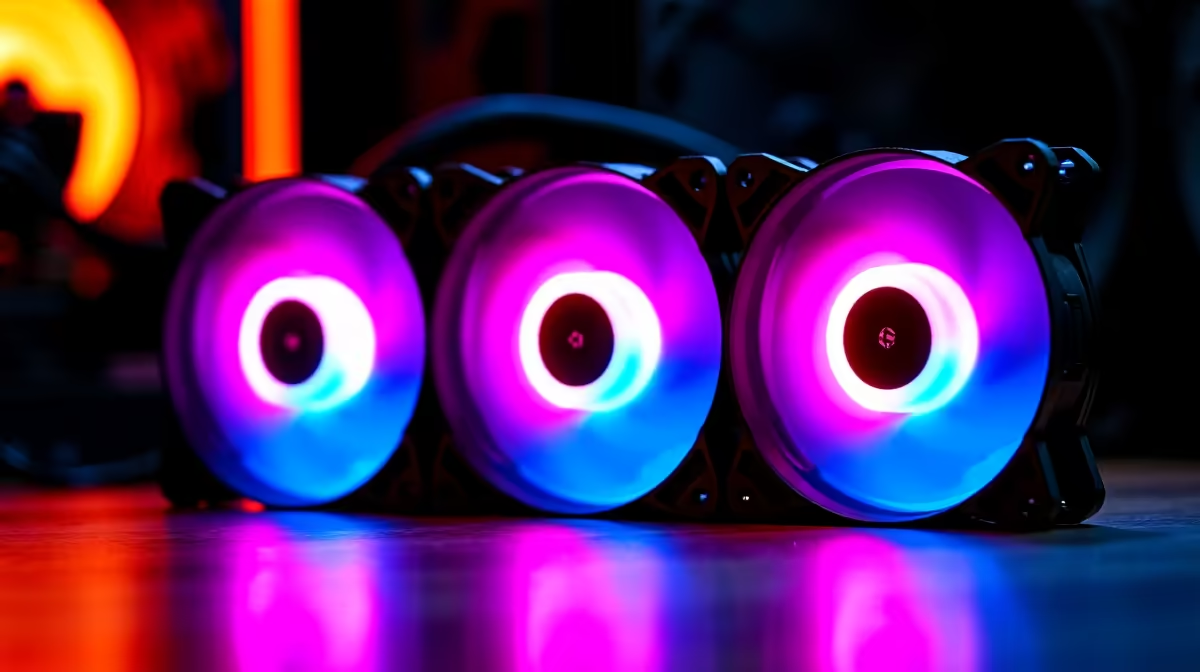
Double-layer 16-LED ARGB fans place two concentric LED rings on the fan frame, one on the inner hub and one on the outer ring, for a total of 16 or more individually addressable LEDs per fan. The result is visually denser lighting with the ability to run independent effects on each ring simultaneously.
The Anatomy of a Double-Layer ARGB Fan 💡
A standard single-layer ARGB fan might place 6 to 12 LEDs on the outer frame ring only. Double-layer fans add a second LED ring on the inner hub or blade area, bringing the count to 16 LEDs or higher per unit. Each LED is individually addressable, meaning software can assign a unique colour and brightness to every one of the 16 points independently. This opens up lighting patterns that single-layer fans cannot achieve: a spiral effect that appears to rotate inward, a dual-zone static display with one colour on the outer ring and a contrasting colour on the hub, or an Aurora sweep that transitions from outer edge to inner centre. Brands like DeepCool and Corsair have released fans with 16 to 18 LED configurations across two layers. At current South African retail pricing, double-layer 16-LED fans typically sit in the R250 to R450 per unit range depending on the brand and whether they include daisy-chain support.
Software Control and Addressable Zones 🖥️
Because each of the 16 LEDs is individually addressable via the 3-pin 5V ARGB standard, any compatible RGB software (ASUS Armoury Crate, MSI Mystic Light, Gigabyte RGB Fusion, or iCUE) can address each LED by index. The practical limit is that most sync software treats the two rings as a single linear string of LEDs numbered 1 to 16 rather than two separate zones. Advanced modes in iCUE and Armoury Crate do allow per-LED addressing with custom animations. For builders who want the full benefit of the double-layer design, running the fans under their native controller (if the pack includes one) often unlocks zone-specific presets not available through third-party sync apps.
Impact on Aesthetics in a Custom Build ✨
In a tempered glass case with three double-layer 16-LED fans on the front intake, the visual density is significantly higher than three standard 6-LED fans. The inner LED ring illuminates the fan hub and blade area, creating depth that single-ring fans lack. When viewed through glass, the fans appear to have a glowing core surrounded by a lit outer frame, a look that complements ARGB RAM and AIO pump heads well. For South African builders presenting their builds at LAN events or gaming cafes, the visual payoff justifies the slight premium over single-layer options. The added LEDs draw marginally more current, around 0.1A to 0.2A extra per fan, which stays within safe header limits for a three-fan chain.
Sync Zones Across Your Whole Build ⚡
For the smoothest visual effect, use double-layer ARGB fans in all front positions and match the outer ring colour to your RAM's ARGB strip and your AIO pump head. This creates a continuous lighting band across the entire build when viewed from the glass side. Run the fans through your motherboard's native RGB app for the tightest colour match.
FAQ
Are double-layer 16-LED fans louder than single-layer fans?
No. The extra LEDs are passive light sources and add no acoustic output. Fan noise depends on blade design, bearing type, and RPM, not LED count.
Can I run double-layer fans on a 3-pin ARGB header?
Yes, 16-LED ARGB fans use the standard 3-pin 5V connector. The only consideration is current draw: 16 LEDs per fan means slightly higher draw per unit, so check total LED count stays under 60 per header without a powered hub.
Do double-layer fans cost significantly more than standard ARGB fans?
The premium is generally R80 to R150 per fan over a comparable single-layer model. For a three-fan pack the cost difference is modest relative to the visual improvement.
Want to make your build stand out? Evetech stocks ARGB case fans including double-layer LED models suited for tempered glass builds. Check the current range and find the lighting level that fits your setup.










