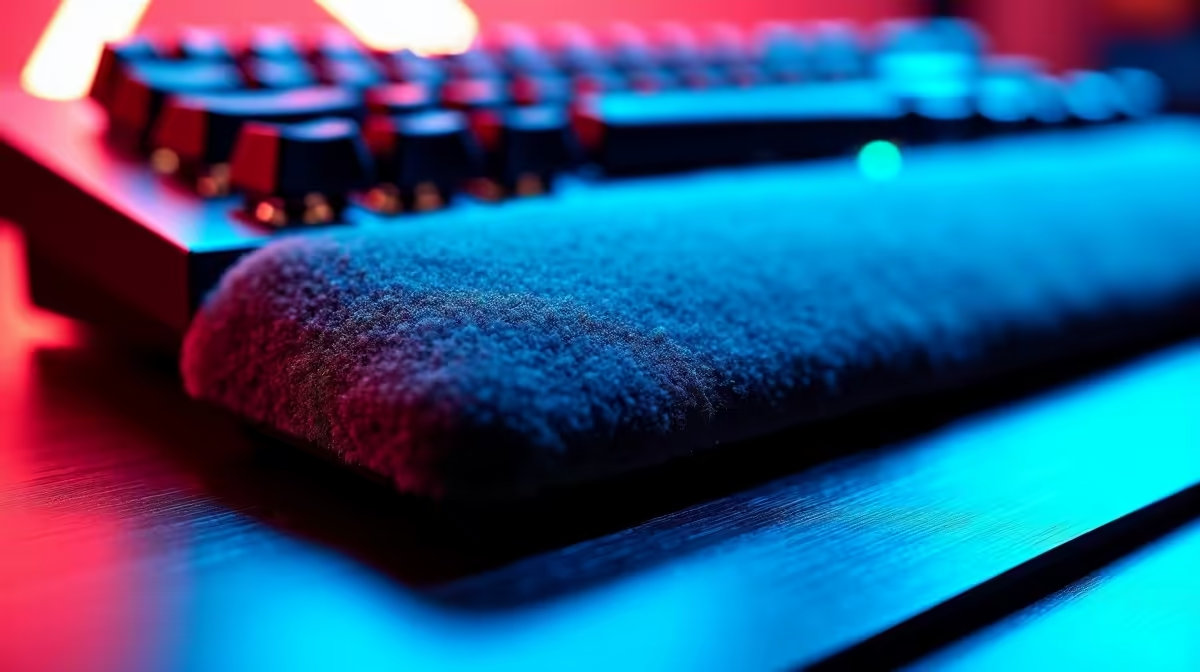
The average office keyboard sits on a hard desk surface, and for most of the day so do the wrists of the person using it. That combination, hard edge meeting soft tissue at the carpal area, creates a contact pressure problem that compounds over hours. Ergo-certified keyboards use cushioned memory foam palm rests because foam is the material most effective at relieving that pressure without introducing new biomechanical problems of its own.
Quick Answer
Memory foam moulds to the wrist shape and distributes load across a wider contact area, holding the palm heel at a neutral angle rather than over a hard edge. UL and TUV ergonomic certifications require padded wrist support because hard rests concentrate pressure at the carpal tunnel, which fails the contact-stress portion of certification testing.
🧠 Why Foam Beats the Alternatives
Wrist support materials fall into a few categories: hard plastic, gel, and memory foam. Hard plastic provides a fixed surface with no give, concentrating pressure at whatever angle the hand approaches. Gel conforms initially but compresses under sustained load, migrating from the contact point and reducing effective support height over a session.
Memory foam resists this. Its cell structure is slow to compress and slower to recover, holding shape under the steady load of a typing session rather than bottoming out. The slow rebound keeps contact pressure distributed consistently rather than concentrating at high points as the material flattens.
✨ The Neutral Posture Argument
UL and TUV test ergonomic peripherals against posture criteria. The key measurement for wrist support is whether the product keeps the wrist within roughly 10 degrees of a neutral flat position under typical typing loads.
When the wrist bends further than that, the tendons passing through the carpal tunnel are no longer sliding freely. They are working against the angle, increasing pressure inside the tunnel over time. A foam rest high enough to lift the palm heel while the wrist stays flat achieves the neutral posture certification requires. Hard rests that are too thin or too rigid allow the wrist to drop below neutral, which is why they typically fail the contact-stress criteria.
🔧 Foam Density in Practice
Density determines how quickly the material compresses and how long it holds position. Foam at around 50 kilograms per cubic metre is considered medium density. This range provides enough resistance to maintain posture support without feeling like pressing into a firm pad.
Low-density foam compresses too quickly and offers less sustained support by the afternoon. Very high-density foam resists conforming to individual wrist shapes and can feel stiffer than optimal for extended use. Medium density delivers consistent support across a full working day, which is why most certified products specify this range.
For South African coastal offices where humidity runs higher than inland, closed-cell foam resists moisture absorption better than open-cell variants, which soften unevenly over time.
🎯 Width, Length, and Matching the Keyboard
A palm rest should match or exceed the width of the keyboard it supports. A rest that is too narrow leaves outer fingers unsupported during wide key reaches, encouraging lateral wrist shifts that undermine the posture benefit.
Full-size keyboards with a numpad need longer rests than tenkeyless layouts. Contoured rests with a slight forward taper contact the palm heel rather than the mid-wrist. A flat strip that contacts the wrist itself places pressure over the carpal area, opposite of what certification testing requires.
Frequently Asked Questions
Why does foam work better than gel for a palm rest?
Gel provides early compliance but compresses under sustained load, losing effective height over a long session. Memory foam compresses slowly and rebounds slowly, keeping it in continuous contact with the wrist at a consistent height throughout the day. That steady support maintains the neutral posture that reduces carpal tunnel pressure.
Does the wrist itself rest on the palm rest while typing?
The heel of the palm should contact the rest, not the mid-wrist. Resting the wrist directly on any surface while actively typing places pressure on the carpal tunnel. The rest supports the palm during pauses between typing bursts, keeping the wrist flat so tendons glide freely.
Which certifications should I look for?
UL and TUV ergonomic certifications both include wrist contact-stress tests. A product that has passed these checks has been verified to hold the wrist in a neutral posture under typical typing loads. Products with no ergonomic certification may claim comfort benefits without independent verification of the posture claim.
What foam density gives the best long-session support?
Medium density at around 50 kilograms per cubic metre provides the most reliable combination of conformity and sustained support. Lower densities compress faster and offer less posture benefit by mid-afternoon. Higher densities resist conforming to individual hand shapes and can feel firmer than optimal for extended use.
Does palm rest width matter for a full-size keyboard?
Yes. A rest that does not span the full keyboard width leaves the wrist unsupported during reaches toward outer keys or the numpad. This causes lateral shifts that undermine posture. Choose a rest that matches or slightly exceeds the keyboard's total width.
Ready to set up a desk that keeps wrists comfortable through a full day? Browse the ergonomic keyboard and accessory range to find a certified setup with the palm rest support your posture requires.