


Quick Answer
A 360mm AIO cooler's key features are: radiator size (three 120mm fans), pump speed and motor type, cold plate material and design, fan RPM range and connector type, LCD or ARGB lighting on the pump head, and socket compatibility. Each feature affects thermal performance, noise, longevity, or aesthetics, and understanding which matters for your use case prevents overpaying for features you will never use.
Radiator, Cold Plate and Pump Explained 🔧
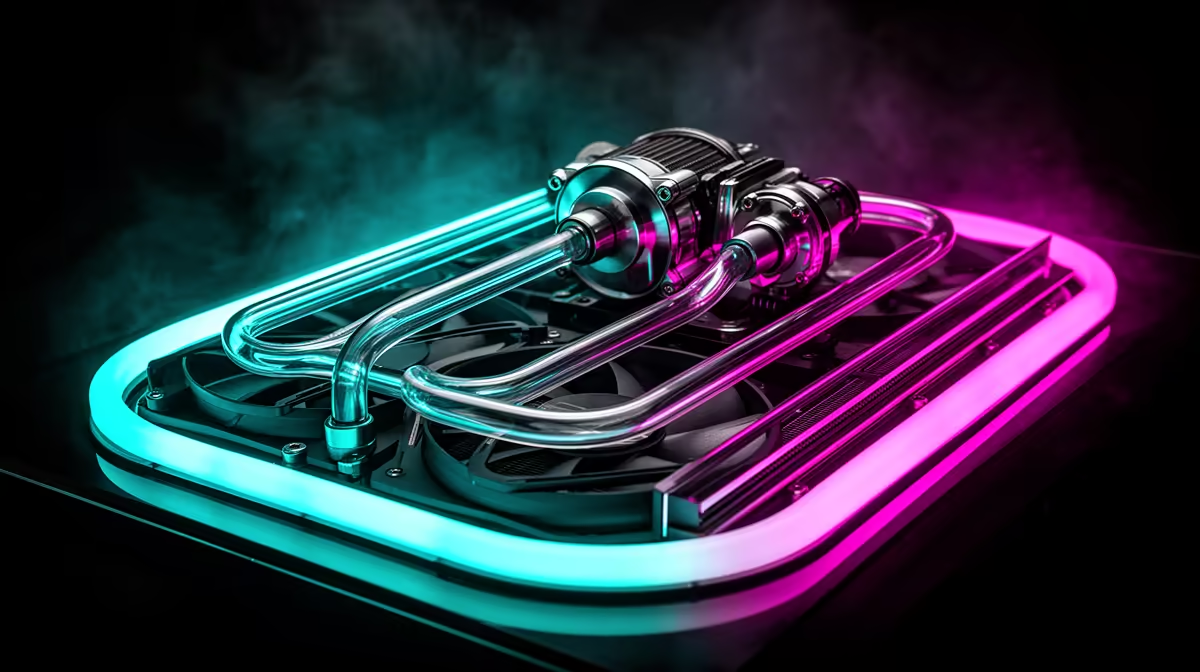
The 360mm radiator dissipates heat into the air pushed through it by three 120mm fans. Radiator thickness ranges from 20mm to 38mm; thicker radiators dissipate more heat but require more case clearance. The cold plate, which contacts the CPU lid, is typically copper, and premium units use micro-fin designs that extract heat more efficiently from high-TDP chips like the Ryzen 9 9950X. The pump drives coolant at 1 to 2 litres per minute on quality units. Three-phase pump motors deliver smoother, quieter operation than single-phase designs at equivalent flow rates, and are found on premium AIOs priced from R3,200 upward.
Fan Features That Actually Affect Performance 💨
AIO fans must push air through a dense radiator fin stack, requiring high static pressure. PWM (4-pin) fans are standard on quality units, allowing your motherboard to set precise speed curves based on CPU temperature. RPM ranges vary from 400 to 800 RPM at idle to 2,200 to 3,000 RPM at maximum load. Higher max RPM means more cooling capacity but more noise. Fan bearing type matters for longevity: fluid dynamic bearings (FDB) last longer and run quieter than sleeve bearings, particularly at the elevated temperatures inside a warm SA case in summer.
LCD Displays, ARGB Lighting and Software Ecosystems 💡
Premium 360mm AIOs often feature a colour LCD screen showing CPU temperatures or custom images, purely cosmetic from a thermal standpoint but useful for at-a-glance monitoring. ARGB lighting is controlled through the manufacturer's software (Corsair iCUE, NZXT CAM) or directly via your motherboard's ARGB headers. Software ecosystems vary in quality: some are lightweight, others resource-heavy. For SA builders who prefer a software-free setup, several 360mm AIOs support native Asus Aura Sync or MSI Mystic Light sync. Pricing ranges from R2,200 for solid non-LCD units to R5,000 for flagship LCD models locally at Evetech.
Check Radiator Thickness Against Your Case Spec ⚡
A 38mm-thick radiator plus 25mm fans equals a 63mm total stack. Some cases list 360mm radiator support but only with thin 20mm radiators. Measure from your mounting surface to the nearest obstruction before purchasing to avoid a fitment conflict that requires returning the cooler.
FAQ
What is the difference between a 360mm AIO and a 360mm custom loop?
A 360mm AIO is a sealed, factory-filled system requiring no maintenance beyond fan cleaning. A custom loop offers potentially better performance but requires annual coolant replacement, compatibility selection across pump, reservoir, and fittings, and significantly higher cost starting at R8,000 for quality components.
Does the pump head LCD affect temperatures at all?
No. The LCD generates a negligible amount of heat that does not meaningfully affect coolant temperature. Disabling the display in software does not change cooling performance.
How do I choose features for video editing in South Africa?
Prioritise pump quality, cold plate design, and fan maximum RPM over LCD displays and lighting. A 360mm AIO with a strong pump and high-pressure fans manages sustained DaVinci Resolve or Cinebench loads better than a showier unit with weaker specifications. Budget R2,500 to R3,500 for a performance-focused unit without unnecessary extras.
Want to match the right 360mm AIO features to your gaming or creative build? Evetech stocks 360mm AIO coolers across all feature tiers and budgets. Visit the cooling section on the Evetech site to compare specifications and find the right unit for your rig.










