


Quick Answer
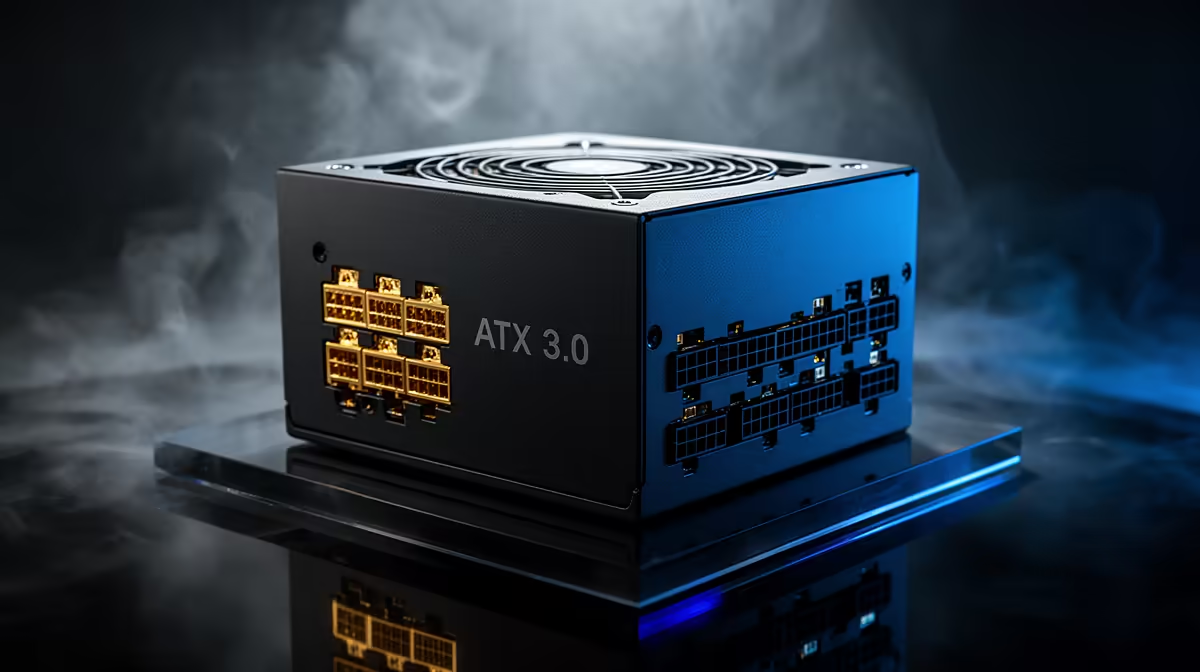
ATX 3.0 PSUs add five key features over ATX 2.x designs: native 16-pin 12VHPWR or 12V-2x6 GPU connector, improved transient response for GPU power spikes up to 200% TDP, tighter voltage regulation on the 12V rail, higher current density at the GPU output, and updated OCP (over-current protection) thresholds matched to modern GPU power requirements. Every one of these matters for stable operation with RTX 50-series and RX 9000-series graphics cards.
Native 16-Pin Connector and Transient Response 🔌
The 16-pin 12V-2x6 connector is the single cable connection for high-wattage GPUs on current platforms. The RTX 5090 uses this connector for its full 575W TDP delivery through a single cable interface. ATX 3.0 PSUs integrate this connector natively with 16AWG minimum conductors capable of continuous 600W throughput. The transient response requirement mandates that the PSU maintain regulated 12V output even during GPU power spikes of 200% the rated TDP lasting up to 100 microseconds. Practically, this means an RTX 5080 spiking to 640W from a 320W baseline does not cause the 12V rail to sag below tolerance, preventing the system shutdowns or GPU throttling that some users experienced with ATX 2.0 PSUs and RTX 4090 cards.
Tighter Voltage Regulation and Updated Protection Circuits ⚡
ATX 3.0 requires the 12V rail to stay within plus or minus 3% of nominal voltage (11.64V to 12.36V) under any load condition. ATX 2.0 allowed plus or minus 5% variance. This tighter tolerance matters for GPU VRM stability since high-end GPU VRMs use the 12V rail as primary input and are sensitive to voltage droop. Updated OCP thresholds in ATX 3.0 allow brief GPU transient spikes without triggering false overcurrent shutdowns, which was a reported failure mode with RTX 4090 adapters on legacy PSUs. Protection circuits also include revised OVP and UVP windows.
Efficiency Standards and South African Build Context 💰
Most ATX 3.0 PSUs carry 80 Plus Gold or Platinum ratings. In South Africa, ATX 3.0 PSUs are available from approximately R2,500 for 850W Gold units to R6,000 for 1,600W Platinum models. For RTX 5080 builds, an 850W ATX 3.0 Gold unit is the practical minimum. For RTX 5090 builds, a 1,000W unit provides the 40% headroom above peak system draw. ATX 3.1 adds additional ground pins to the 16-pin connector for better fault sensing and is the current standard on PSUs released from 2024 onward.
Check for ATX 3.1 Rather Than Just ATX 3.0 on New Purchases ⚡
ATX 3.1 is a refinement of ATX 3.0 that improves the 16-pin connector's sensing pins for better over-current fault detection. RTX 50-series cards use the ATX 3.1 12V-2x6 connector as standard, and PSUs marketed as ATX 3.1 natively support this. ATX 3.0 PSUs are electrically compatible but use the slightly earlier connector specification.
FAQ
Does an ATX 3.0 PSU work with older GPUs that use 8-pin PCIe connectors?
Yes. ATX 3.0 PSUs include the standard 6-pin and 8-pin PCIe connectors in addition to the 16-pin connector, maintaining full backwards compatibility with any GPU from the past decade.
Why did early RTX 4090 users have connector melting issues?
Early RTX 4090 units shipped with an adapter cable that combined four 8-pin PCIe connectors into one 16-pin 12VHPWR connection. Improper seating of any of the four plugs created resistance, which caused localised heating and melting at 450W draw. Native ATX 3.0 PSU cables eliminated this adapter chain entirely.
Is ATX 3.0 necessary for an RX 9070 XT build?
The RX 9070 XT uses a 220W TDP with standard dual 8-pin PCIe connectors on most board partner designs, not the 16-pin connector. An ATX 2.0 PSU is technically sufficient, but an ATX 3.0 unit still benefits the build through tighter voltage regulation and improved transient response.
Building a high-end GPU system in South Africa? Evetech stocks ATX 3.0 and ATX 3.1 PSUs with 850W to 1,600W options, all with local warranty and compatibility details for current RTX and RX GPU platforms.










