Quick Answer
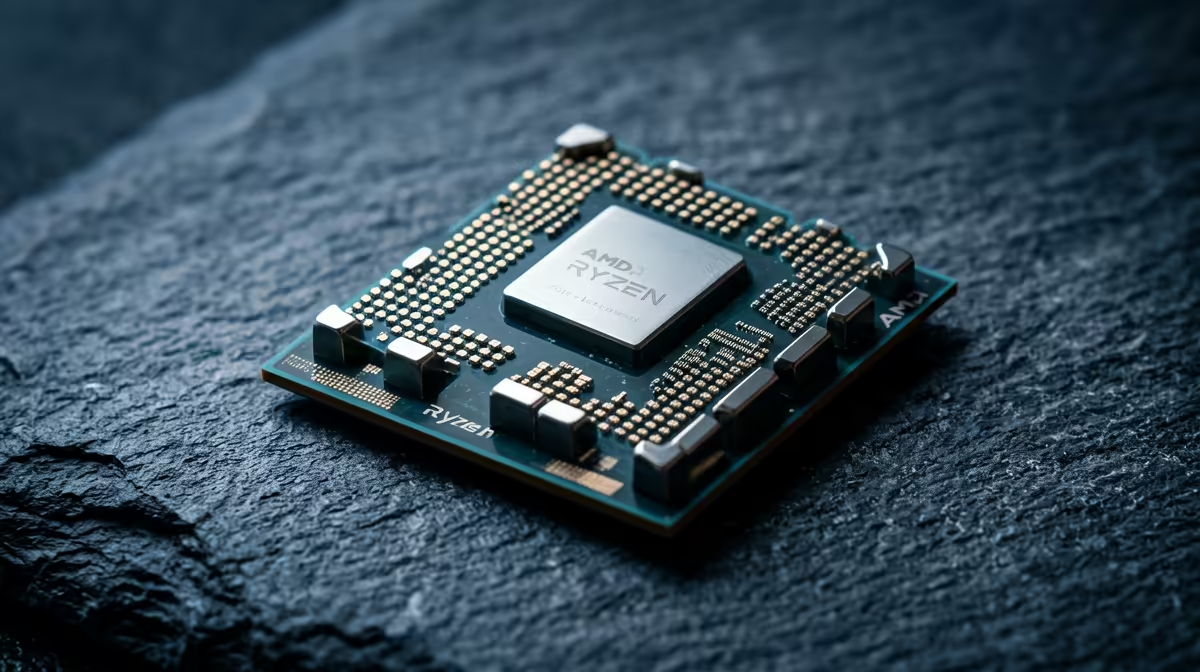
Across the X3D Ryzen family the gaming order is simple: 9800X3D fastest, 7800X3D best value, 7950X3D for gamers who also create. All three use 3D V-Cache to lead in CPU-bound games, and all run on AM5 with DDR5-6000. For most SA gamers the 7800X3D is the buy.
How The X3D Chips Differ
The 7800X3D and 9800X3D are both 8-core parts; the 9800X3D adds newer architecture and higher clocks for a modest lead in averages and stronger overclocking. The 7950X3D doubles the core count to 16, splitting them across cache and frequency dies, which suits people who render or stream heavily alongside gaming.
For gaming alone the extra cores of the 7950X3D rarely help, since games seldom use more than eight. That makes the cheaper 8-core X3D chips the rational pick unless your workload is genuinely multi-threaded.
Platform And Cooling Notes
Every X3D chip needs an AM5 board and DDR5. A B650 board plus a 32GB DDR5-6000 kit is the value pairing; X670E only matters for heavy expansion. These chips are heat-sensitive, so a 240mm AIO or premium air cooler keeping them under 80C protects sustained boost. AM5's long support window means an X3D buy today leaves room to upgrade later on the same board.
FAQ
Is the 7950X3D better for gaming than the 7800X3D?
Not meaningfully. Games rarely use more than eight cores, so the 7950X3D's extra cores sit idle while gaming. Its advantage is mixed creator-plus-gaming workloads.
What makes X3D chips faster in games?
The stacked 3D V-Cache holds more game data close to the cores, reducing memory latency. This lifts minimum frame rates most in simulation, strategy and racing titles.
Can I use my current AM5 board with an X3D chip?
Most B650 and X670 boards support X3D parts after a BIOS update. Confirm the board's CPU support list, then update the BIOS before installing the chip.
8-core 7800X3D or 9800X3D for gaming and put the saving over a 16-core part toward a faster GPU, which lifts frame rates more.