Quick Answer
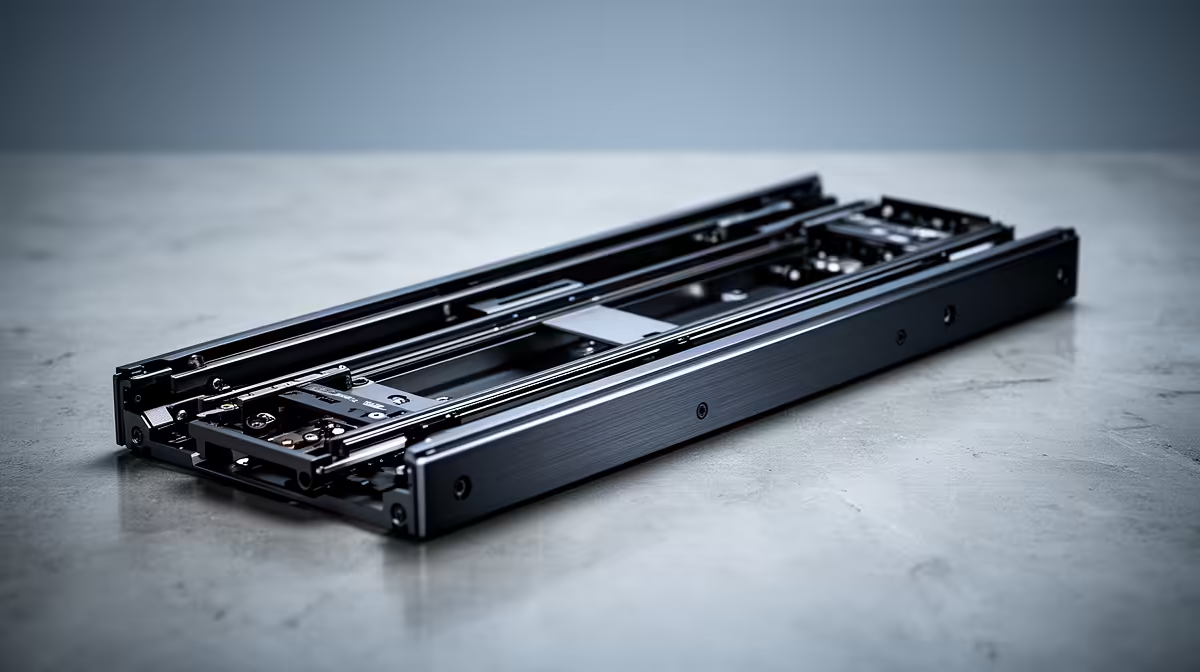
A modular sliding motherboard tray lets you install and cable your motherboard outside the case chassis, then slide the populated tray back in as a single unit, cutting build time significantly and making motherboard swaps far less frustrating.
The Practical Difference a Sliding Tray Makes 🔧
Traditional case builds require you to reach around mounted drives, radiators, and cable bundles to secure standoffs and route power cables. A sliding tray changes the workflow entirely. You mount standoffs on the tray, seat the motherboard, route the 24-pin ATX cable, and connect CPU power before the tray ever enters the chassis. Once the tray slides in and locks, only the final fan, radiator, and front-panel connections remain. Lian Li's modular cases use this approach in their O11 Air Mini and EVO series, allowing the motherboard tray to detach via thumb screws. For builders upgrading from an older platform, say swapping an AM4 board for an AM5 board to pair with a Ryzen 7 9700X, the tray means the swap takes 45 minutes rather than a two-hour wrestling match.
Cable Management Gains from a Removable Tray 💡
With the tray out of the chassis, both sides of the board are accessible simultaneously. You can pre-route cables through grommets and zip-tie them on the back of the tray before the board goes in. This produces the kind of clean cable routing that normally takes an experienced builder two hours of frustration inside a mounted chassis. For a showcase build with tempered glass panels, clean rear cabling is not optional; it is the difference between a build that looks R30,000 and one that looks R15,000 regardless of what the components cost.
Compatibility and Limitations to Know 🖥️
Sliding motherboard trays work best in full-tower and large mid-tower chassis. Compact mid-towers sometimes advertise removable trays but the slide rail is too short to fully expose the board. Always confirm the tray extends far enough to access all standoff positions before buying. Modular trays also add a small amount of weight to the chassis floor, so ensure your desk or floor stand can handle a case that may weigh 15 kg to 20 kg fully loaded with a 420mm radiator and multiple drives.
Pre-Build Your Tray First ⚡
Mount and torque all motherboard standoffs onto the tray before you open any component boxes. This single step prevents the frustrating situation of discovering you have the wrong standoff height after your cooler is already seated. Standard ATX standoffs fit most SA-stocked full-tower cases.
FAQ
Which case brands offer the best sliding motherboard tray systems in SA?
Lian Li, Phanteks, and Fractal Design are the most common brands stocked locally with genuine modular tray systems. Confirm the tray slides on rails rather than just detaching as a flat panel, since a rail system stays level and prevents the board from flexing during reinsertion.
Does a modular tray work with E-ATX boards?
Some modular trays are rated only for ATX and smaller. E-ATX boards (typically 305mm x 330mm) need a tray that explicitly supports the wider format. Check the case spec sheet for the maximum motherboard size before purchasing.
Can I upgrade just the motherboard tray if my current case does not have one?
No. Modular sliding trays are integrated into the case chassis design; they are not a retrofit accessory. If you want this feature, you will need a new case with the system built in.
Want to make your next build cleaner and faster?
Evetech stocks modular and full-featured PC cases from trusted brands, all available for delivery or collection across South Africa.