Plug a portable monitor in over HDMI and it lights up; swap to the single USB-C cable and the screen stays black. That mismatch is one of the most confusing faults a portable display throws at you, and the good news is that the portable monitor itself is almost certainly fine. The fault sits in what your laptop's USB-C port can and cannot send.
Quick Answer
If HDMI works but USB-C stays blank, your laptop's USB-C port most likely lacks DisplayPort Alt Mode, the feature that lets a USB-C port carry video. The working HDMI image proves the monitor is healthy. Either keep using HDMI or add a DisplayLink adapter to push video through a port that cannot do it natively.
Why HDMI Works but USB-C Does Not
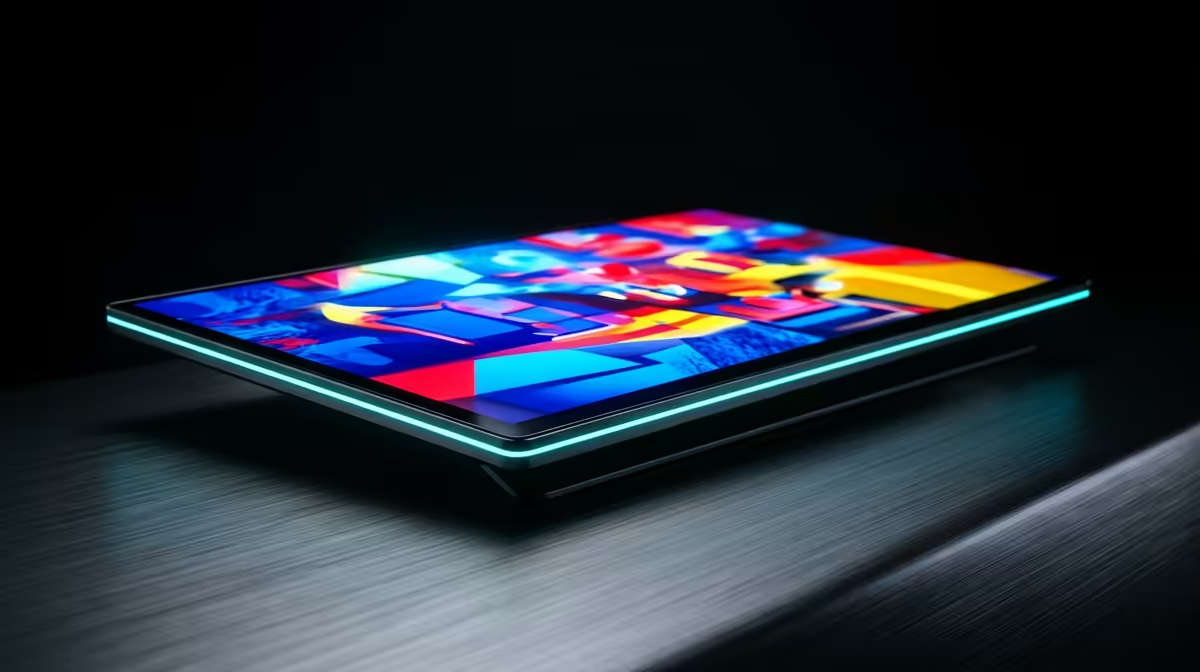
A portable monitor can usually take video two ways. The HDMI input is a dedicated video connection, so if it shows a picture, the panel, the backlight and the monitor's electronics are all working. That single fact rules out a faulty monitor.
USB-C is different. The port is a shape, not a guarantee of features. For a USB-C cable to carry video, the laptop port must support DisplayPort Alt Mode, which reroutes some of the connector's wires to send display data. Plenty of laptops have USB-C ports that only handle data and charging. Plug your monitor into one of those and you get power but a blank screen.
If you are shopping for a display that travels well, the portable monitor selection at Evetech lists the connection types each model supports so you can match it to your laptop.
How to Confirm the Cause
Before assuming the worst, run two quick checks. First, swap the USB-C cable, because some cables carry only power and data, not video, even when both ends fit. Try one known to support video, ideally the one that shipped with the monitor. If a different cable works, the cable was the culprit.
Second, check your laptop's specifications for DisplayPort Alt Mode, sometimes shown as a small DisplayPort logo beside the port. If the spec sheet makes no mention of video over USB-C, that confirms the port cannot do it.
The Fixes That Actually Work
Once you know the port lacks video, you have two clean paths forward.
The simplest is to keep using HDMI. Since the HDMI input already works, an HDMI cable from the laptop, or an HDMI adapter, gives you a reliable picture with no extra fuss. For many people this is the end of the story.
The second is a DisplayLink adapter. DisplayLink is a technology that sends video over plain USB using a driver and a small chip rather than relying on the port's native video support. Install the DisplayLink driver, connect the adapter, and you can drive the monitor through a USB-C or USB-A port that has no DisplayPort Alt Mode of its own. It adds a software layer, so it is best for productivity rather than fast gaming, but it solves the blank-screen problem entirely.
Choosing Between Them
Use HDMI if your laptop has a spare HDMI output; it is the most direct route. Reach for a DisplayLink adapter if you want single-cable USB convenience or your laptop has no usable video output at all. To compare panels and connection options, the most popular monitors at Evetech are a useful reference point.
Frequently Asked Questions
Why does my portable monitor show HDMI but not USB-C?
The HDMI image proves the monitor works. A blank USB-C screen means your laptop's USB-C port lacks DisplayPort Alt Mode, the feature needed to carry video over USB-C, so the port can only deliver power and data.
How do I know if my laptop port supports video over USB-C?
Check the laptop's specifications for DisplayPort Alt Mode, sometimes marked with a small DisplayPort logo beside the port. If video over USB-C is not listed, the port cannot output a display signal natively.
What is a DisplayLink adapter?
It is a device that sends video over standard USB using a driver and a dedicated chip, rather than relying on the port's built-in video support. It lets you drive a monitor through a port that has no DisplayPort Alt Mode.
Is DisplayLink good enough for gaming?
It is best suited to productivity, browsing and office work because it adds a software processing layer. For fast-paced gaming, a native HDMI or DisplayPort Alt Mode connection is the better choice.
Want a portable monitor that connects cleanly to your specific laptop? Browse the portable monitor range at Evetech and check the supported inputs before you buy.