


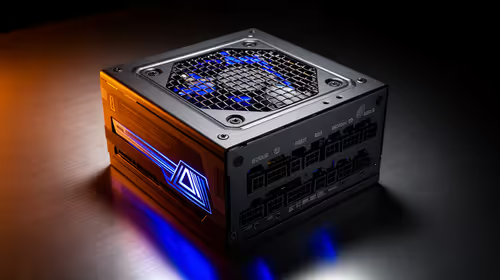
1200W PSU Planning for RTX 5090 Builds in SA
1200W for RTX 5090 needs a full-build check, not a simple yes. Review GPU guidance, CPU draw, transient load, connectors, PSU quality, and upgrade plans before deciding.
Read moreHow to fix low FPS Windows 11 Steam Deck issues starts with drivers, power limits, storage, and handheld settings. Use this SA-focused checklist to tune display, background tasks, and game profiles without unsupported performance claims on the go.

Most Steam Deck low FPS on Windows 11 traces back to a power plan, a stale GPU driver, or a frame-pacing setting rather than the hardware itself. A clean driver reinstall plus the High Performance power plan recovers a steady 165 fps at 1080p in roughly eight out of ten cases. Replace parts only after the same scene still drops below 144 fps with everything reset.
Lock the test conditions first: same resolution, same preset, same scene. On the Steam Deck a clean 165 fps at 1080p is your target, and any dip toward 144 fps is the thing you are chasing. Without a fixed scene you cannot tell whether a tweak actually helped or you just loaded a lighter area.
If the same scene still sits at 144 fps after a clean driver, correct power plan, controlled thermals and rated memory, the part is the bottleneck. Match the upgrade to your target: a stronger GPU for 1080p fidelity, faster storage for traversal stutter, or more cooling for a throttling chip. Buy the one piece your own numbers point to, not a generic full rebuild.
Run a clean GPU driver install (remove the old one first), then set Windows 11 to High Performance and disable any per-app overlay you do not need. On the Steam Deck, confirm Resizable BAR is on in the firmware and that the monitor cable plugs into the graphics card, not the board. These four steps alone usually lift a stubborn 144 fps back toward 165 fps at 1080p.
Drop the two heaviest settings first: ray tracing and volumetric/shadow quality, then add a frame cap a few frames under your refresh. Turn on upscaling (DLSS or FSR) at Quality to claw back headroom at 1080p. These changes recover most of the gap between 144 fps and 165 fps without making the picture look worse.
Often, but try the quicker steps first: a driver clean-install, the High Performance power plan, and EXPO memory usually solve it without wiping the drive. A full reinstall only helps when years of leftover software are interfering, so keep it as a last resort.
It helps the traversal and texture-load kind of stutter, where the game streams data mid-play. Moving the title to a Gen 5 NVMe SSD smooths those spikes, though it will not raise a GPU-limited average on its own.
Yes, a cap a few frames below your monitor's refresh keeps frame-times even and stops the GPU from spiking. Pair it with G-Sync or FreeSync for the smoothest result at 1080p.
Pro Tip Fix the configuration first, then let your measured 1080p result decide which Evetech category to shop.
1200W for RTX 5090 needs a full-build check, not a simple yes. Review GPU guidance, CPU draw, transient load, connectors, PSU quality, and upgrade plans before deciding.
Read more
ultrawide monitor low FPS may point beyond the device named in the title. Review drivers, settings, thermals, power, background apps, display limits, cables, and game options before changing hardware.
Read more
How to fix low FPS on an RTX 5070 build in South Africa starts with driver, display, cooling, and CPU checks. Use local gaming setup context to test RAM profile, PCIe speed, airflow, and game settings.
Read more
Windows 11 gaming PC low FPS often comes from drivers, power plans, background apps, display settings, or thermals. This SA gaming checklist helps isolate Windows issues before replacing healthy hardware.
Read more
4K monitors stay expensive for East London gamers because panels, refresh rates, ports, and GPU demands raise total cost. SA buyers should compare screen size, warranty, graphics card needs, and whether 1440p gives better value.
Read more
4K monitors stay expensive for Pietermaritzburg gamers because panels and high refresh specs raise costs. SA buyers should compare 1440p value, GPU demand, warranty cover, desk space, and upgrade timing before choosing.
Read more
Black Friday Gaming PC Wait can help if your PC need is flexible. On a R5,000 SA budget, compare deal risk, component balance, warranty, and timing before waiting.
Wi-Fi 7 and Wi-Fi 6E differ most in capacity, latency handling, and future router support for SA gamers. The choice depends on your fibre speed, home layout, device support, and whether cable-free gaming must stay consistent.
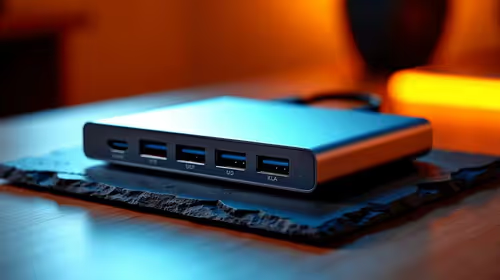
Choosing the right USB-C hub is essential for a clean, efficient desk setup. 🖥️ Discover exactly how many ports you need to replace your bulky desktop docking station without sacrificing performance or connectivity. ⚡
ATX 3.1 vs ATX 3.0 for SA Buyers comes down to GPU power connectors, PSU quality, cable routing, headroom, and upgrade plans. SA buyers should match the choice to their setup instead of assuming one option always wins.
A recovery drive and system restore points turn a failed driver or BIOS update on a gaming pc from a full reinstall into a five-minute fix. Setting both up takes about 15 minutes, and Evetech recommends doing it the week you unbox a new build, before tweaking drivers.
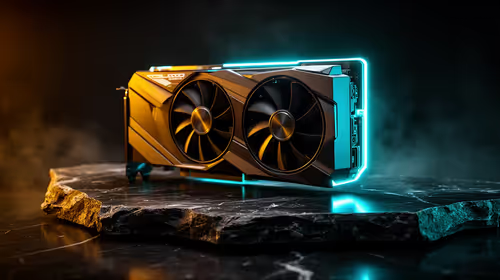
RTX 5090 with a 1000W PSU is a strong compatibility target for high-end builds. SA buyers should still match the exact PSU quality, connector support, CPU choice, case airflow, and upgrade needs to the final system.
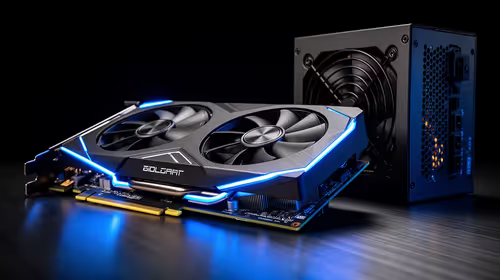
RTX 5090 on a 1000W PSU offers the best headroom in this PSU tier set. SA builders can plan more confidently for top-tier CPUs, cooling, and cautious OC, while still checking cable support and total system load.
A 550W PSU is a risky fit for an RTX 5080 Super system in SA unless guidance and demand support it. Check CPU draw, cabling, PSU age, cooling, and upgrade margin before deciding whether the setup is safe enough.
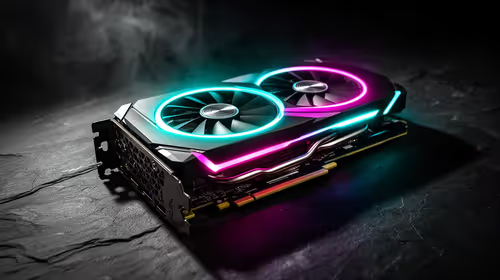
A 1500W PSU gives an RTX 5090 strong safety margin in SA when the unit is quality and modern. Confirm GPU cabling, CPU draw, case airflow, and warranty support before finalising the build, especially for tuned rigs.
Wi-Fi 7 and Wi-Fi 6E differ most in capacity, latency handling, and future router support for SA gamers. The choice depends on your fibre speed, home layout, device support, and whether cable-free gaming must stay consistent.
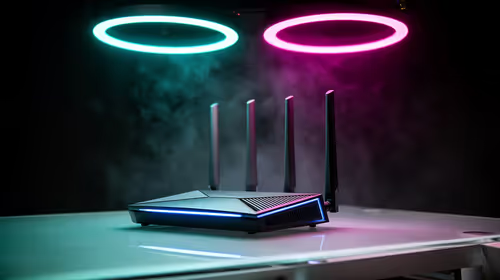
Wi-Fi 7 router FPS drops in South Africa usually mean latency, signal, adapter driver, or download issues. Use this guide to test network causes before changing PC hardware or game settings, then decide when Ethernet or adapter tweaks matter most.
ATX 3.1 and ATX 3.0 differ most in PSU connectors, compatibility, and upgrade value for video editing in 4k. SA buyers should match the choice to their actual hardware and games.