


550W PSU Planning for RTX 5080 Super Builds in SA
550W for RTX 5080 Super needs a full-build check, not a simple yes. Review GPU guidance, CPU draw, transient load, connectors, PSU quality, and upgrade plans before deciding.
Read moreUse a VESA 75x75 arm only when the monitor hole pattern, load limit and hardware all match. Plan cable movement and arm clearance before fitting an 18.5in portable display.
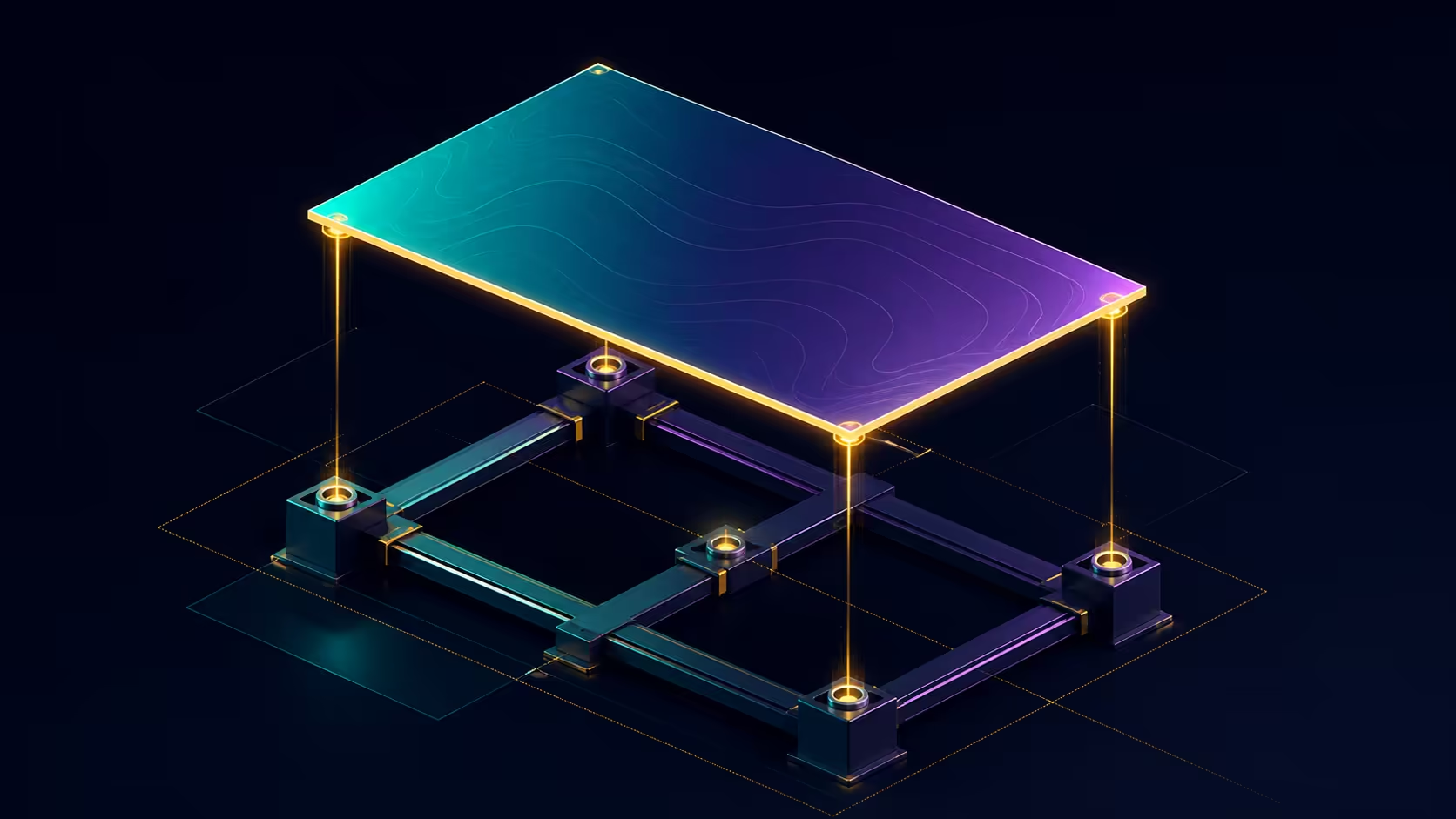
A mounting arm is a mechanical system, not a promise hidden inside a screen-size label. Planning a VESA 75x75 portable monitor mount starts with pattern, hardware, load and clearance checks before the display is brought near the desk.
The monitor's VESA 75x75 pattern supports an appropriate arm, while its 2.79-pound weight keeps the mounting load modest for a portable 18.5-inch display.
A VESA 75x75 arm should be used only after the exact monitor's mounting support, hole spacing, screw requirements and the arm's load limits are confirmed. The R2,499 UPERFECT UGame NxtLED One Plus is an 18.5-inch FHD display, but its panel size alone does not prove VESA compatibility.

VESA 75x75 describes a square hole pattern measuring 75mm between mounting points. That measurement does not establish thread type, screw depth, recess shape or the presence of suitable attachment points on a particular portable screen.
Inspect the rear of the exact unit and its instructions. If the pattern is not explicitly supported, do not treat holes, covers or case features as substitutes. An adapter plate also needs documented compatibility with the screen and the arm.
Measure the mounting area around the pattern. A plate can match the spacing yet cover controls, vents or connection access. Put every required cable into the drawing before choosing hardware.
The Evetech monitor accessories category can be considered once the pattern and support method are known.
Arm capacity must cover the monitor, any adapter plate and attached equipment. Do not use diagonal size as a weight estimate. Obtain the actual assembled load and keep it within the arm maker's permitted range.
Check the lower limit as well as the maximum. Some spring arms are designed for heavier screens and may rise when a light load is attached. The joint should hold position through the intended height and tilt range without excessive tightening.
Desk strength and clamp position complete the load path. A narrow surface, hollow panel or obstructed edge may need a different mounting method. Inspect beneath the desk before purchase rather than discovering a frame or cable tray during installation.
Lay out the monitor, plate, fasteners and arm on a protected surface. Verify screw engagement against the specified depth and never force a fastener that binds. Hardware that is too long can damage a display even when the thread diameter appears correct.
Support the screen while the tension is adjusted. Move the arm slowly through height, reach and rotation, watching for unexpected drift. The 18.5-inch panel should clear the desk, wall and nearby equipment throughout that arc.
Cable loops need enough slack for movement without pulling on the display. Route them after the arm position is proven, then repeat the full movement with the source connected.
The NxtLED One Plus uses an IPS panel with 178-degree viewing. That broad specified viewing range does not remove the need to place the screen squarely for the user's chair, working distance and room lighting.
The screen's paper-like finish is low-glare, with Omni Visible adding its own anti-glare treatment. The actual room still determines placement, so aim direct bright sources away from the display.
Browse portable monitor options at Evetech when a different size or support requirement would make the desk plan easier. Retighten only according to the arm instructions after the final position passes the stability test.
Mounting should preserve the panel's main strengths. Leave the view unobstructed so Omni Visible can maintain consistent colour and brightness across its 178-degree field, and avoid pressure on the slim three-sided bezel. The textured rugged build is intended for repeated portable use, but the arm still needs its own capacity and fasteners. Keep the included case for travel after the screen leaves the desk mount.
Set the arm height so the top of the screen and normal sightline encourage a neutral posture. The 178-degree panel preserves the picture when a nearby collaborator approaches from the side.
It identifies the distance between four mounting points. It says nothing by itself about threads, screw depth or monitor support.
No. The adapter must be designed for the exact display and arm while preserving load capacity, controls and cable clearance.
A spring mechanism built for heavier screens may not hold a lighter assembly at the chosen height or angle.
Route them after the arm's movement has been tested, leaving enough slack to avoid pulling on the monitor connectors.
Ready to design the mount around measured fit rather than guesswork? Confirm the interface and moving load, then explore portable monitors and suitable desk hardware at Evetech.
It identifies the distance between four mounting points. It says nothing by itself about threads, screw depth or monitor support.
No. The adapter must be designed for the exact display and arm while preserving load capacity, controls and cable clearance.
A spring mechanism built for heavier screens may not hold a lighter assembly at the chosen height or angle.
Route them after the arm's movement has been tested, leaving enough slack to avoid pulling on the monitor connectors.
550W for RTX 5080 Super needs a full-build check, not a simple yes. Review GPU guidance, CPU draw, transient load, connectors, PSU quality, and upgrade plans before deciding.
Read more
8000Hz polling is overrated for most SA gamers because gains can be tiny next to battery drain and monitor limits. Mbombela players should weigh mouse feel, game support, and system stability before chasing the number.
Read more
Magnetic switches are taking over SA gaming keyboards because actuation can be tuned. For Sandton gamers, rapid trigger, reset control, and profile depth can help, but layout, key feel, and software quality still matter.
Read more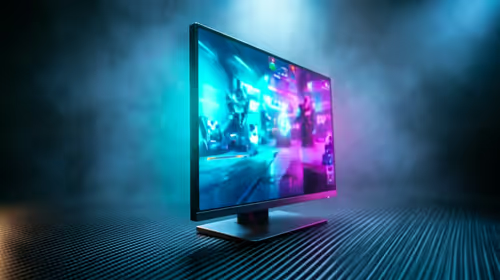
Polokwane oled monitor value questions need cautious SA context because pricing can move with availability, exchange rates, specs, and warranty support. Treat the trend as a planning signal, not a fixed price promise.
Read more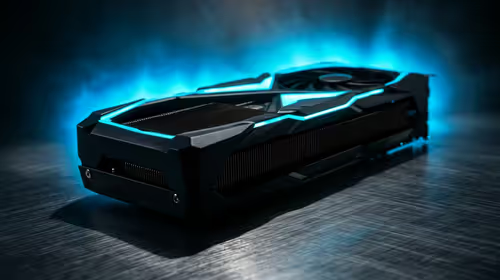
Arc B580 budget builds for Midrand gamers can shift with exchange rates, supply, specs, and model tier. Treat the title as a buying prompt, then compare SA warranty, timing, and build priorities.
Read more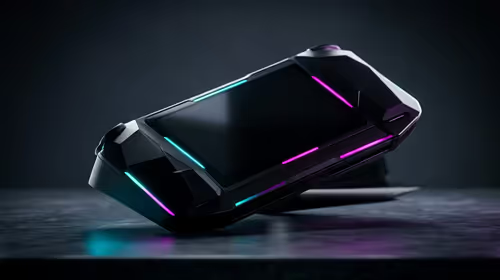
ROG Ally X may beat the LCD Steam Deck for SA gamers who value stronger handheld performance, more memory, and Windows flexibility. Compare battery life, controls, game libraries, and Polokwane support needs before deciding.
Read more
Minisforum's M2 Pro pairs Core Ultra X7, Arc B390 graphics and 32GB onboard memory in 1.8 litres. SA buyers should weigh its fixed memory and $1,439 launch offer against local mini PCs.

Lenovo says Legion Go failures linked to BIOS N3CN42WW are not user error. Affected SA owners should stop retrying the update, preserve proof and open a support case.

Smart monitors can add apps and convenience, but they also add privacy settings and unwanted-software risk. SA buyers should audit the operating system before paying for extras.

A fake 113GB GTA VI ISO reportedly used empty padding around a small malware payload. SA gamers should delete unofficial builds, keep Windows security active and wait for official channels.
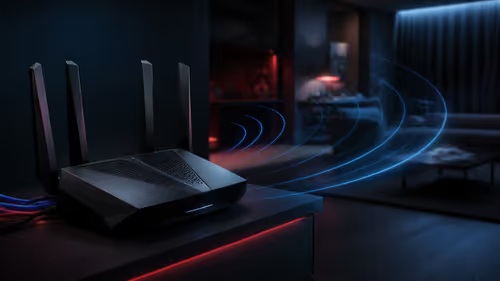
ASUS calls the ROG GT-BN98 the first Wi-Fi 8 gaming router. SA buyers should fix coverage and client limits before paying for a future wireless standard.
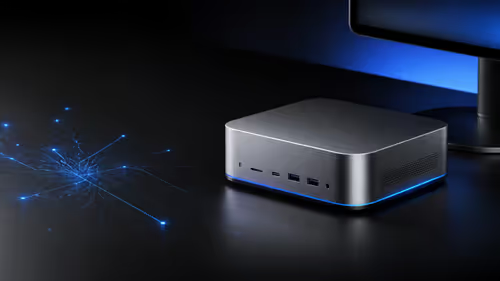
Apple's M6 Mac mini adds faster AI, graphics and networking in the same compact format. SA buyers should wait for a rand listing before comparing value.
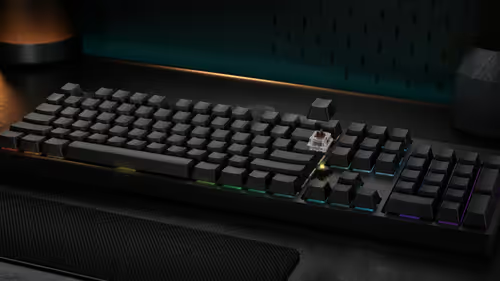
The Vulcan II XP adds hot-swappable switches, sound damping and gaming controls to a full-size wired board. SA buyers should compare feel before features.

Microsoft says Windows on Arm now has over 7,000 verified apps and games. SA buyers should still check each driver, game and work tool before switching.
550W for RTX 5080 Super needs a full-build check, not a simple yes. Review GPU guidance, CPU draw, transient load, connectors, PSU quality, and upgrade plans before deciding.
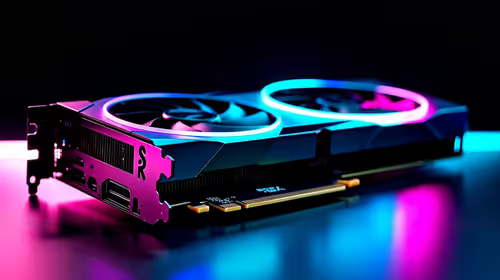
Skyrim HD texture packs that actually run on RX 9070 helps SA readers plan hardware, settings, compatibility, and upgrade trade-offs. Check GPU, CPU, RAM, storage, monitor, and stability needs without risky performance claims.
8000Hz polling is overrated for most SA gamers because gains can be tiny next to battery drain and monitor limits. Mbombela players should weigh mouse feel, game support, and system stability before chasing the number.
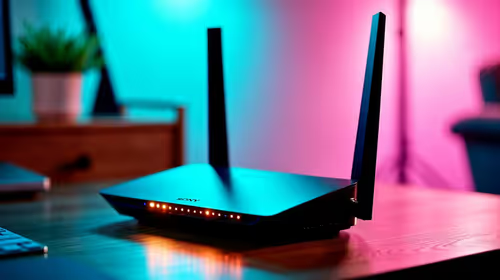
Wi-Fi 7 or Wi-Fi 6e for streaming on twitch and youtube should be judged by fit, not a single winner. Compare compatibility, latency, capacity, upgrade path, cost planning, and South African setup needs.