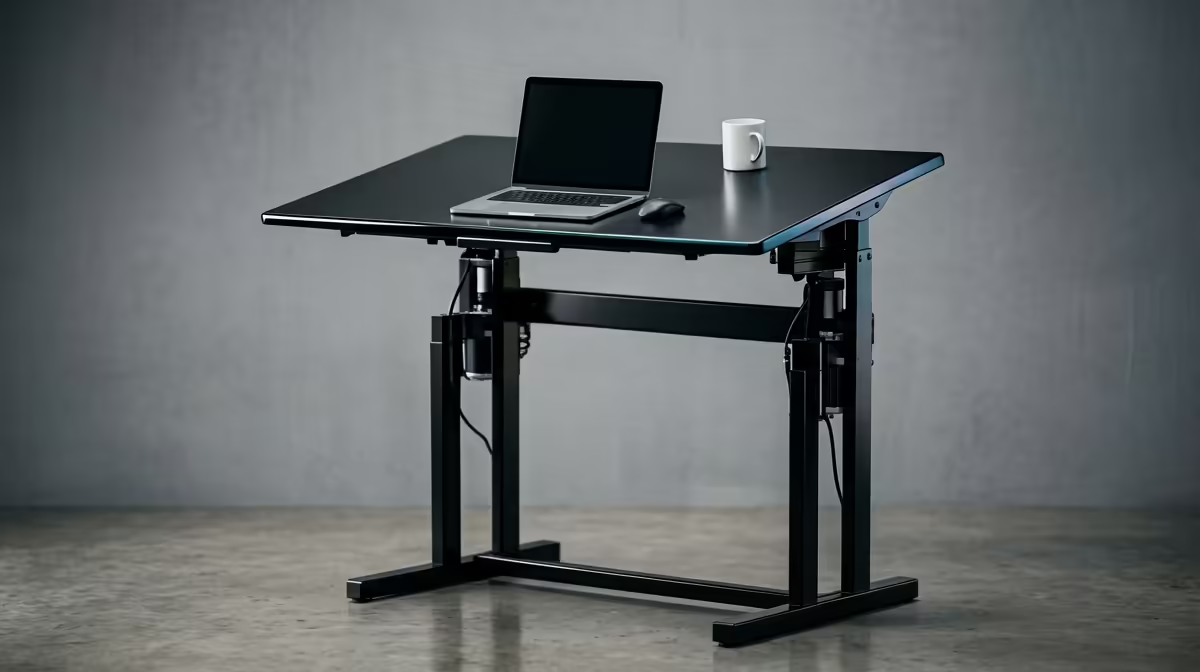
A desk that feels rock solid at sitting height can turn into a trembling tower the moment you raise it to standing, and the wobble is not a defect so much as physics. A standing desk at full extension behaves like a long lever, so the tiniest play in the legs or an uneven foot gets amplified into noticeable sway. The good news is that the three fixes that actually work cost almost nothing.
Quick Answer
Standing desk wobble at full height usually comes down to three things: loose frame and foot bolts, an uneven floor under one of the feet, and a frame with no cross brace to resist twisting. Tighten every bolt, level all four feet so each one carries weight, and add a crossbar if the frame lacks one. Done together, these cut the sway dramatically.
Why It Gets Worse the Higher You Go
The telescoping legs that let the desk rise are stacked tubes, and the higher you extend them, the less overlap there is between segments. Less overlap means more joint play, and at standing height the whole column acts as a tall lever, so a hint of looseness at the joint becomes obvious sway up at the worktop. That is also why a desk can feel perfectly stable seated and spongy when raised: nothing broke, the leverage just changed.
The Three Fixes, In Order
Start with the cheapest and most common culprit before reaching for hardware.
Tighten everything. Daily raising and lowering vibrates fasteners loose over weeks, and a desk that was once solid often just needs its bolts retorqued. Work around the frame and the feet methodically and snug every bolt, paying special attention to where the legs meet the worktop and the foot plates. This alone fixes a surprising number of cases.
Level the feet. This is the single most overlooked cause. Even a millimetre of difference between feet leaves one corner unsupported, and at standing height that gap turns into a rock. Most standing desks have adjustable levelling glides on each foot. Use a spirit level on the worktop and turn each glide until all four feet carry weight and the top sits even in every direction.
Add a cross brace. If the frame has no crossbar connecting the legs, it has little resistance to twisting, what stability guides call racking. A crossbar ties the legs into a closed, rigid frame and adds torsional stiffness, so side-to-side sway drops noticeably. Many frames offer one as an add-on, and it is the most effective hardware fix when bolts and levelling are not enough.
Watch the Floor Underneath
Where the desk stands matters as much as the desk itself. On thick carpet the levelling glides sink into the pile, which acts like a spring and amplifies every movement. A hard, flat surface is ideal, and on carpet a rigid mat or board under the feet gives the glides something solid to push against. On an uneven tiled or wooden floor, the levelling step above is what closes the gaps.
When the Desk Itself Is the Limit
If you have tightened, levelled, braced, and sorted the floor and a heavy entry-level frame still shimmies under a loaded worktop, the frame may simply be underbuilt for the weight you are putting on it. A sturdier frame with a wider footprint and a built-in crossbar is the long-term answer, and it is worth browsing the gaming and ergonomic desk range at Evetech when you plan an upgrade. The best-selling desk accessories at Evetech are also useful for rounding out the workspace once the frame is sorted.
Frequently Asked Questions
Why is my desk steady when sitting but wobbly when standing?
The telescoping legs overlap less at full height and act as a long lever, so any small joint play is amplified at the top. Nothing is broken, the leverage simply increases as the desk rises.
Does a crossbar really make a big difference?
Yes. A crossbar links the legs into a rigid closed frame and resists the twisting motion that causes side-to-side sway. It is the most effective single hardware fix once your bolts are tight.
Could it just be loose bolts?
Very often, yes. Daily height changes vibrate fasteners loose over time, so a once-stable desk frequently just needs every frame and foot bolt retightened before you try anything else.
How do I level the feet correctly?
Put a spirit level on the worktop and adjust each glide in turn until all four feet bear weight and the top reads level in every direction. A single unsupported foot is the most common overlooked cause of wobble.
Will a desk mat on carpet help?
It can. Carpet pile lets the glides sink and acts like a spring that amplifies movement, so a firm mat or board under the feet gives them a solid base and reduces the rocking.
If tightening and levelling are not enough, a sturdier frame solves it for good. Browse stable standing desk options in the gaming and ergonomic desk range at Evetech and build a workspace that stays still when you stand.