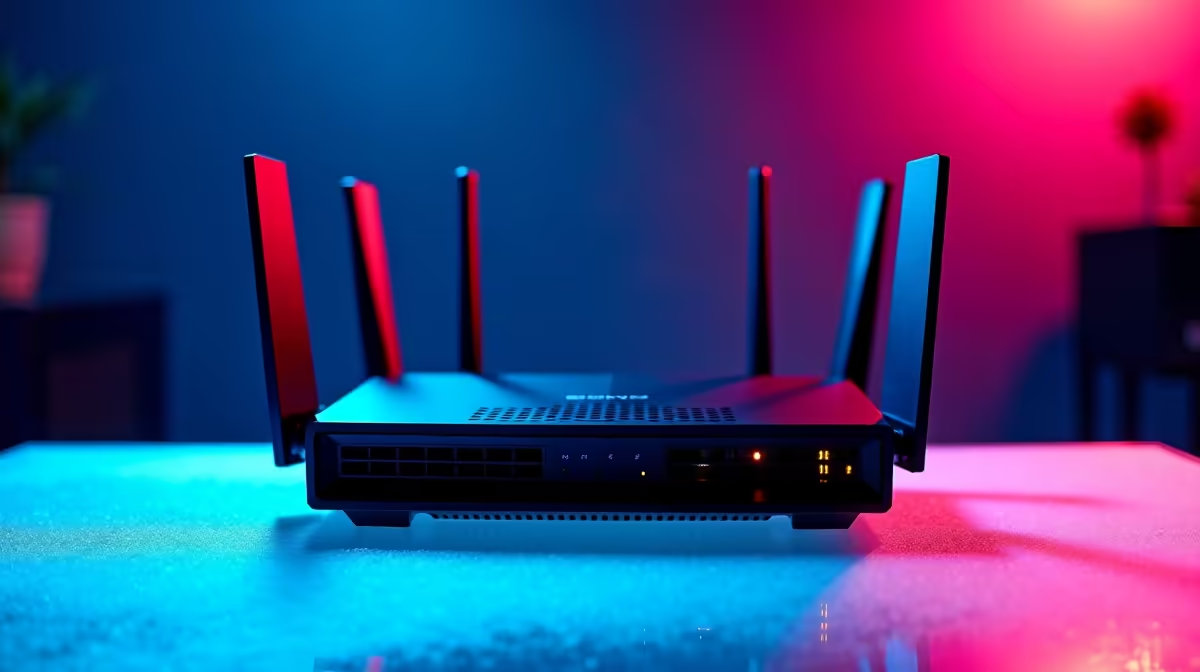
The difference between a 5G home connection that flies and one that stutters often comes down to where the antenna sits, not which plan you bought. Indoor versus outdoor 5G CPE is really a question about how much signal makes it to your router. An outdoor unit mounts on a wall or roof and locks straight onto the nearest tower, while an indoor unit trades a little signal strength for the convenience of plug-and-go setup.
Quick Answer
Choose outdoor 5G CPE if you are far from a tower, surrounded by thick walls, or in an area with weak signal, because mounting the antenna outside avoids building loss and grabs a stronger link. Choose a compact indoor unit if you already get strong 5G near a window in your suburb, since it is far easier to install and combines router and antenna in one box.
How the two types differ
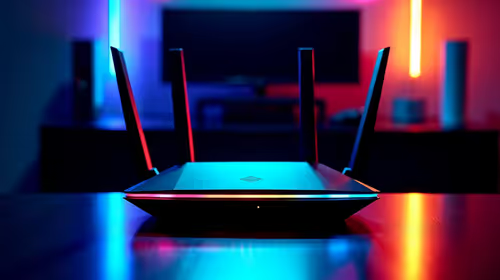
Indoor 5G CPE puts the modem, router, and Wi-Fi in a single unit you place inside the house, usually near a window. It is the most popular choice by a wide margin because activation is simple: plug it in, insert the SIM, and you are online. Outdoor 5G CPE splits the job. The radio and antenna sit outside on a wall or roof for the best possible line of sight to the tower, then feed an indoor router over an Ethernet cable, often with power delivered along the same cable.
Why building materials change everything
Signal does not pass through walls for free. Concrete, brick, metal sheeting, and energy-efficient coated glass all absorb 5G, and South African homes built with solid brick and concrete can lose a meaningful chunk of signal before it ever reaches an indoor router. That loss is exactly what an outdoor unit sidesteps, because the antenna captures the signal before any wall gets in the way.
There is also a placement conflict baked into indoor units. The best spot for 5G reception is usually right at a window, but the best spot for Wi-Fi coverage is central in the home. With an all-in-one indoor box you often cannot satisfy both at once, so either your cellular link or your Wi-Fi reach suffers.
Matching placement to your situation
Use your circumstances to decide:
- Strong-signal suburb, close to a tower, decent indoor reception: an indoor unit is the easy, sensible pick.
- Far from the tower, rural edge, or signal that drops indoors: go outdoor and mount the antenna high with clear line of sight.
- Thick brick or concrete walls killing your indoor bars: outdoor placement usually recovers the difference.
- Renting and unable to drill or mount externally: an indoor unit near the best window is the practical compromise.
A simple test helps. Check the signal indicator on a phone or the router near a window versus deeper in the house. If the bars collapse as you move inside, that drop is what an outdoor antenna would reclaim. The networking range at Evetech covers both indoor and outdoor 5G options, and if you are pairing a CPE with extra Wi-Fi coverage, the popular accessories selection is a quick way to find mesh nodes and cabling to fill the gaps.
Frequently Asked Questions
Is outdoor 5G CPE always better?
Not always. Outdoor units give stronger reception by avoiding wall loss, but they need mounting and cabling. If your indoor signal is already strong, a simpler indoor unit performs well with far less effort.
Why does my indoor 5G router slow down away from the window?
Walls and coated glass absorb 5G signal, so reception is best near a window and weaker deeper inside. An all-in-one indoor unit cannot sit at the window and broadcast Wi-Fi centrally at the same time, which is the core trade-off.
How is an outdoor unit connected to my home network?
The outdoor antenna and radio sit outside and connect to an indoor router over an Ethernet cable, which frequently carries power to the unit as well, so you only run a single cable inside.
Do I need outdoor CPE if I live in a city?
Often not. Dense urban areas usually have nearby towers and strong signal, so an indoor unit is enough. Outdoor units earn their keep at the edge of coverage, in rural areas, or where heavy walls block the signal.
Can I move an indoor unit around to find better signal?
Yes, and you should. Test it at different windows and heights, since even a metre or two can change reception noticeably. If no indoor spot gives a stable link, that is the sign to consider an outdoor unit.
Sorting out a 5G home connection? Browse the 5G routers and networking gear at Evetech to match the right indoor or outdoor unit to your signal.