


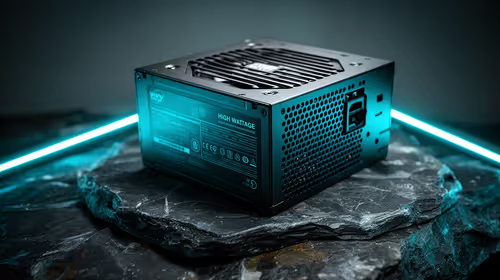
550W PSU Planning for RTX 5080 Super Builds in SA
550W for RTX 5080 Super needs a full-build check, not a simple yes. Review GPU guidance, CPU draw, transient load, connectors, PSU quality, and upgrade plans before deciding.
Read moreFrame generation on a modern graphics card boosts the frame counter but inserts interpolated frames that add real input latency, mattering more in shooters than smoothness. Evetech's high-refresh range favours raw frames and fast native response for ranked play.
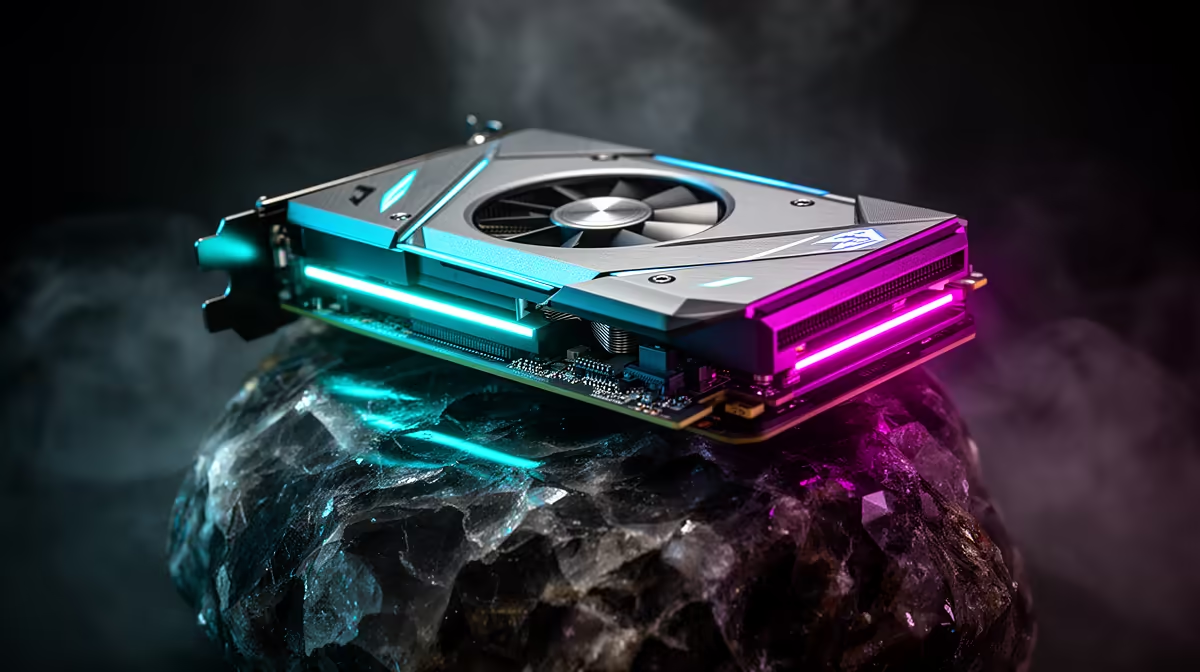
Frame generation can make a demanding game look much smoother, but the bigger frame counter does not mean your inputs are sampled more often. In a competitive shooter, response, visibility and stable rendered frames matter more than interpolated motion.
Leave frame generation off for ranked shooters unless you have tested the complete latency result and prefer the feel. Use native rendering or upscaling to build a high base frame rate first. Frame generation is a better fit for slower single-player games where visual smoothness carries more weight.
Compare graphics cards for high-refresh gaming with current GPU best sellers. Choose enough raw performance for the frame target you want before counting generated frames.
The game engine reads your input, updates the simulation and renders a frame. Frame-generation systems analyse surrounding frames and motion data to insert another image for display. That extra image improves visual continuity, yet it does not contain a newer game-state update from your mouse click.
A display counter may show 180 frames per second while the underlying rendered rate is much lower. The visual result can look fluid, but aiming response follows the base pipeline. This is why a native 180fps and a generated 180fps should never be treated as the same competitive result.
NVIDIA Reflex and AMD latency-reduction features can trim queues elsewhere in the pipeline. They are valuable when supported, and they can offset some of the latency cost around a frame-generation setup. They cannot turn generated frames into fresh simulation updates.
Measure the full system if you can. At minimum, switch the feature on and off in the same practice route, keep the frame cap and settings controlled, and pay attention to flick shots, fast tracking and sudden direction changes.
Lower the settings that consume GPU time without helping target visibility. Keep textures within VRAM, avoid a GPU load pinned at its ceiling, and use an upscaling Quality mode only if the image stays clear enough for distant targets.
Set a realistic cap that the PC can hold through busy fights. Stable frame times often feel better than a higher average with hard drops. Match the target to your monitor and check the CPU, since low-resolution competitive settings can move the limit away from the graphics card.
Use it for a controller-driven adventure, racing game or ray-traced single-player title when the base frame rate already feels responsive. It can make camera movement look excellent on a high-refresh display and help heavy visual settings feel more polished.
Keep the base rate healthy. Generating frames from a sluggish 30fps foundation can expose artefacts and slow response. A base near 60fps or above gives the system better temporal information and a more comfortable control loop, though each game needs its own test.
No. Latency tools may reduce other delays, while generated frames themselves do not add new input samples.
Raw rendered frames are the safer priority for ranked play. Test the feature in your exact game before making an exception.
No. Upscaling reconstructs each rendered frame at a higher output resolution. Frame generation inserts additional displayed frames.
Set a stable rendered-frame target for your shooter, test end-to-end response, and treat generated frames as a visual option for other games.
No. Latency tools may reduce other delays, while generated frames themselves do not add new input samples.
Raw rendered frames are the safer priority for ranked play. Test the feature in your exact game before making an exception.
No. Upscaling reconstructs each rendered frame at a higher output resolution. Frame generation inserts additional displayed frames. {{PRODUCTS: { facets: { query: "high refresh rate graphics card" }, limit: 12, title: "Compare GPUs for Competitive Gaming", style: "4" } }}
550W for RTX 5080 Super needs a full-build check, not a simple yes. Review GPU guidance, CPU draw, transient load, connectors, PSU quality, and upgrade plans before deciding.
Read more
8000Hz polling is overrated for most SA gamers because gains can be tiny next to battery drain and monitor limits. Mbombela players should weigh mouse feel, game support, and system stability before chasing the number.
Read more
Magnetic switches are taking over SA gaming keyboards because actuation can be tuned. For Sandton gamers, rapid trigger, reset control, and profile depth can help, but layout, key feel, and software quality still matter.
Read more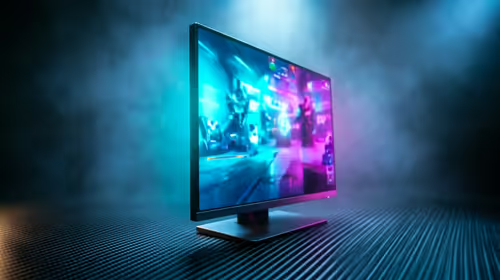
Polokwane oled monitor value questions need cautious SA context because pricing can move with availability, exchange rates, specs, and warranty support. Treat the trend as a planning signal, not a fixed price promise.
Read more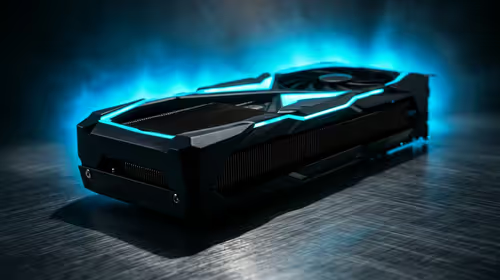
Arc B580 budget builds for Midrand gamers can shift with exchange rates, supply, specs, and model tier. Treat the title as a buying prompt, then compare SA warranty, timing, and build priorities.
Read more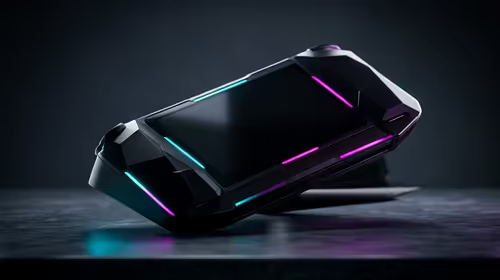
ROG Ally X may beat the LCD Steam Deck for SA gamers who value stronger handheld performance, more memory, and Windows flexibility. Compare battery life, controls, game libraries, and Polokwane support needs before deciding.
Read more
Minisforum's M2 Pro pairs Core Ultra X7, Arc B390 graphics and 32GB onboard memory in 1.8 litres. SA buyers should weigh its fixed memory and $1,439 launch offer against local mini PCs.

Lenovo says Legion Go failures linked to BIOS N3CN42WW are not user error. Affected SA owners should stop retrying the update, preserve proof and open a support case.

Smart monitors can add apps and convenience, but they also add privacy settings and unwanted-software risk. SA buyers should audit the operating system before paying for extras.

A fake 113GB GTA VI ISO reportedly used empty padding around a small malware payload. SA gamers should delete unofficial builds, keep Windows security active and wait for official channels.
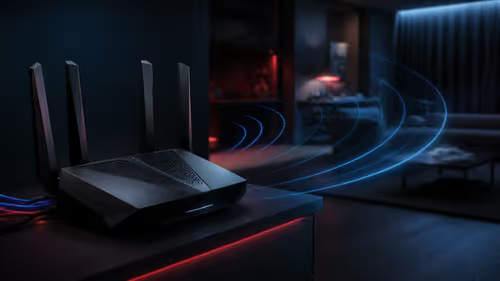
ASUS calls the ROG GT-BN98 the first Wi-Fi 8 gaming router. SA buyers should fix coverage and client limits before paying for a future wireless standard.
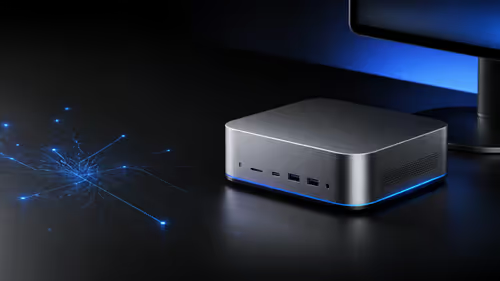
Apple's M6 Mac mini adds faster AI, graphics and networking in the same compact format. SA buyers should wait for a rand listing before comparing value.
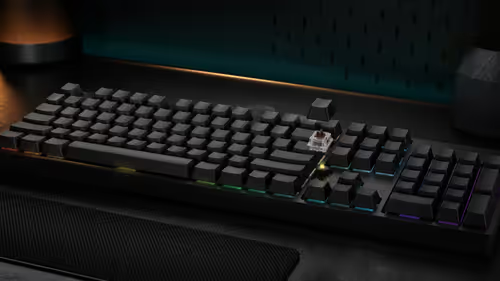
The Vulcan II XP adds hot-swappable switches, sound damping and gaming controls to a full-size wired board. SA buyers should compare feel before features.

Microsoft says Windows on Arm now has over 7,000 verified apps and games. SA buyers should still check each driver, game and work tool before switching.
550W for RTX 5080 Super needs a full-build check, not a simple yes. Review GPU guidance, CPU draw, transient load, connectors, PSU quality, and upgrade plans before deciding.
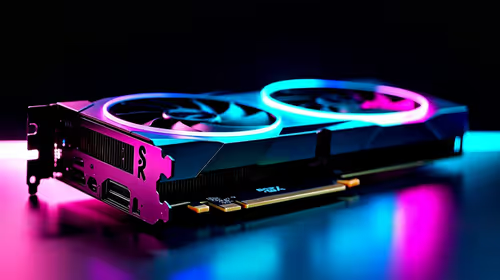
Skyrim HD texture packs that actually run on RX 9070 helps SA readers plan hardware, settings, compatibility, and upgrade trade-offs. Check GPU, CPU, RAM, storage, monitor, and stability needs without risky performance claims.
8000Hz polling is overrated for most SA gamers because gains can be tiny next to battery drain and monitor limits. Mbombela players should weigh mouse feel, game support, and system stability before chasing the number.
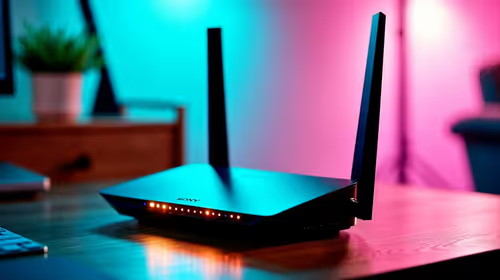
Wi-Fi 7 or Wi-Fi 6e for streaming on twitch and youtube should be judged by fit, not a single winner. Compare compatibility, latency, capacity, upgrade path, cost planning, and South African setup needs.