


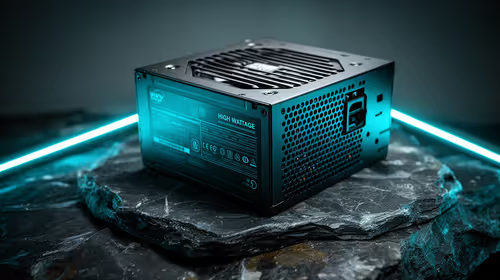
550W PSU Planning for RTX 5080 Super Builds in SA
550W for RTX 5080 Super needs a full-build check, not a simple yes. Review GPU guidance, CPU draw, transient load, connectors, PSU quality, and upgrade plans before deciding.
Read moreHigh-density mesh is better than foam only when its feel and support suit the individual through a normal office session. The E3 Air uses a cloud-like high-density mesh seat, which buyers can compare through real desk tasks.
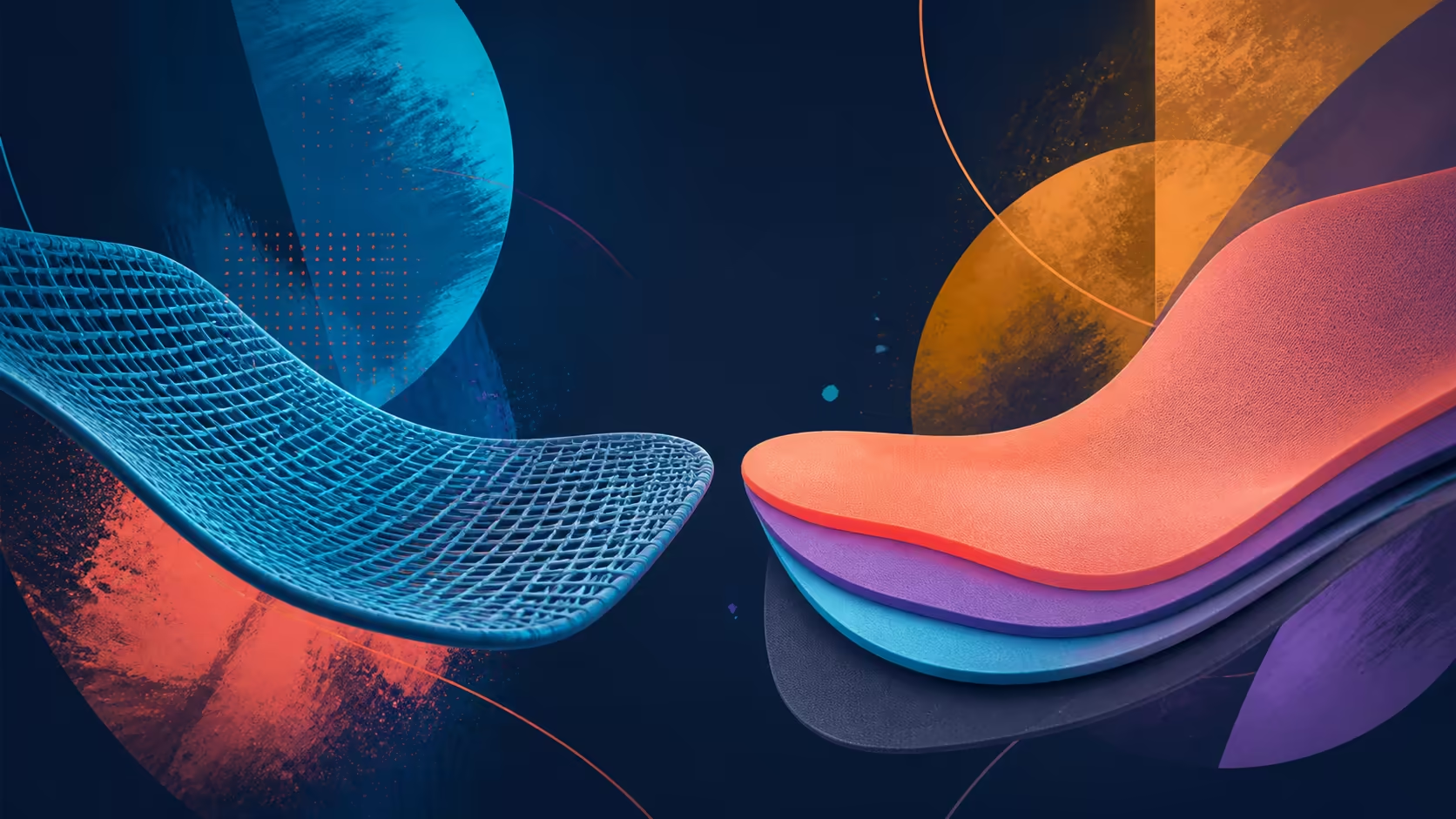
Material labels cannot decide how a chair will feel after several hours. A high-density mesh office chair seat may appeal to someone who prefers its particular surface and support response, while foam may suit another person. The R7,399 E3 Air offers a cloud-like high-density mesh seat for this comparison.
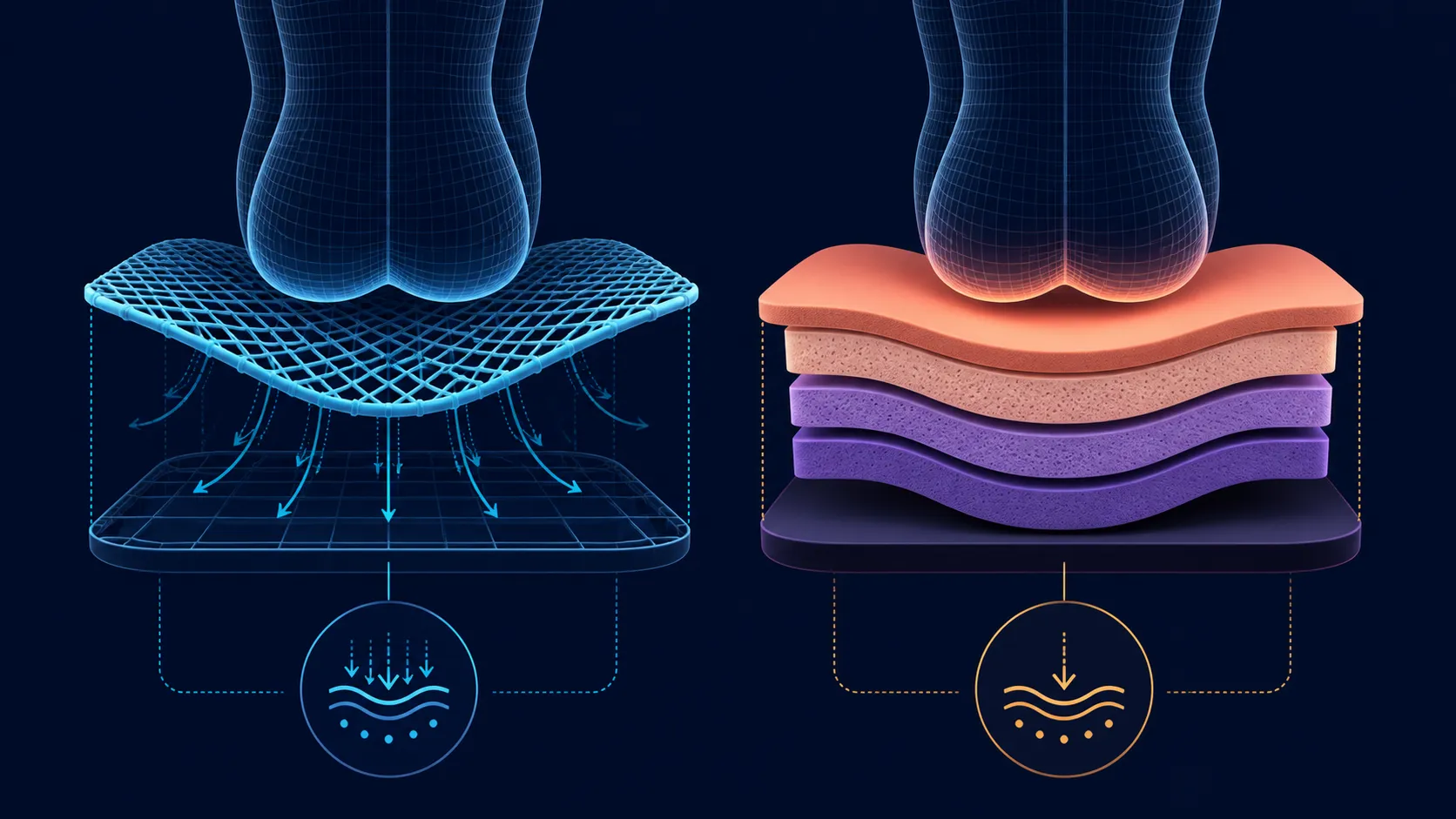
The E3 Air uses four-way elastic CloudMesh rather than high-density foam, combining airflow with a flexible suspended surface.
High-density mesh is not automatically better than foam for long office sessions; the better surface fits the user, remains acceptable during real tasks and complements the chair's other contact points. The E3 Air provides a R7,399 mesh example with a 150kg maximum user weight. Compare feel over time instead of declaring a winner from material names.
Mesh and foam are broad categories rather than a single sensation. Construction, shape, tension, thickness and the person using the seat can all change the experience. The E3 Air has a cloud-like, high-density mesh seat, but those qualities do not guarantee a particular comfort result.
Start with the tasks that create the longest sitting periods. Use the same clothing, desk height and foot position when comparing chairs. Notice whether the seat supports the intended posture without creating an edge or pressure point that becomes distracting. A few deliberate minutes reveal initial feel; a normal work block is more informative about sustained suitability.
Use Evetech's HBADA office-chair range to place the seat choice beside the actual adjustment needs. Material should not eclipse lumbar contact, input alignment or user-weight eligibility.
Record impressions at the beginning, middle and end of a typical work period. This avoids letting a strong first impression stand in for the entire day. Vary tasks naturally, but keep the chair settings fixed during the first comparison so the seat remains the main variable.
The model's three-zone lumbar support wraps through 80 degrees, and the backrest can recline to 140 degrees. These features may change load distribution or posture, which is why they should be tested in a later round. Do not attribute a better or worse result to mesh after changing the recline, lumbar contact and desk arrangement together.
The E3 Air permits a user weight of no more than 150kg, with the chair carried by a five-star steel base. Staying under that ceiling does not prove the seat shape or dimensions fit. Check those measurements for the individual and workspace before equating a valid capacity with personal suitability.
Head and arm support also deserve their own pass. The headrest moves in 4D along two axes; separately, the mechanical arm supports provide 360 degrees of omni-motion. Set each around the screen or inputs only after evaluating the seat, then repeat a real task to judge the complete arrangement.
Browse the broader office-chair selection from Evetech with a short scorecard for initial feel, end-of-session feel, support contact and fit. That evidence is more useful than a universal mesh-versus-foam verdict.
Its 150kg maximum and SGS Class-4 certification add concrete structural context. Compare heat, pressure and edge support through equal sessions. Mesh may suit a warm room, while a foam rival can still win when its cushioning better matches the user.
Its seat is mesh of a high-density, cloud-like design. The description establishes the surface type without guaranteeing firmness, pressure response or a long-session experience.
No. Seat preference and body fit vary, while mesh and foam constructions also differ among chairs. Compare the exact candidates through the same daily task.
Keep desk and chair settings stable, then note feel early and later in a normal work period. A repeated task gives a better comparison than an isolated showroom impression.
It cannot guarantee that outcome. Persistent discomfort deserves appropriate assessment, and seat dimensions, support contact and individual posture all remain relevant.
This chair's user ceiling is 150kg. Apply it first, then confirm physical fit and personal experience rather than treating the capacity figure as a comfort score.
The E3 Air reaches a 140-degree maximum back angle. Evaluate any changed posture separately because the endpoint does not explain controls or assure comfort.
This Cloud White chair is R7,399. Weigh that price against the complete seating system and the evidence from your own fit checklist.
Ready to compare seat feel over a real work period? Browse Evetech office chairs with a simple start-to-finish comfort scorecard beside you.
Its seat is mesh of a high-density, cloud-like design. The description establishes the surface type without guaranteeing firmness, pressure response or a long-session experience.
No. Seat preference and body fit vary, while mesh and foam constructions also differ among chairs. Compare the exact candidates through the same daily task.
Keep desk and chair settings stable, then note feel early and later in a normal work period. A repeated task gives a better comparison than an isolated showroom impression.
It cannot guarantee that outcome. Persistent discomfort deserves appropriate assessment, and seat dimensions, support contact and individual posture all remain relevant.
This chair's user ceiling is 150kg. Apply it first, then confirm physical fit and personal experience rather than treating the capacity figure as a comfort score.
The E3 Air reaches a 140-degree maximum back angle. Evaluate any changed posture separately because the endpoint does not explain controls or assure comfort.
This Cloud White chair is R7,399. Weigh that price against the complete seating system and the evidence from your own fit checklist.
550W for RTX 5080 Super needs a full-build check, not a simple yes. Review GPU guidance, CPU draw, transient load, connectors, PSU quality, and upgrade plans before deciding.
Read more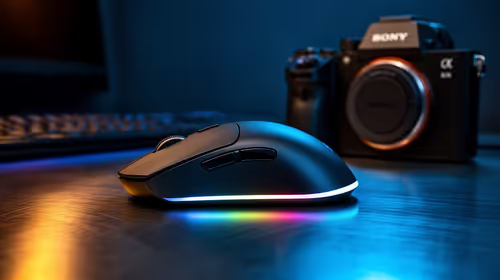
8000Hz polling is overrated for most SA gamers because gains can be tiny next to battery drain and monitor limits. Mbombela players should weigh mouse feel, game support, and system stability before chasing the number.
Read more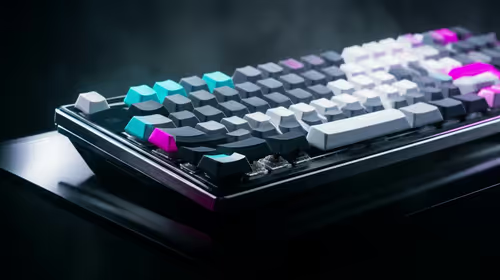
Magnetic switches are taking over SA gaming keyboards because actuation can be tuned. For Sandton gamers, rapid trigger, reset control, and profile depth can help, but layout, key feel, and software quality still matter.
Read more
Polokwane oled monitor value questions need cautious SA context because pricing can move with availability, exchange rates, specs, and warranty support. Treat the trend as a planning signal, not a fixed price promise.
Read more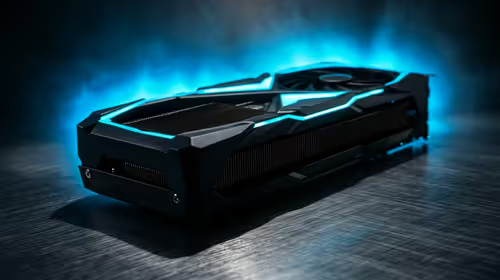
Arc B580 budget builds for Midrand gamers can shift with exchange rates, supply, specs, and model tier. Treat the title as a buying prompt, then compare SA warranty, timing, and build priorities.
Read more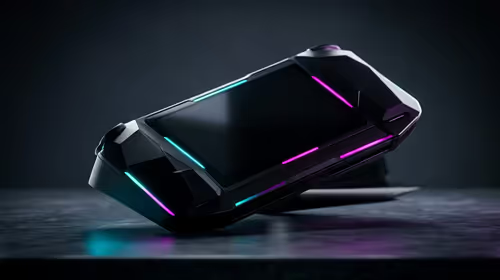
ROG Ally X may beat the LCD Steam Deck for SA gamers who value stronger handheld performance, more memory, and Windows flexibility. Compare battery life, controls, game libraries, and Polokwane support needs before deciding.
Read more
Minisforum's M2 Pro pairs Core Ultra X7, Arc B390 graphics and 32GB onboard memory in 1.8 litres. SA buyers should weigh its fixed memory and $1,439 launch offer against local mini PCs.

Lenovo says Legion Go failures linked to BIOS N3CN42WW are not user error. Affected SA owners should stop retrying the update, preserve proof and open a support case.

Smart monitors can add apps and convenience, but they also add privacy settings and unwanted-software risk. SA buyers should audit the operating system before paying for extras.

A fake 113GB GTA VI ISO reportedly used empty padding around a small malware payload. SA gamers should delete unofficial builds, keep Windows security active and wait for official channels.
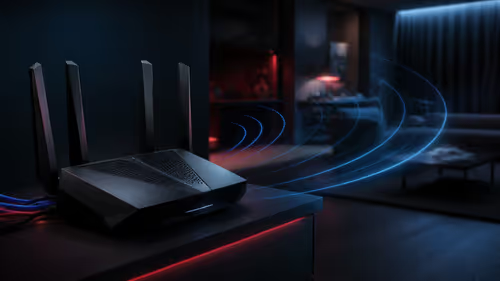
ASUS calls the ROG GT-BN98 the first Wi-Fi 8 gaming router. SA buyers should fix coverage and client limits before paying for a future wireless standard.
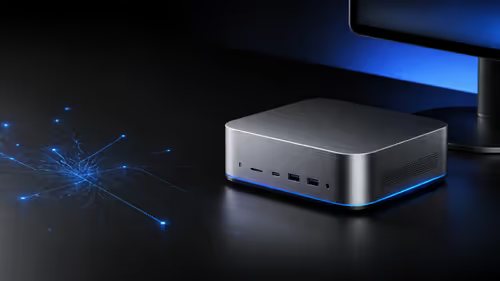
Apple's M6 Mac mini adds faster AI, graphics and networking in the same compact format. SA buyers should wait for a rand listing before comparing value.
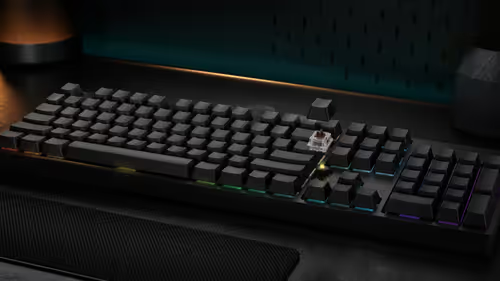
The Vulcan II XP adds hot-swappable switches, sound damping and gaming controls to a full-size wired board. SA buyers should compare feel before features.

Microsoft says Windows on Arm now has over 7,000 verified apps and games. SA buyers should still check each driver, game and work tool before switching.
550W for RTX 5080 Super needs a full-build check, not a simple yes. Review GPU guidance, CPU draw, transient load, connectors, PSU quality, and upgrade plans before deciding.
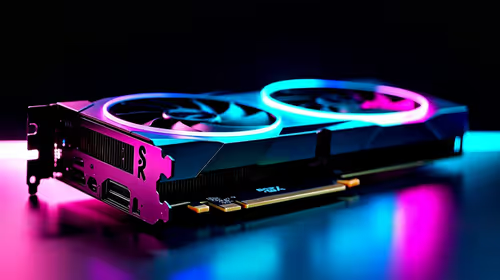
Skyrim HD texture packs that actually run on RX 9070 helps SA readers plan hardware, settings, compatibility, and upgrade trade-offs. Check GPU, CPU, RAM, storage, monitor, and stability needs without risky performance claims.
8000Hz polling is overrated for most SA gamers because gains can be tiny next to battery drain and monitor limits. Mbombela players should weigh mouse feel, game support, and system stability before chasing the number.
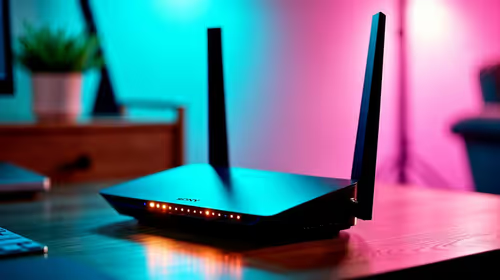
Wi-Fi 7 or Wi-Fi 6e for streaming on twitch and youtube should be judged by fit, not a single winner. Compare compatibility, latency, capacity, upgrade path, cost planning, and South African setup needs.