


650W PSU Planning for RTX 5090 Builds in SA
650W for RTX 5090 needs a full-build check, not a simple yes. Review GPU guidance, CPU draw, transient load, connectors, PSU quality, and upgrade plans before deciding.
Read moreMetal boom arms do provide better stability for heavy microphones, holding capsules up to about 1.5kg without sag thanks to steel springs and a clamp. In a South African home studio they keep a pro dynamic mic locked where lighter plastic arms slowly droop.
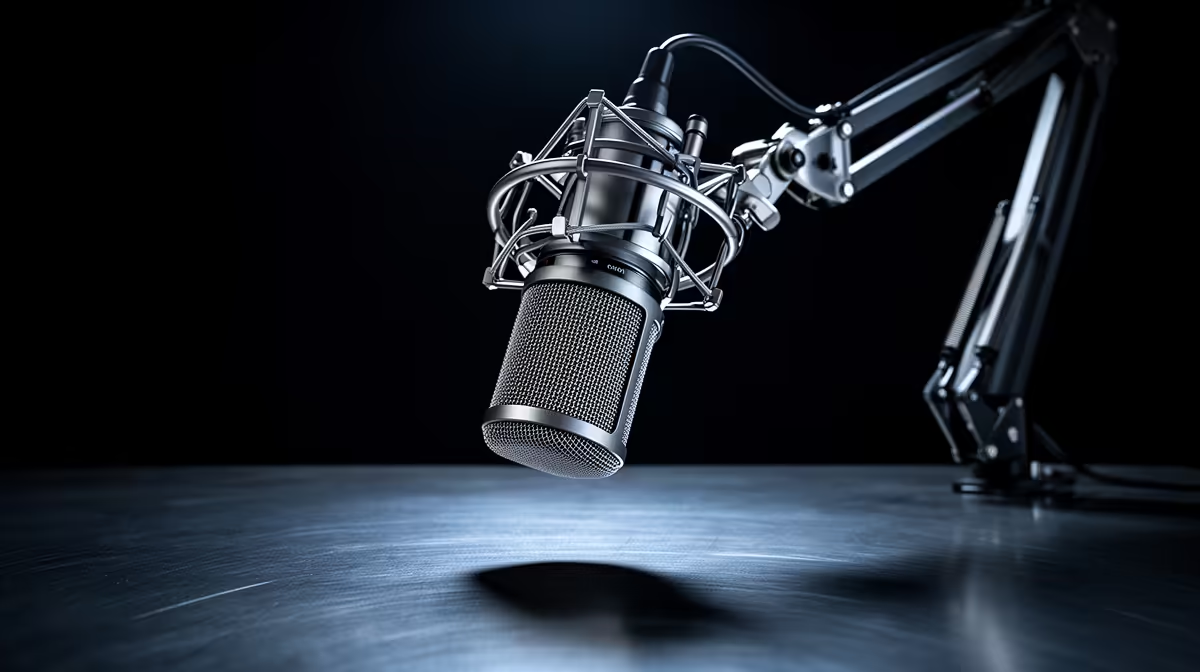
A mic stand is only as useful as its ability to stay where you put it. Metal boom arms earn their place in a serious home studio by holding heavy microphones at the exact angle you need, hour after hour, without the slow creep that ruins a session. For South African creators running pro dynamic capsules that can top 700g, the difference between a steel arm and a plastic one is not cosmetic.
Metal boom arms provide better stability for heavy microphones. Steel springs and rigid tubes hold capsules up to around 1.5kg without sag, while plastic arms flex under load and drift over time. For a dynamic mic used in a fixed home studio, a quality metal arm is the reliable choice.
A boom arm resists gravity through the tension in its spring and the rigidity of its tube and joints. Plastic flex-point joints absorb a little of that spring tension as deformation, letting the arm drift downward gradually. Under a 500g mic you may not notice. Under an 800g to 900g dynamic capsule, the arm moves measurably within an hour.
Steel tubes and cast metal joints do not absorb spring force the way plastic does. The arm you position at 15cm from your mouth stays there through a three-hour stream. The recording geometry remains consistent because the physical geometry remains consistent.
Quality metal boom arms are typically rated to support mics up to around 1.5kg. Most professional dynamic microphones fall well under that ceiling, which means a good steel arm has meaningful headroom for virtually any capsule you are likely to run.
The relevant variable is adjustable spring tension. Most quality steel arms include a hex-screw tensioner that lets you dial the spring force to match the mic's weight precisely. A correctly tensioned arm sits still. An under-tensioned one drifts down.
The hex key adjustment takes under a minute. Loosen the screw slightly, let the arm find its natural position, then tighten until it holds. Repeat once with the mic attached at full extension. That removes the slow-droop problem entirely.
A rear counterweight helps when the arm is stretched to maximum reach with a heavier capsule. Most creators at standard desk depth do not need one, but if your desk is deep and the arm is running close to its limit, factor the counterweight option into the purchase decision.
A rigid steel arm bolted to a wobbly clamp solves nothing. A C-clamp gripping the desk edge provides a far more stable anchor than a free-standing weighted base, which can shift when the desk is bumped.
Check the clamp's maximum jaw opening before buying. Gaming desks with thick chipboard cores or decorative rounded edges often run 40mm or wider, and a clamp rated to 35mm simply will not fit. A shock mount between the arm and the microphone adds the final isolation layer, cutting desk thumps and footstep rumble before they reach the capsule.
A quality steel spring arm typically supports microphones up to around 1.5kg. Most professional dynamic and large-diaphragm condenser microphones fall well below that figure. Check the specific rated capacity and match it against the combined weight of your mic, shock mount, and any accessories you plan to attach.
Plastic joints flex slightly under sustained load, absorbing spring tension and letting the arm drift downward over time. Under a lightweight mic the effect is small. Under a 700g-plus dynamic capsule the movement becomes noticeable within an hour. Steel joints do not flex under load, so the arm holds position through long sessions.
A rigid steel arm transfers less vibration than a plastic one because its joints do not flex. Pairing it with a quality shock mount at the mic end isolates the capsule from desk thumps and keyboard vibration further. The arm reduces gross movement and the shock mount handles fine vibration that remains.
Most C-clamps are rated for desks up to around 55mm thick. Standard office desks at 18 to 25mm present no issue. Gaming desks with thick cores or rounded decorative edges can exceed 40mm, so check the jaw opening specification before purchasing to avoid a sizing mismatch.
Usually not for standard desk setups. Spring arms rated to 1.5kg handle most dynamic mics at normal extension. A rear counterweight becomes useful when the arm is stretched close to maximum reach, such as positioning a mic in front of a deep gaming desk. Proper spring tension adjustment handles most configurations without one.
Ready to hold your microphone exactly where you put it? Browse the metal boom arm range at Evetech and pair yours with the professional dynamic microphone that fits your studio and streaming goals.
A quality steel spring arm typically supports microphones up to around 1.5kg. Most professional dynamic and large-diaphragm condenser microphones fall well below that figure. Check the specific rated capacity and match it against the combined weight of your mic, shock mount, and any accessories you plan to attach.
Plastic joints flex slightly under sustained load, absorbing spring tension and letting the arm drift downward over time. Under a lightweight mic the effect is small. Under a 700g-plus dynamic capsule the movement becomes noticeable within an hour. Steel joints do not flex under load, so the arm holds position through long sessions.
A rigid steel arm transfers less vibration than a plastic one because its joints do not flex. Pairing it with a quality shock mount at the mic end isolates the capsule from desk thumps and keyboard vibration further. The arm reduces gross movement and the shock mount handles fine vibration that remains.
Most C-clamps are rated for desks up to around 55mm thick. Standard office desks at 18 to 25mm present no issue. Gaming desks with thick cores or rounded decorative edges can exceed 40mm, so check the jaw opening specification before purchasing to avoid a sizing mismatch.
Usually not for standard desk setups. Spring arms rated to 1.5kg handle most dynamic mics at normal extension. A rear counterweight becomes useful when the arm is stretched close to maximum reach, such as positioning a mic in front of a deep gaming desk. Proper spring tension adjustment handles most configurations without one.
650W for RTX 5090 needs a full-build check, not a simple yes. Review GPU guidance, CPU draw, transient load, connectors, PSU quality, and upgrade plans before deciding.
Read more
How to fix FPS drops Windows 11 RX 9070 XT starts with GPU drivers, overlays, power plans, and frame pacing checks. For SA gaming PCs, verify chipset updates, HAGS, refresh rate, thermals, and per-game graphics settings.
Read more
How to fix FPS drops on X870E motherboard starts with BIOS, chipset drivers, PCIe settings, and memory stability. SA gamers can check EXPO, resize BAR, thermals, display refresh, and background apps before replacing components.
Read more
RTX 5060 is popular with SA students because it can fit gaming, coursework, and creative app needs in one setup. Compare total system price, cooling, RAM, storage, and screen quality before picking a desktop or laptop.
Read more
1440p is the sweet spot for SA gamers because it balances sharp visuals, high frame rates, and GPU cost better than 4K. It is a practical monitor target for players who want smoother upgrades without the heavier hardware demands of 4K.
Read more
RAM pricing for Midrand gamers can shift with exchange rates, supply, specs, and model tier. Treat the title as a buying prompt, then compare SA warranty, timing, and build priorities.
Read more
From 1 October 2026, WhatsApp Business Platform service replies in South Africa are expected to cost about $0.0076, or 12 cents, per delivered message.
DDR5-8000 RAM Kits pros and cons depend on the build, budget, and workload. Weigh gaming needs, platform fit, power, cooling, warranty support, and South African pricing context before shortlisting it.

Wi-Fi 6E vs Wi-Fi 6 depends on AAA single-player gaming needs, platform limits, and budget fit. Compare compatibility, latency, upgrade path, and real setup constraints before choosing for an SA build.

Ryzen 9 9950X3D dead pixel checks should isolate the panel first. Run colour fills, inspect the monitor menu, test another cable or input, and capture proof before linking it to the SA CPU upgrade.

YouTube will count public views from the first frame across video formats from 24 August, while earnings and eligibility remain tied to engaged viewing.
Canonical expects Ubuntu on WSL users to outnumber native Ubuntu desktop users before the end of 2026. The software is open source and runs inside supported Windows PCs.
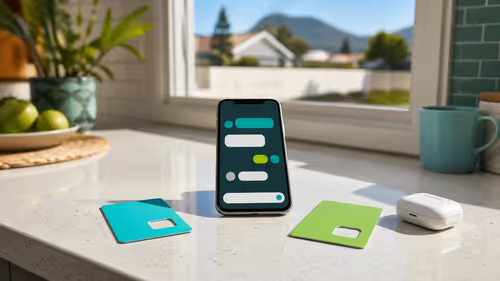
Telkom's daily bundles pair WhatsApp access with 10 all-network voice minutes. The R15 option includes 300MB, while the R17 option uses a fair-use threshold.

A 10,000-hour test found similar image retention across older and newer OLED TVs, while newer panels were brighter and more efficient. Local OLED monitors started at R9,999.
From 1 October 2026, WhatsApp Business Platform service replies in South Africa are expected to cost about $0.0076, or 12 cents, per delivered message.
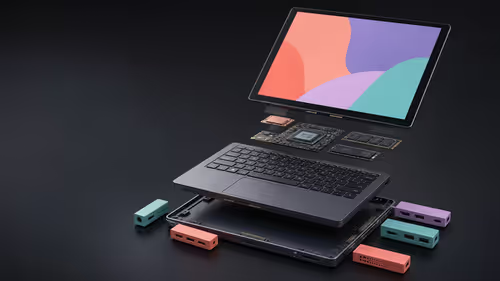
Framework has refreshed Laptop 12 with Intel Core Series 3 processors, Thunderbolt 4, a backlit keyboard and a claimed battery-life increase.

A Windows 11 Experimental Insider build adds per-app camera, microphone and location controls for Win32 programs, plus permission prompts.
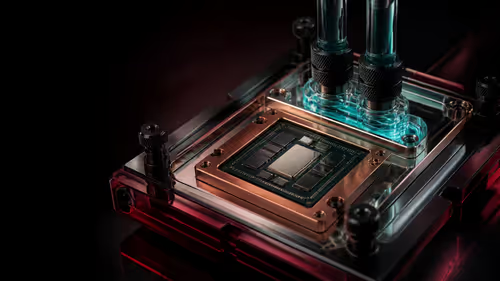
Thermal Grizzly is selling a tested, delidded Ryzen 9 9950X3D2 with its own 24-month warranty for experienced direct-die cooling builds.