


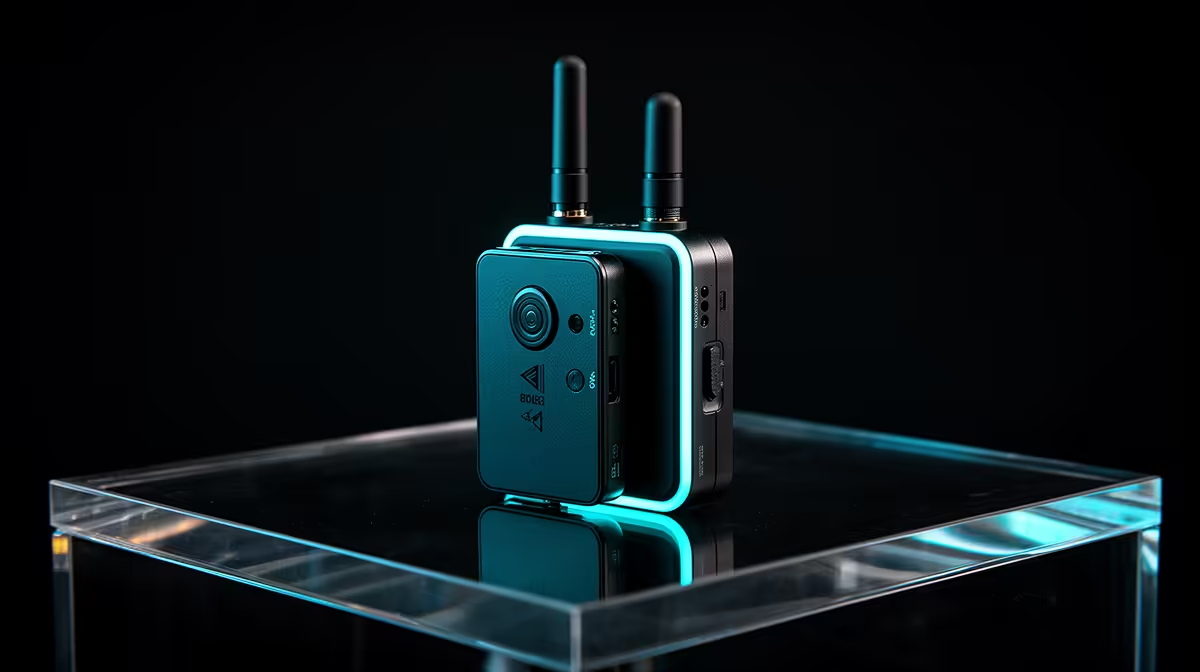
Pick up your phone, clip a wireless lav to your collar, press record, and walk. That workflow is why plug-and-play wireless mics for mobile creators have grown so quickly in SA. No audio interface, no separate recorder, no bag of cables. For the creator shooting interviews at Joburg markets or vlog content along the Cape Town waterfront, the question is not whether these mics work, it is where they are sufficient and where a different tool produces something better.
Quick Answer
Mobile-first creators can rely on a USB-C plug-and-play wireless lav for vlogs, interviews, and social video. The mic clips close to the speaker's mouth and records clean speech without extra gear. For music recording or high-fidelity audio, a wired condenser captures richer detail.
🎙️ What Makes a Wireless Lav Suit Mobile Shooting
The capsule on a clip-on lavalier transmitter sits a short distance from the speaker's mouth, typically 15 to 20 centimetres when mounted on a collar. At that range the voice-to-distance ratio is favourable. The microphone picks up speech before the surrounding environment blends in, which is why lav recordings often sound cleaner than footage captured by the phone's built-in mic from half a metre away.
USB-C connectivity removes the traditional friction point. Older wireless lav receivers used 3.5mm connections requiring adapters and introducing compatibility headaches across Android devices. USB-C receivers bypass that entirely. On any Android phone with a USB-C port, the receiver connects and is immediately available with no adapters and no prompts.
For solo shooting where the creator also operates the camera, the freedom to move without a cable trailing back to the phone is the practical core of the format.
⚡ Outdoor Performance and Wind Noise
Shooting outside in SA introduces a consistent acoustic challenge that studio-focused reviews often understate. Even a mild breeze across an exposed capsule generates a low rumbling noise sitting right in the frequency range of human speech. Most wireless lav transmitters include a foam windscreen or offer one as an accessory. A furry slip-on windscreen performs better in stronger conditions by adding another diffusion layer over the foam.
For a creator shooting in Cape Town's windy coastal environments, a furry windscreen is close to mandatory for outdoor use. Without it, even a gentle wind can render outdoor footage unusable regardless of signal quality.
🔧 Where the Format Has Limits
Wireless lav systems optimised for speech prioritise voice intelligibility over full-spectrum audio. That design suits interviews and vlogs. Music sits outside the sweet spot. An acoustic guitar, a vocalist performing, ambient music at an event: all require a wider frequency response and a condenser that captures the environment rather than narrowing in on it. A wireless lav used for music produces a midrange-heavy recording that feels constrained next to a proper condenser capture.
Frequently Asked Questions
Can a mobile creator use only a wireless lav for all their content?
For speech-driven content, yes. Vlogs, interviews, reviews, and social shorts all work well. The format becomes limiting for music recording, cinematic sound design, or ambient-heavy documentary content. A wired condenser available for those specific scenarios covers the gap without replacing the wireless lav.
How far can a creator roam from the phone?
On a 2.4 GHz system, roughly 50 metres in open space. Obstacles between the transmitter and receiver shorten that range. For compact urban locations the practical range is shorter but more than adequate for most shots.
Does wind ruin outdoor wireless lav recordings?
It can without protection. A foam windscreen handles moderate wind. For consistently breezy conditions, adding a furry slip-on brings noise down to manageable levels. It does not affect voice quality, so there is no reason to leave it off outdoors.
Is a wireless lav useful for music video content?
Less so than for speech. A lav microphone captures voice clearly but its frequency response and capsule design prioritise speech intelligibility. Music needs a wider range and a cardioid pattern that captures the full instrument. A dedicated condenser is the better tool for music-forward content.
What is the battery life like for a day of shooting?
Most current wireless lav transmitters run 6 to 8 hours per charge. For a full shooting day, a charging case that tops up between sessions is worth including in the kit. Receivers draw power from the phone over USB-C and carry no battery of their own.
Ready to upgrade your mobile audio for solo shooting and street content? Browse the wireless microphone range suited to phone-based creators who need clean audio without carrying extra gear.










