Quick Answer
In a plan that upgrades the monitor before the GPU, case fans matter when the upgrade pushes the system hotter or you want a quieter desk; a R250 to R400 high-airflow fan set keeps temps in check so a new screen is not paired with a thermally throttling rig. Cooling is the cheap insurance between bigger upgrades.
Where Fans Fit The Upgrade Order
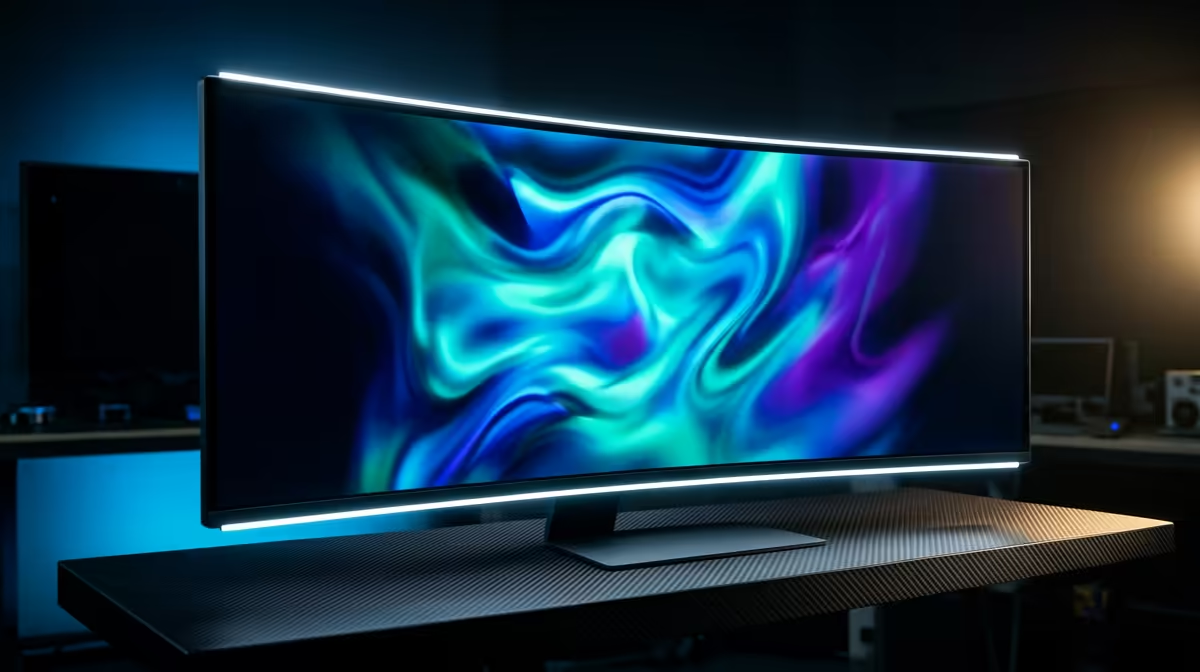
Putting the monitor first makes sense when your current GPU still drives your games well; a sharper, faster panel transforms the experience for less than a new card. Fans enter the plan if your case already runs warm, since a better monitor does nothing if the GPU throttles under load. A small fan investment keeps the existing card cooler and quieter, protecting performance while you save for the eventual GPU upgrade.
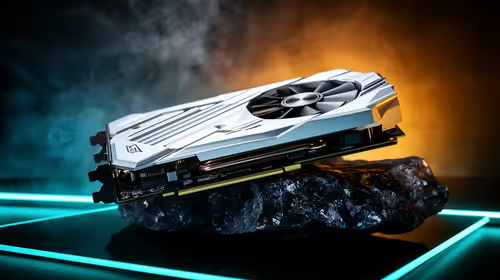
Check your GPU's temperature under a demanding game first; if it sits comfortably below 75C, your airflow is fine and the monitor can come first, but if it climbs past 80C, the fan upgrade should jump ahead of the screen in your plan.
Cool Now, Upgrade The GPU Later
Audit your airflow before spending elsewhere. If your GPU pushes past 80C or the case sounds like a hairdryer, add a balanced intake-and-exhaust fan set first. That stabilises frame rates on the card you own, so the new monitor shows smooth motion. When you finally swap the GPU, the improved airflow is ready to cool the more powerful card too.
FAQ
Should I add case fans before or after a new monitor?
Add fans first if your GPU already runs hot or loud; otherwise a new monitor may reveal stutter from a throttling card. Cooling protects the upgrade.
Will better fans improve frame rates?
Indirectly; cooler components avoid thermal throttling, so a GPU near its limit holds higher, steadier clocks and frames after an airflow upgrade.
Do fans help when I later upgrade the GPU?
Yes; improved case airflow is ready to cool a more powerful card too, so the fan investment carries forward to the next upgrade.
GPU temperature first; if it tops 80C, add a balanced intake-and-exhaust fan set before the new monitor so the card holds steady frames.