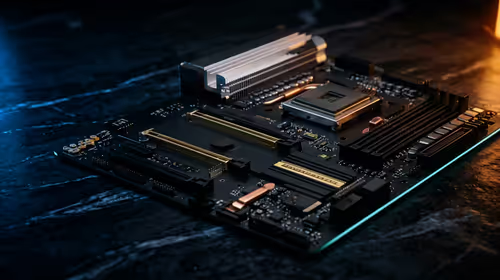
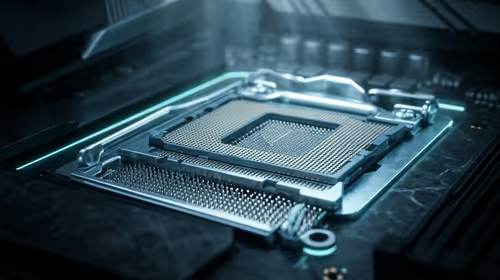
For deal hunters, the chipset is the spec that quietly decides whether a cheap motherboard is a bargain or a trap. Knowing when to pay up for a better chipset keeps a good deal genuinely good.
Quick Answer
For deal hunters, paying more for a better chipset is worth it when you need its features: a B-series chipset around R2,000 to R3,500 adds proper VRM, more connectivity and overclock or EXPO support over the cheapest A-series boards. If you run a basic build with no upgrades planned, an entry chipset deal is fine. Match the chipset to your CPU and upgrade plans.
When the chipset is worth paying for
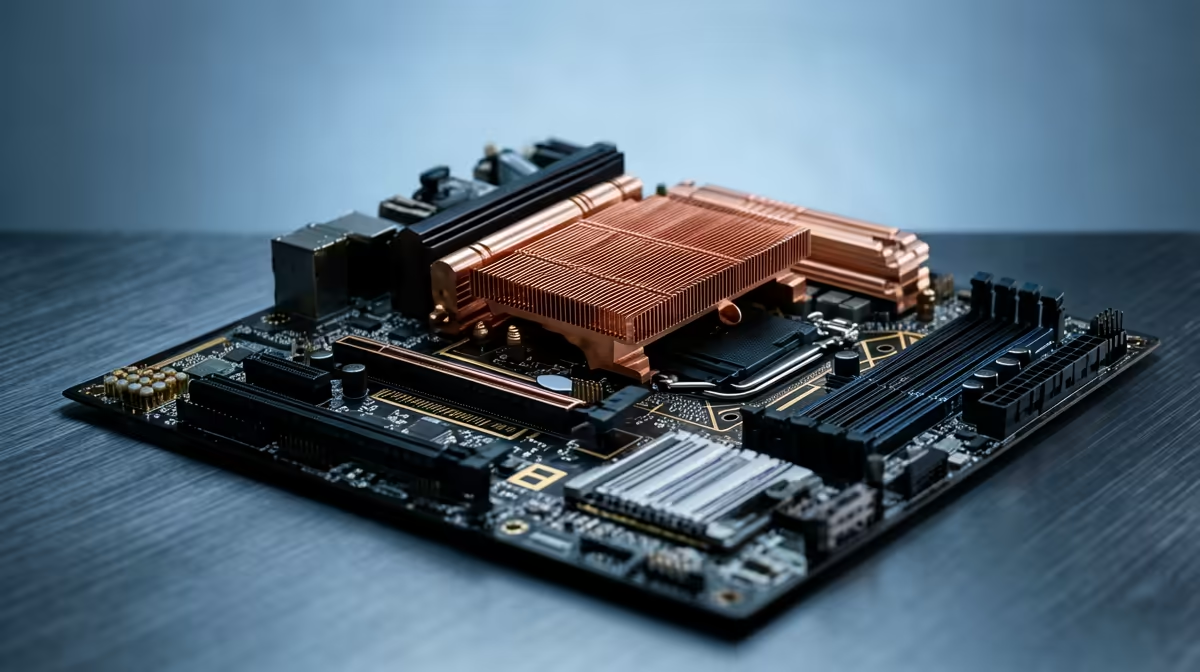
The chipset sets a board's features: VRM quality, the number of M.2 and USB ports, PCIe lanes, and whether you can run memory profiles like EXPO or overclock. Stepping up to a B-series chipset is worth it if you want a solid VRM for a mid-range or higher CPU, room for multiple drives, and the ability to run rated RAM speeds. Paying for these when you need them turns a cheap board into real value rather than a limitation.
When an entry chipset deal is fine
If your build is basic, a low-power CPU, one drive, no overclocking, and you have no upgrade plans, an entry A-series chipset board on special is a legitimate bargain. The key is honesty about your needs: do not pay for premium chipset features a simple office or light gaming build will never use, but do not cheap out if you plan to run a strong CPU or fast RAM. Always confirm the chipset supports your CPU.
SA deal-hunter value
A B-series board at R2,000 to R3,500 is the value chipset for most gaming and upgrade-minded builds; an entry chipset deal suits a basic, fixed setup. Match the chipset to your CPU and whether you will upgrade.
FAQ
When is a better chipset worth the money?
When you need its features: a stronger VRM, more ports, multiple drives or EXPO and overclock support. A B-series chipset suits mid-range and upgrade-minded builds.
Is a cheap entry chipset board ever a good deal?
Yes, for a basic build with a low-power CPU, one drive and no upgrade plans. Just confirm the chipset supports your CPU before buying.
What does the chipset affect?
VRM quality, the number of M.2 and USB ports, PCIe lanes, and memory-profile and overclock support. It sets what the board can do beyond the basics.
Match the chipset to your CPU and upgrade plans at Evetech; a B-series board is the value pick for gaming, while basic builds can chase an entry deal.