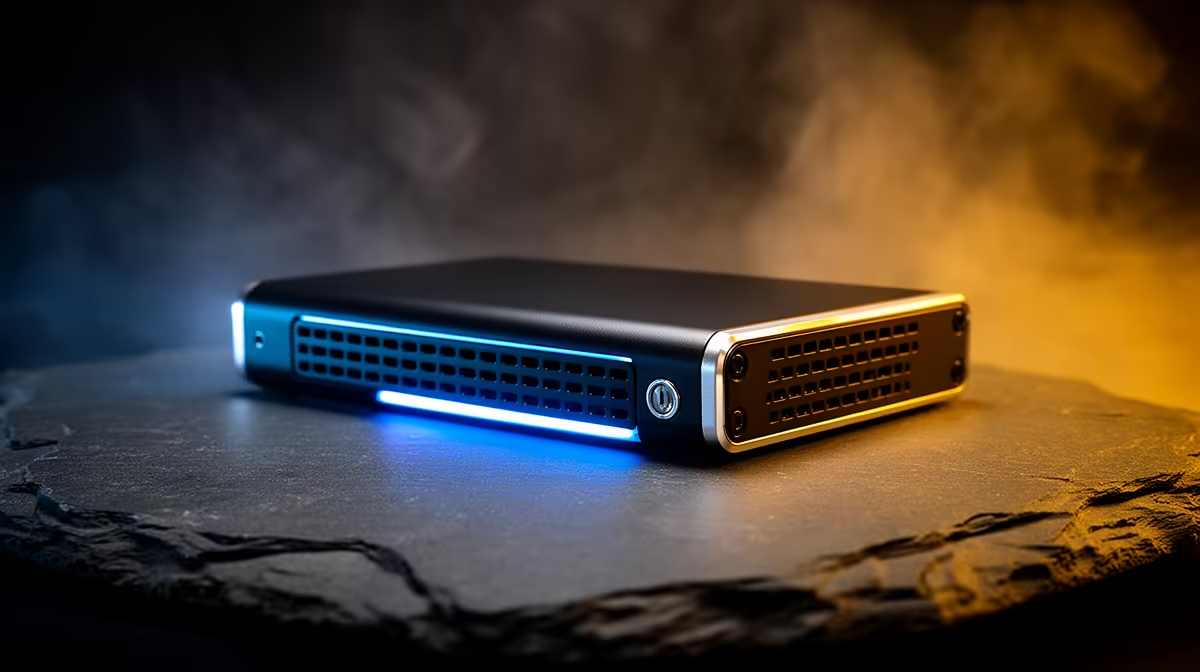
A spare NVMe drive can become quick portable storage when the enclosure stops heat and USB limits from wasting it. An NVMe enclosure should match the drive key, interface, cooling needs and host ports you own.
Quick Answer
An NVMe enclosure is worth it when a spare M.2 drive is healthy and you need fast portable storage, cloning space or a project shuttle. The enclosure connection sets the ceiling. A 10Gbps USB path cannot expose a Gen4 SSD's internal headline speed, and USB4 performance varies by host, bridge and cable. Match NVMe protocol, M.2 length, keying and cooling before buying. A SATA M.2 drive may need another enclosure even though it fits the same general shape.
Identify the spare drive
Read the SSD label and product specification. Confirm NVMe or SATA, M-key or B+M key, physical length and whether the module is single or double-sided. Enclosure lists should name supported protocols and sizes.
Check drive health before putting data on it. An old SSD that already logs errors should not become a portable backup.
USB names need exact speeds
USB 3.2 products can support different link rates despite similar labels. USB4 also has several capabilities and depends on the host port. Read the enclosure, cable and computer specifications together.
The slowest link wins. A high-speed enclosure connected through a basic cable or hub falls to that path. Protocol overhead also means file transfer stays below the raw link number.
Heat builds inside a small shell
Fit the supplied thermal pad against the controller and enclosure body as instructed. Confirm the shell closes without bending the SSD. Long writes can heat the controller and trigger throttling.
Do not cover vents or hold a hot metal enclosure in fabric. Log temperature and transfer speed during the largest job you expect.
Portable use needs safe removal
Use supported eject procedures and let write activity finish before unplugging. Sudden removal during a copy can corrupt the file system. Encryption can protect a lost drive, but record recovery information somewhere secure and separate.
Choose the bridge for the computers you own
List every host port you will use. A desktop may offer USB4 while a work laptop has 10Gbps USB-C and a console supports a narrower storage role. Buy for the common supported path unless one workstation justifies the faster bridge.
Check cable length and certification. Some enclosures include a short cable that works at full rate and another charging cable that does not. Label the tested cable and keep it with the enclosure.
Bridge firmware and sleep behaviour affect reliability. Read current support notes for wake, disconnect and operating-system compatibility. A portable drive that vanishes after sleep is a bigger problem than a modest benchmark difference.
For cloning, confirm sector size and destination capacity. Keep the source untouched until the new system boots and important files open.
Browse the SSD category, review SSD best sellers, and use the required NVMe SSD page to identify compatible internal drives.
FAQ
Can an enclosure reach the SSD's full Gen4 speed?
Only when the complete external link can support it, and most USB paths impose a lower ceiling plus overhead.
Will an NVMe enclosure accept M.2 SATA?
Not unless it states SATA support. Shape alone does not establish protocol compatibility.
Can I use it as my only backup?
No. One portable drive can fail or disappear. Keep another independent copy of important data.
Compare NVMe enclosures by drive protocol, host link, cable and sustained thermal performance.