


A desk cluttered with three separate bases for a webcam, a mic, and a ring light is not just untidy; each base competes for the same surface real estate your keyboard and mouse already need. Standardising on universal 1/4 inch thread mounts collapses those three footprints into one, and the hardware to do it costs less than a decent lunch.
Quick Answer
A 1/4 inch thread is the standard fitting for webcams, microphone clips, and small lights. One adjustable stand with a 1/4 inch head can carry all three in turn, cutting the number of bases on your desk. A R40 brass adapter bridges any 3/8 inch gear to the same thread.
🔧 What the 1/4 Inch Standard Actually Covers
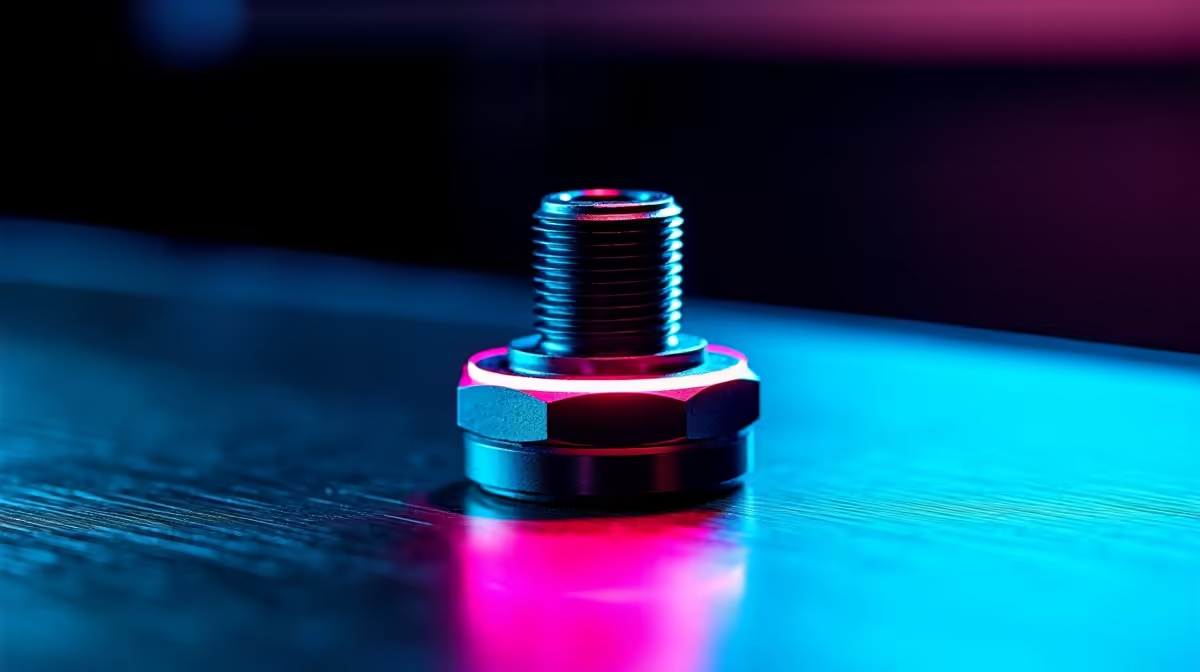
The 1/4 inch 20 thread, sometimes marked 1/4-20, is the screw fitting on the bottom of virtually every webcam, most tabletop microphone clips, and a large proportion of small LED lights. It started in photography and spread across consumer accessories because a single standard means the same head accepts almost any piece of gear without adapters.
Practically, this means a single column stand with a 1/4 inch head can carry your webcam for a stream, then swap to a mic arm clip for a recording session, then accept a compact LED panel for product shots. The gear changes; the stand does not. On a small Cape Town apartment desk where every centimetre matters, removing two redundant bases makes a tangible difference.
The one exception is heavier or older gear fitted with a 3/8 inch thread, common on heavier mic stands and some studio lights. A brass step-down bushing converts a 3/8 inch fitting to a 1/4 inch post; these cost under R50 and are worth keeping in a drawer.
✨ Reducing Cable Clutter Alongside Base Clutter
Fewer bases cut cable mess indirectly. Each stand is an anchor point for its cable; three bases means three cable runs crossing the surface. Consolidate to one column and a single cable route runs straight down to a clip at desk level.
A dual-arm stand takes this further: camera on the top arm, light on the lower, one base, two cable runs sharing the same column path. The discipline required is committing to gear rotation rather than accumulating extra bases alongside the new stand.
🎯 Choosing the Right 1/4 Inch Stand Configuration
Single-column stands with a lockable 1/4 inch head suit setups where one piece of gear lives on the stand permanently. A weighted base at around R200 to R350 holds a webcam reliably at eye level.
Dual-arm options make sense when camera and light both need fixed positions simultaneously. Both arms share one base, still less footprint than two separate stands. For gear rotation rather than simultaneous use, a single head with a quick-release plate is more practical; swaps take five seconds.
Frequently Asked Questions
What gear actually uses the 1/4 inch thread fitting?
Webcams, compact LED panels, tabletop microphone clips, action cameras, and most phone-mount adapters all use a 1/4 inch thread as their base fitting. It is the dominant standard across consumer accessories, which is why a single stand can carry all of them. Studio mics on shock mounts and heavier lights sometimes use the larger 3/8 inch thread instead.
How does consolidating to one stand actually clear desk space?
Every base occupies surface area. Moving from three bases to one column frees that footprint and routes cables down a single column path, reducing the tangle across the surface. The difference is most visible on desks narrower than 120cm.
What does a 3/8 inch to 1/4 inch brass bushing do?
The bushing is a short metal cylinder threaded on both ends. One end accepts the 3/8 inch post on a heavier stand; the other presents a 1/4 inch thread for your gear. It converts between the two common fitting sizes, costs under R50, and is small enough to keep with your gear bag permanently.
Will a 1/4 inch thread handle heavier accessories without stripping?
Metal threads on a properly rated stand handle loads well above a webcam or compact light. Steel 1/4 inch threads take camera rigs over 2kg without issue. Plastic threads on very cheap stands strip under repeated loading, which is one reason to stay in the R250 to R450 price band where metal threads are standard.
Is a dual-arm stand worth the extra cost for a small desk?
If you need camera and light simultaneously at fixed positions, yes. Two arms sharing one base use less surface area than two separate stands and only one cable route runs down the column. If you swap gear rather than run both at once, a single head with a quick-release plate achieves the same saving at lower cost.
Ready to cut the clutter from your streaming desk? Browse the webcam stand and mount range for 1/4 inch compatible options that carry your whole setup without taking over your desk.










