Ping is how long a round trip to the game server takes. Jitter is how much that delay changes. Packet loss means some traffic never arrives. They can appear together, but each gives you a different clue.
Quick Answer
High steady ping feels delayed. High jitter makes timing swing from one moment to the next. Packet loss produces missing updates, rubber-banding, frozen players or disconnects.
Measure all three in the game where possible. A nearby speed-test server can hide the international route and the packet handling used by your match.
Browse home networking equipment and popular gaming accessories after a wired baseline shows the fault is local.
Ping: The Base Delay
Ping is usually reported in milliseconds. A local server should be faster than a distant Europe route, but city, ISP and peering change the result.
Your local input can appear on screen through prediction. The delay shows when the server confirms, rejects or corrects what happened.
Jitter: The Moving Target
A steady 120ms route can be predictable. A route that moves between 40ms and 180ms makes movement and shots arrive unevenly.
Wi-Fi interference, household uploads, ISP congestion and route changes can cause jitter. Compare Ethernet with normal Wi-Fi and quiet with loaded line.
Packet Loss: Missing Traffic
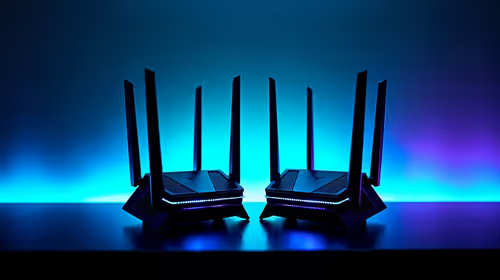
Loss can happen on Wi-Fi, the access line, an ISP route or the game service. A router replacement helps only when the loss starts inside the home.
Intermediate traceroute hops may ignore probes while later hops remain clean. Measure loss at the game or final destination before blaming one line in a trace.
Which Is Worst?
Competitive play dislikes all three. Loss and large jitter often feel more disruptive than a steady moderate ping. The game genre and netcode change the threshold.
Use Ethernet, pause uploads and record five minutes. Add time and region so the result can be repeated.
A Three-Point Test
First ping the router. This isolates the cable or Wi-Fi link. Second test the first responsive ISP hop. Third use the game's own graph or known destination.
Run the three tests together when the problem appears. A spike beginning at the router is local. A clean local path followed by high international delay points farther out.
Repeat under a controlled upload. If jitter and loss appear only while the line is busy, queue management may help. If loss remains with a quiet wired line, collect evidence for the ISP or game support.
Save a screenshot of the destination result. Do not publish personal IP addresses or account details.
FAQ
What is ping in one sentence?
It is the round-trip delay between your device and the destination.
How is jitter different?
Jitter measures variation in that delay, which makes timing inconsistent.
Can a router fix packet loss?
Only when the loss comes from local Wi-Fi, cabling, queueing or router faults. It cannot repair an upstream server path.
Record ping, jitter and end-to-end packet loss over Ethernet before changing settings or buying a replacement router.