Protecting portable audio equipment and XLR jacks in humid coastal air is one of those maintenance disciplines that separates a broadcaster who stays on-air from one who chases gremlins mid-show. Salt-laden coastal air accelerates corrosion at a rate that inland studios never experience, and the first sign is usually a crackle that contact cleaner can fix -- if you catch it early enough.
Quick Answer
Cap every XLR jack when not in use, store gear in a sealed case with silica gel packs, and wipe contacts with electronic contact cleaner regularly. These three habits block the salt-air corrosion cycle before it degrades your signal.
🌊 Why Coastal Air Attacks Audio Connectors
The chemistry is straightforward: salt in the air dissolves into moisture, lands on exposed metal, and drives an electrochemical reaction that oxidises brass and copper contacts. XLR pins are particularly vulnerable because the connector design traps humidity inside the barrel rather than letting it dry out naturally.
The resistance added by that oxide layer is subtle at first. You might notice a slight loss of high-frequency clarity, or a faint crackle that appears only when the connector is warm. Left unchecked, the resistance climbs until the signal drops noticeably or cuts out entirely during a broadcast -- which is never a good moment to discover a maintenance gap.
Wireless beltpacks face the same chemistry. Their plastic housings flex as temperature swings between morning chill and afternoon heat, pumping humid air past seals not designed for continuous coastal exposure. Condensation forms on internal contacts, degrading battery terminals and shorting low-voltage connections.
🔌 The Three-Step Connector Care Routine
A consistent routine takes less than five minutes after every outdoor broadcast and dramatically extends connector lifespan.
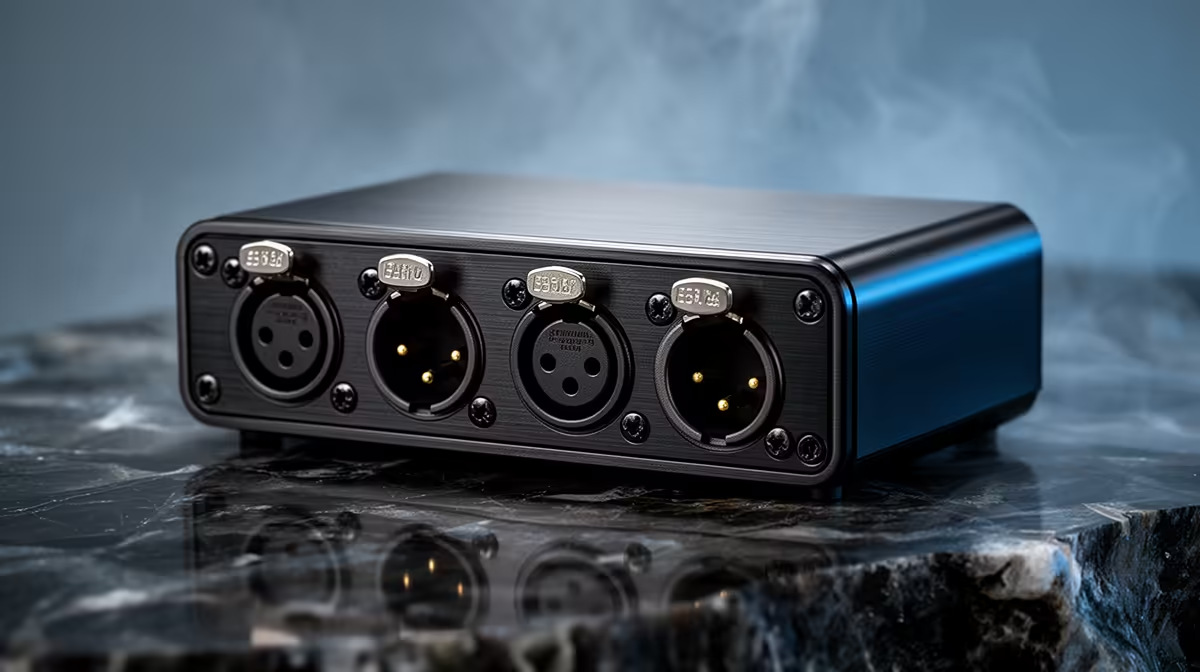
First, cap immediately. Rubber dust caps for XLR connectors cost almost nothing and create a physical barrier that prevents salt particles from settling on the pins. Fit male and female caps to every connector the moment you unplug. If you leave bare jacks sitting in an open bag between locations, you are essentially dipping the pins in brine over time.
Second, wipe before packing. A lint-free cloth removes surface moisture from the connector shell. For connectors that have already been exposed to spray or heavy humidity, a short burst of electronic contact cleaner into the female barrel, followed by plugging and unplugging a male connector several times, scrubs oxide film from the contact points mechanically and chemically. Let the solvent flash off for two minutes before capping.
Third, pack dry. Every case that travels near the coast should contain fresh silica gel desiccant packs. Aim to keep relative humidity inside the case below 50 percent. Most gel packs come with a colour indicator; swap them out or regenerate them in an oven when the beads turn pink. A case that smells musty has already been too wet for too long.
🧰 Storage and Transport Best Practices
A sealed hard case with foam inserts is the right default for coastal work. The foam cushions against knocks, the seal blocks ambient humidity, and the desiccant inside controls what little air remains in the cavity. Soft bags are acceptable for short urban runs but offer no humidity control and very little protection against accidental immersion in spray.
Label your desiccant packs with the date you placed them and check every four weeks -- coastal humidity saturates gel faster than the packaging suggests. Roll XLR cables with Velcro ties rather than rubber bands, which crack the outer jacket over time. Store coils with connector ends pointing upward so moisture drains away from the metal.
For wireless transmitters that spend a show clipped to a performer, a zip-lock pouch with a small sachet is a practical micro-environment between sets, when the main case is open and the transmitter is off the body.
Frequently Asked Questions
How does salt air get inside a capped XLR connector?
Rubber caps reduce exposure significantly but do not create an airtight seal. Salt particles can still enter around the lip during heavy sea spray or rain. Combined cap use with regular contact cleaning is more effective than relying on caps alone to achieve full protection.
How often should contact cleaner be applied to XLR jacks?
For connectors used weekly in coastal conditions, a cleaning cycle every four to six weeks is a sensible baseline. If you notice any audible degradation or visible discolouration on the pins, clean immediately rather than waiting for the scheduled date.
Do gold-plated XLR pins resist coastal corrosion better than standard pins?
Gold is more corrosion-resistant than brass, so gold-plated pins corrode more slowly in salt air. They still benefit from capping and storage with desiccant, but the rate of oxidisation is meaningfully lower than on standard brass contacts.
Is it worth servicing wireless beltpack battery contacts separately?
Yes. Battery contacts corrode independently of the audio connectors and are often overlooked. A cotton swab with a small amount of contact cleaner on the battery terminals, followed by a dry wipe, keeps conductivity high and prevents the intermittent power loss that salt air causes at poorly maintained contacts.
Ready to keep your portable audio gear performing reliably on the coast?
Browse Evetech's range of audio accessories and portable recording equipment to find the connectors, cases, and maintenance tools your coastal broadcast kit needs.