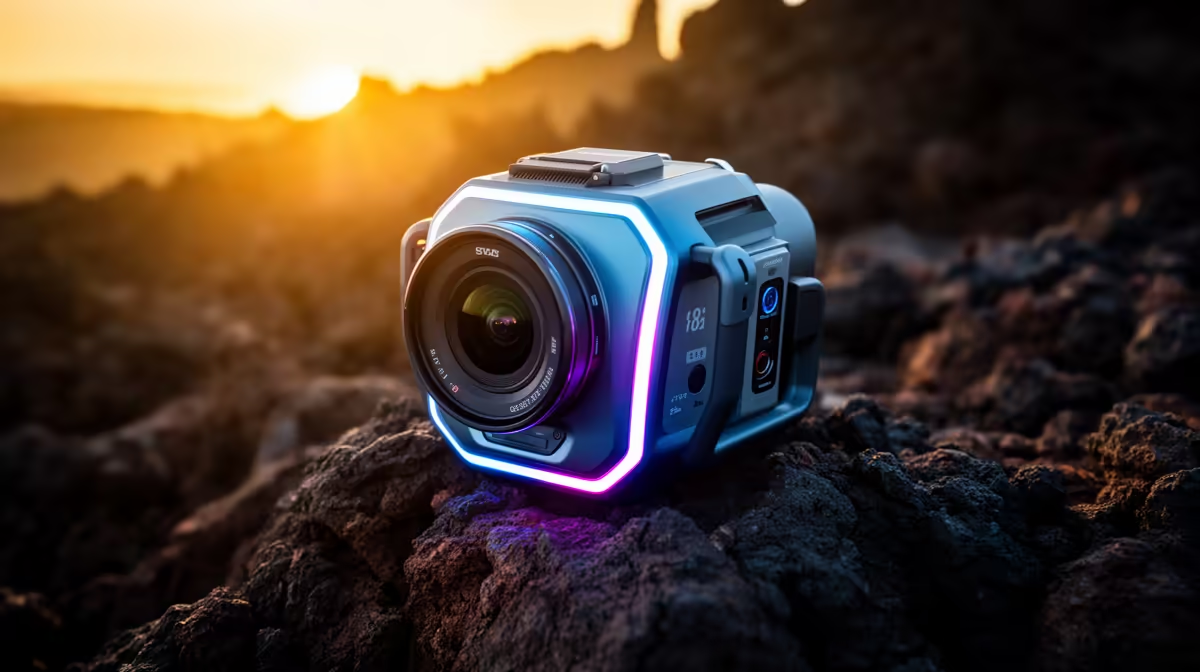
Wireless streaming gear at outdoor SA sports events faces threats that your home studio never throws at it: blazing highveld sun, fine Karoo dust drifting into lens threads, and afternoon rain that appears from nowhere and soaks everything before you can cover it. Getting the stream home alive depends on how well you protect the kit before the first whistle blows, not after the weather has already arrived.
Quick Answer
Shield cameras with packable rain covers, store spares in sealed hard cases, keep batteries shaded and cool, position antennas well above head height, and carry a 5GHz fallback channel. SA outdoor venues are unpredictable, so redundancy and physical protection matter more than any single premium piece of gear.
🔧 Shielding Cameras From Weather and Physical Damage
A light IPX-rated splash sleeve is the minimum cover every outdoor broadcast rig should carry, even if the forecast looks clear. SA summer afternoons routinely produce rain that was not in any morning prediction, and a soaked camera body can sustain moisture damage that appears weeks later inside the lens mechanism. Keep the sleeve in a side pocket so it deploys in under a minute; for fixed PTZ positions, a permanent weatherproof housing covers the same ground without the manual step.
Between shots, store camera bodies, encoders, and spare lenses in a hard-shell case with foam cut-outs rather than a soft bag. Sealed cases with rubber gaskets block fine dust from clogging lens threads and port covers, and the foam prevents the impact damage that soft transport bags allow during a busy multi-venue event day.
🌡️ Managing Heat and Battery Life Under SA Sun
Thermal shutdown is a genuine risk at large outdoor events. Many consumer and prosumer cameras will throttle or cut out when the body temperature climbs too high, and on a tar-surfaced ground with full summer sun that can happen quickly if the camera sits exposed.
Position gear under shade wherever the coverage angle allows. A portable sunshade or a simple tripod-mounted umbrella rigged behind the camera keeps body temperature down without blocking the shot. If shade is not available, a light-coloured reflective sleeve over the body can meaningfully reduce heat absorption.
Battery management in the heat requires extra planning. Spare packs stored in a shaded bag stay cooler than those baking on the grass, and capacity typically runs 10 to 15 percent shorter than indoor benchmarks once ambient temperature exceeds 35 degrees Celsius. Rotate from the cool bag and factor in the shorter runtime when planning the session.
Pro Tip ⚡
Pack a small insulated lunch bag for battery storage. It costs almost nothing and keeps spare packs at a stable temperature through a long outdoor event, giving you predictable run times when you need them most.
📡 Keeping the Wireless Feed Stable in a Crowded Venue
Stadium and sports ground environments are some of the hardest wireless conditions a broadcaster encounters. Large crowds carry thousands of phones and personal hotspots, most of them broadcasting on the 2.4GHz band, which creates a level of interference that will visibly degrade a wireless video link relying on the same spectrum.
Mount your wireless transmitter antennas above head height whenever possible. Human bodies absorb radio signals, so an antenna sitting at shoulder level in a crowd will have its signal path blocked constantly as people move between the transmitter and receiver. A short riser, antenna extension, or elevated mount on the tripod head makes a measurable difference to link stability.
Always prepare a second wireless channel, either a 5GHz option if the transmitter supports dual-band, or a wired SDI or RJ45 backup routed to the broadcast position. Major venues sometimes deploy official broadcast infrastructure you can tap into, so it is worth confirming what the venue provides before setting up independent infrastructure that duplicates something already there.
Frequently Asked Questions
What is the first thing to do if rain starts unexpectedly?
Cover the camera body first, then the encoder and any hardware with open ports. Cameras not actively recording go straight into the sealed hard case. Most gear recovers from a brief shower if covered quickly, but moisture left sitting in vents causes damage that appears days later.
How do you handle dust at sports venues with dirt surfaces?
A sealed carry case between shots is the primary defence. A UV filter on the lens costs a fraction of what the element costs if scratched by an abrasive particle, and a blower brush to clean threads and port covers before resealing the case keeps contacts and glass in good condition.
How do you stop condensation forming on gear between cool storage and a hot exterior?
Allow gear to acclimatise before using it. If equipment has been stored in an air-conditioned vehicle and moves into hot humid air, moisture can form on the lens and sensor. Give it ten to fifteen minutes in a shaded outdoor spot before shooting to let the temperature equalise. A dry silica gel sachet in the carry case helps absorb moisture during storage.
Ready to protect your outdoor streaming setup?
Browse the streaming cameras, protective accessories, and wireless gear at Evetech to build a rig that handles whatever the weather and the crowd throw at it.