


Quick Answer
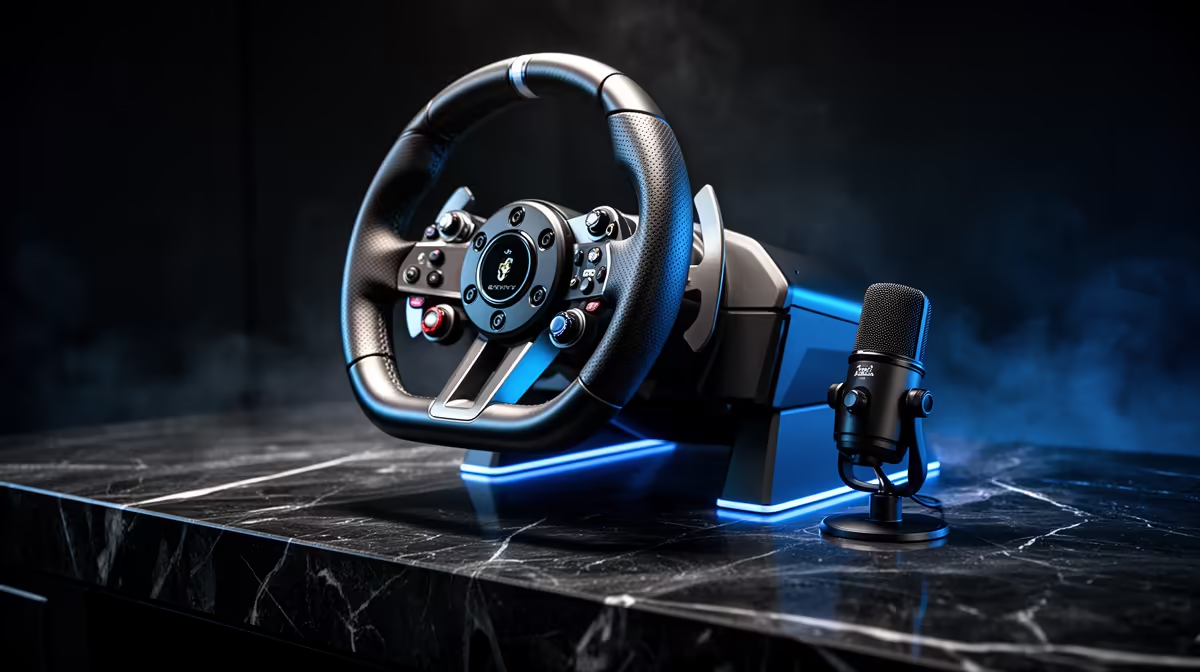
For a racing-wheel cockpit, a streaming microphone matters most if you broadcast or run league comms - and a directional USB condenser is the key, because it rejects the constant wheel, pedal and force-feedback noise around you. Budget R2,000 to R3,500 at Evetech for a cardioid mic plus a boom arm. For offline solo racing, it is optional.
Cockpit Noise Decides The Mic Choice
A sim cockpit is a noisy place - rim buttons clicking, pedals thudding, the wheelbase whirring under force feedback. The mic's pickup pattern is what keeps that out of your audio. A cardioid or supercardioid USB condenser captures only the front, so your commentary stays clean while the mechanical racket stays out.
Placement multiplies the effect. A boom arm brings the capsule to your mouth and away from the wheelbase, doing more for clarity than any spec on the box.
When It Is Worth Paying For
Pay for a good directional mic if you stream races, commentate, or coordinate a league where teammates depend on clear comms. For private offline career-mode racing, a headset mic covers the rare chat and the desk mic can wait.
An onboard gain dial lets you trim sensitivity so braking thumps and rumble do not bleed into the broadcast - a practical feature for cockpit use.
Spend Bands
An entry cardioid USB mic runs R900 to R1,500. A cockpit-suited model with tight directionality and a gain dial sits at R2,000 to R3,500. A boom arm adds R400 to R900.
FAQ
Why does pickup pattern matter in a cockpit?
Because a cockpit is full of mechanical noise. A cardioid or supercardioid mic captures only your voice from the front and rejects the wheel, pedals and force feedback, keeping comms and streams clean.
Is a boom arm necessary for sim racing?
Strongly recommended. It positions the mic at your mouth and away from the wheelbase, improving clarity more than spending extra on the mic body alone.
When is a dedicated cockpit mic worth it?
When you stream, commentate, or run league comms. For solo offline racing a headset mic is enough and the desk mic can wait until you broadcast.
cardioid mic on a boom arm pointed at your mouth, away from the wheelbase, and lower the gain so braking thumps stay out of your stream.










