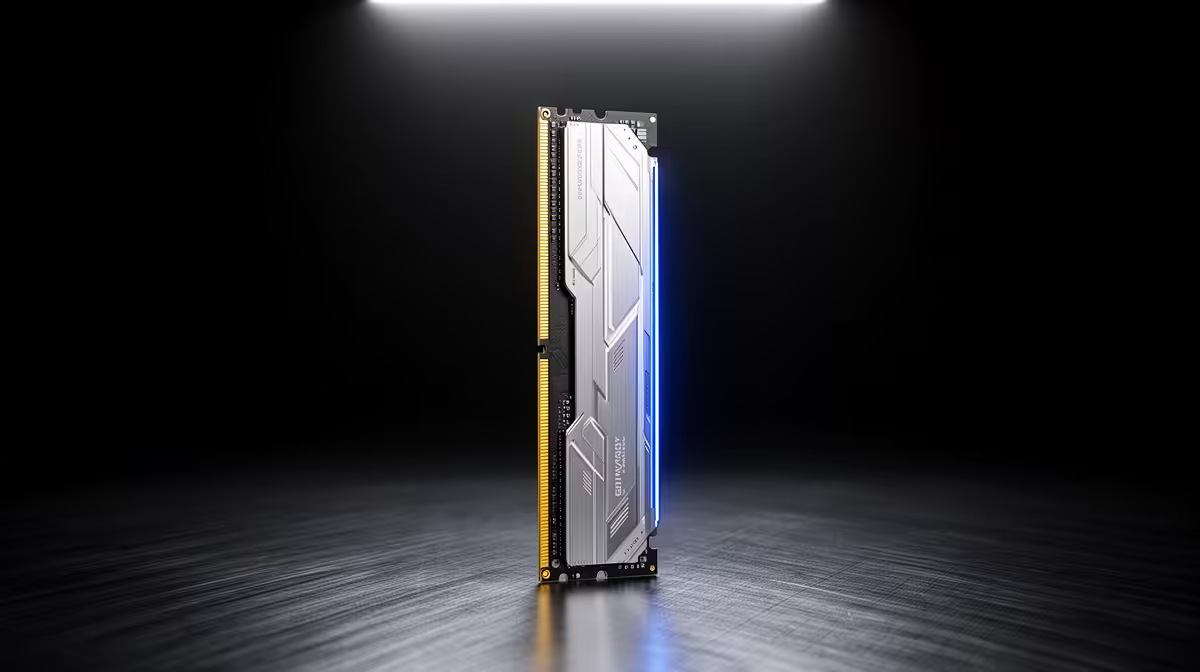
The RAM price crisis is not a normal retail wobble. AI infrastructure is consuming exceptional quantities of memory, manufacturers are prioritising high-value server products, and consumer modules are competing for constrained capacity. That pressure can raise desktop memory prices even when local demand has not changed.
Quick Answer
RAM is expensive in 2026 because AI data centres have tightened global DRAM supply while manufacturers allocate capacity toward server demand. As a real South African marker, a KLEVV Bolt X 16GB DDR4-3200 module was R2,899 at Evetech as of July 2026. There is no defensible date for the pressure to end, so buy the capacity you need rather than betting a build on an unconfirmed price reversal.
🏭 Consumer RAM shares a global supply chain
Desktop memory does not exist in a separate market from server memory. The products differ, but production capacity, investment decisions and upstream materials are connected. When high-margin AI infrastructure absorbs attention and allocation, less flexibility remains for ordinary PC modules.
This is why the DDR5 memory category can move even without a new gaming platform launch. Local prices also reflect exchange rates, shipping and replacement cost, so South Africa may not see relief at the same moment as an overseas headline.
📉 No one can promise the turning point
Memory markets are cyclical, but a cycle does not provide a calendar date. New capacity takes time, and manufacturers can change the mix of products they make before consumer supply meaningfully loosens.
A useful buying rule is urgency-based. If insufficient RAM is causing stutter, failed workloads or constant page-file use, the cost is already affecting you. If your system runs comfortably, waiting costs nothing and preserves flexibility.
🇿🇦 Buy the module, not the market story
South African buyers should compare exact capacity, generation, speed and kit layout. A low price for one 16GB module is not automatically equivalent to a matched 2x8GB kit, and DDR4 cannot substitute for DDR5 on a board that requires it.
Evetech's memory best sellers provide a practical local snapshot. Check motherboard support and existing module details before purchasing, because an incompatible bargain is still wasted money.
Keep a dated note of the exact kit and price when comparing over time. Category averages can move because the product mix changed, while the module you need stayed flat or disappeared. Track the purchasable item, not a dramatic market headline.
Frequently Asked Questions
Why did RAM prices rise so sharply in 2026?
AI server demand tightened memory allocation while manufacturers prioritised higher-value data-centre products, reducing flexibility in consumer supply.
Is DDR5 more affected than DDR4?
Both can be affected, although pricing moves differently by generation, capacity and inventory. Compare the exact kits you can use.
When will RAM prices come back down?
There is no confirmed date. Relief depends on supply expansion, product allocation and demand cooling.
Should gamers expect further increases?
Further increases are possible, but not certain. Buy for a measured capacity need rather than trying to predict the lowest point.
Need memory now, but refuse to buy on panic?
Compare compatible DDR4 and DDR5 kits at Evetech, confirm the exact module layout, and purchase only the capacity your workload can justify.