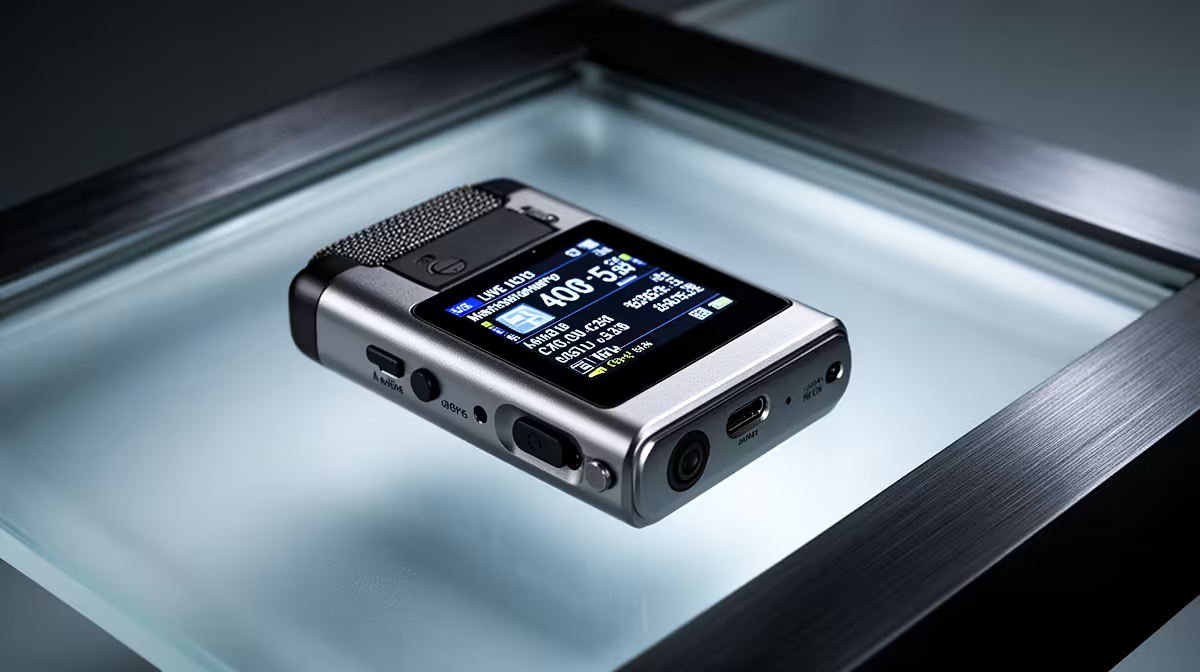
The small screen on a wireless mic receiver tells you everything that matters about your audio in real time, but only if you know what each section of the display represents. Reading an LCD live monitoring display on wireless mic units is a skill that takes two minutes to learn and saves you discovering problems after the shoot has wrapped. Here is what each readout means and what to do when it changes.
Quick Answer
The LCD shows four things: level bars for signal amplitude, a gain value in dB, a link-strength indicator for RF connection quality, and a battery icon per transmitter. Keep level bars at roughly two-thirds height, link indicator at maximum bars, and respond to a flashing battery before the transmitter shuts down.
⚡ The Level Bars
The animated bar graph is your live audio signal meter. It rises with your subject's voice and drops during silence. The healthy target sits at roughly two-thirds of the bar height during normal speech, which maps to approximately minus 12dB to minus 6dB below the clipping threshold.
Bars consistently reaching the very top mean your gain is set too high: clipping risk is real and the harsh crackle it produces cannot be removed in post. Trim the transmitter gain down by 3dB to 6dB. Bars that barely register during full-volume speech mean the gain is too low and the recording will sit close to the noise floor.
🔋 The Battery Icon and What Flashing Means
Most receivers show a separate battery indicator for each transmitter. When charge drops below roughly 15 percent, the icon begins flashing. That flash is not an emergency, but it is an immediate prompt: wrap the current take and swap or charge the transmitter before the next session. A transmitter that shuts down mid-take produces silence with no warning and no recovery option in the file.
🔌 The Link-Strength Indicator
The RF signal indicator shows how reliably the receiver is reading the transmitter. At full bars the connection is solid. As bars decrease you are approaching the edge of reliable range or encountering interference.
Treat it as a spectrum, not a pass-or-fail flag. Dropping from four bars to two while your subject walks further away is an early warning: move the antenna, close the distance, or switch to a quieter frequency channel before the audio starts crackling. On a dual-channel setup, each transmitter shows its own link indicator independently, so a subject who rounds a corner drops their indicator without affecting the other channel.
Frequently Asked Questions
What do the level bars on the LCD represent?
They display the instantaneous amplitude of the incoming audio signal. The target during speech is bars peaking at around two-thirds height, roughly minus 12dB to minus 6dB. Bars pinned at the top signal clipping risk; bars that barely register during full-volume speech indicate the gain is set too low.
When should I act on the flashing battery icon?
Immediately after wrapping the current take. Most kits flash when 60 to 90 minutes of charge remain, which is a real window but not a comfortable one. A transmitter that dies mid-recording leaves a gap that cannot be filled afterward.
How do I read the link-strength indicator correctly?
As a gradient rather than a simple good-or-bad signal. Full bars mean a solid RF lock. One or two bars means you are close to dropout range. Reposition the receiver antenna vertically at chest height, reduce distance, or switch the kit to a less congested frequency channel before the audio deteriorates.
Why does the display go dark between takes?
The screen enters a battery-saving sleep mode after 20 to 30 seconds of inactivity. A single button tap restores the full readout. Some kits let you extend the sleep timeout in the settings menu, which is useful on a fast-moving shoot where you need level information available at a glance without pressing a button each time.
Ready to read your wireless audio at a glance and catch problems before they reach the recording?
Browse the wireless microphone range with live LCD monitoring displays and find a kit that keeps you informed on every shoot.