


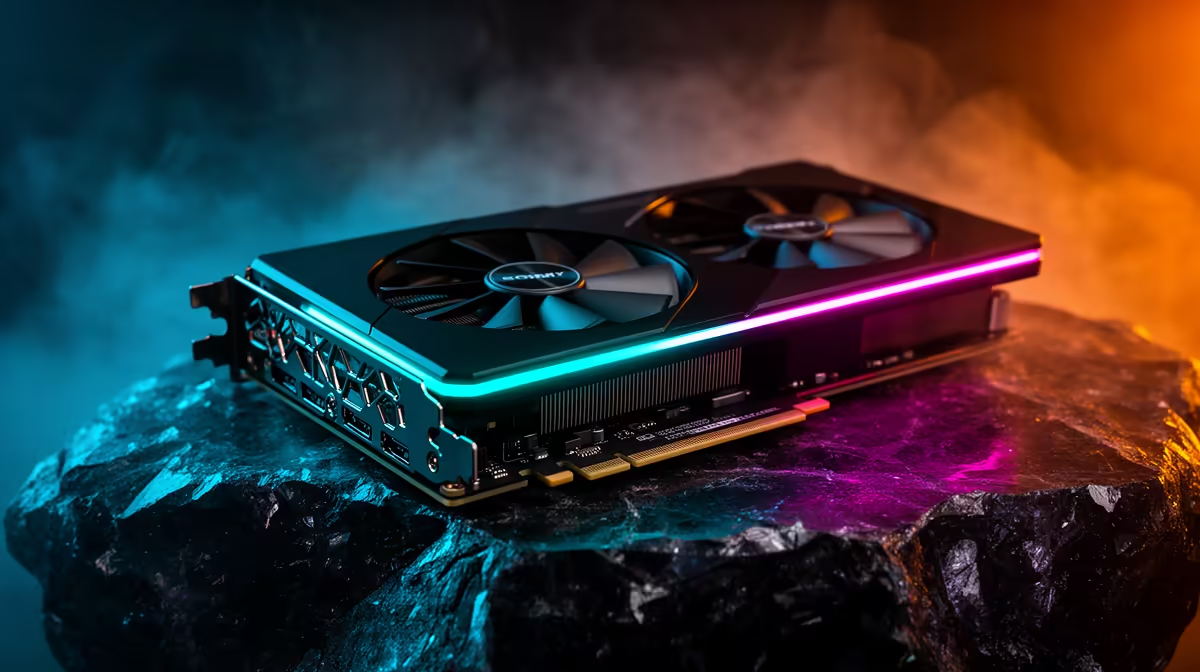
The RTX 5090 is the fastest consumer GPU available, so the real question for Quake Remastered is not whether it runs, but how far past your monitor's refresh rate it goes at 1080p.
Quick Answer
The RTX 5090 runs Quake Remastered at 1080p maxed at the engine's frame-rate ceiling, effectively capped by the game rather than the GPU. The 1996 remaster is trivial for this card; 1080p makes no use of its power.
Why 1080p Is Trivial Here
Quake Remastered is a lightly updated 1996 shooter, so at 1080p the RTX 5090 hits whatever frame-rate ceiling the engine allows, often capped around 250 fps or by the engine's tick rate. The GPU sits almost completely idle. This is the least demanding game the card could run.
Settings And Monitor
Max everything at 1080p; the RTX 5090 will not notice. There is no need for DLSS or any upscaling. Pair a high-refresh 1080p or 1440p panel to display the high frame rates, and enjoy the classic shooter with modern smoothness and add-on episodes.
RTX 5090 In SA
The RTX 5090 is currently stocked at Evetech in the R55,000-R65,000 band depending on model. For Quake Remastered it is wildly overkill; any modern GPU runs it at the engine ceiling. The card only makes sense alongside demanding current titles at 4K. Pair a Ryzen 7 9800X3D for the highest CPU-bound frame rate.
FAQ
What FPS does the RTX 5090 get in Quake Remastered at 1080p?
The engine's frame-rate ceiling, often around 250 fps or capped by the tick rate. The GPU is effectively idle on this 1996 remaster.
Is the RTX 5090 overkill for Quake Remastered?
Wildly. Any modern GPU runs the remaster at the engine ceiling. The card only makes sense for demanding current 4K titles you also play.
Do I need DLSS for Quake Remastered?
No. The game is so light that no upscaling is needed; the RTX 5090 hits the engine's frame-rate limit at any resolution.
hits its engine frame-rate ceiling on any modern GPU; the RTX 5090 only earns its price in demanding current 4K titles.










