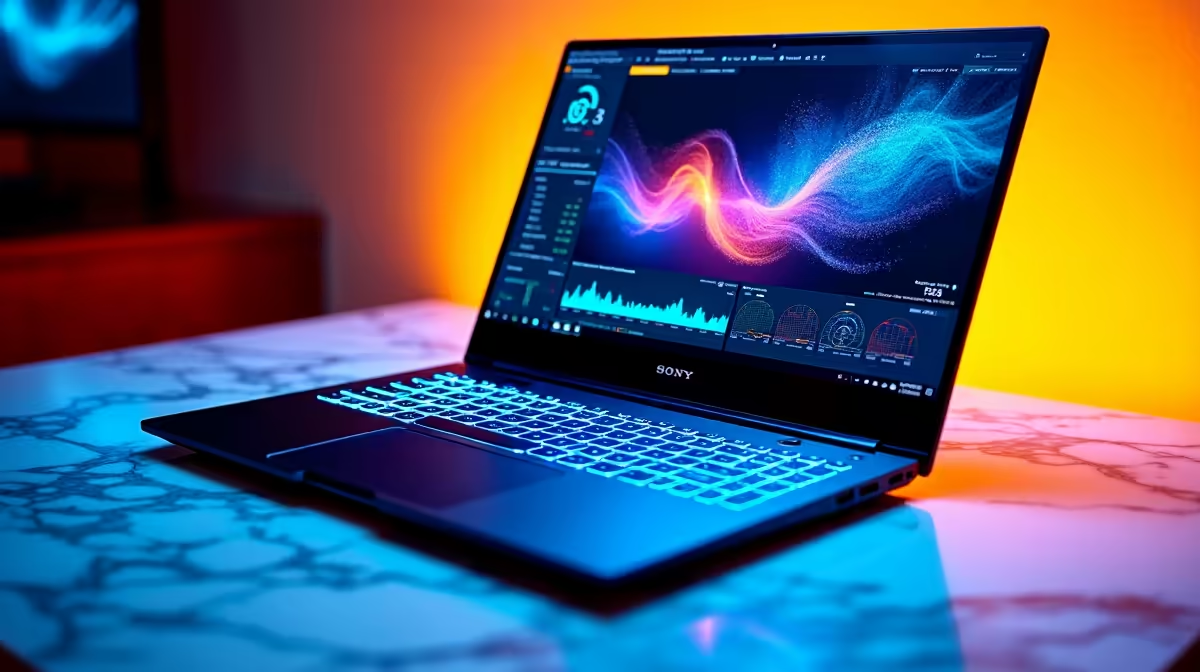
Lenovo LOQ RTX3050 at R9,500 suits SA data science and actuarial students who need local GPU acceleration for heavier notebooks, while many class assignments still run well on a normal laptop.
Start with the course workload, not the badge
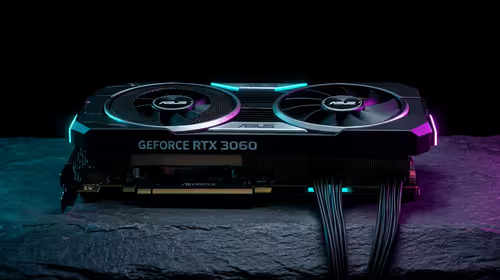
The Lenovo LOQ RTX3050 at R9,500 is the value pick when that workload includes model training, CUDA-based libraries, or visual computing projects. The real spec that matters here is RTX3050, because it gives you a dedicated GPU instead of relying only on the processor.
For mostly statistics, spreadsheets, coding, R, Python, SQL, and report writing, the ASUS ExpertBook P1503 i5 at R9,858 is the cleaner academic buy. Its i5 spec is enough for everyday notebooks, browser research, lectures, and practical submissions without pushing you into a gaming machine.
The Lenovo IdeaPad Slim 3 i7 at R13,400 and ASUS Vivobook X1504VA i7 at R13,999 make sense if you want stronger processor headroom but do not specifically need RTX3050 graphics. The i7 spec is useful for larger datasets, multitasking, and longer assignment sessions where CPU speed matters more than GPU features.
Student desk reality for campus work
On a student desk, the ASUS Vivobook S14 OLED at R10,719 is more about screen quality than raw compute. Its OLED spec is useful for long reading sessions, dashboards, charts, and presentation work, while the ASUS ExpertBook P5405 at R12,700 gives another practical laptop option when you want a business-style machine for daily study.
Ready to choose the right laptop?
Use ASUS ExpertBook P1503 i5 at R9,858 as the student desk benchmark, then check whether its listed spec matches the space, workload, and upgrade path.