Quick Answer
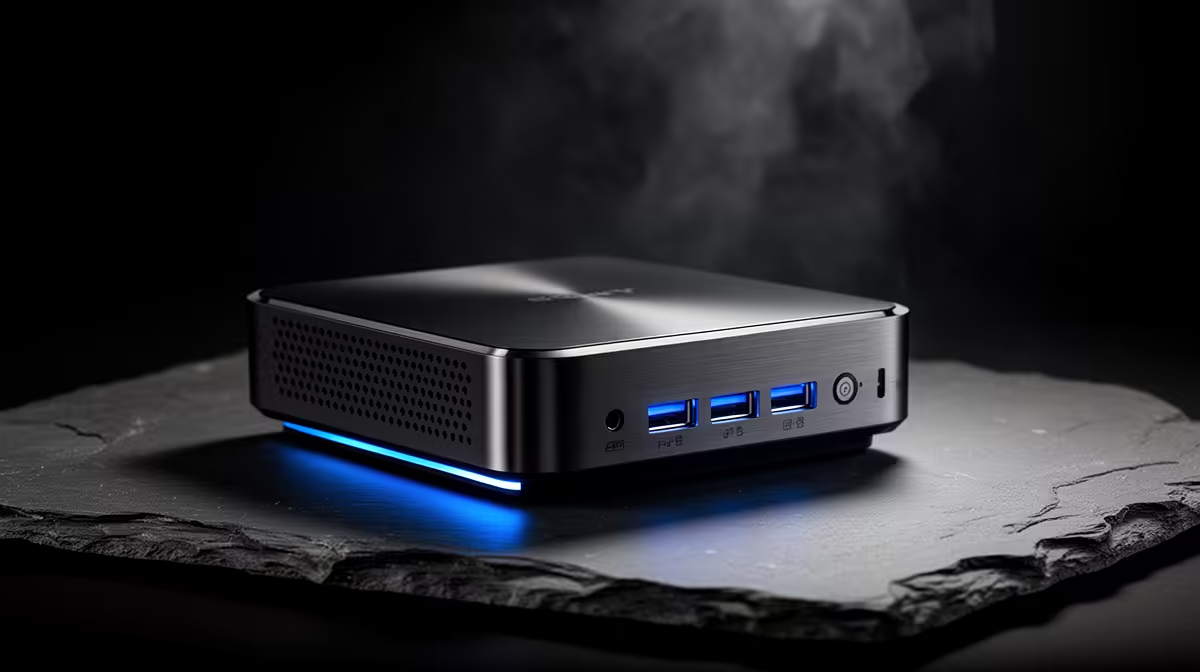
For school coding club projects, mini PCs matter when you want compact, affordable, low-power machines for teaching programming - they run a full desktop OS and coding tools in a tiny, quiet box ideal for a classroom. A capable mini PC runs R4,000 to R9,000 at Evetech. For coding, web development and learning, a mini PC is excellent value; for heavy 3D or gaming workloads, it is not the tool.
Why Mini PCs Suit A Coding Club
A coding club needs machines that run a code editor, a browser, and programming languages or tools - workloads a mini PC handles easily. Their small size fits cramped classroom desks, they draw little power (often 15W to 65W), run quietly, and cost far less than full towers. For teaching Python, web development, Scratch or general programming, a mini PC is a smart, space-saving choice.
They run a normal desktop OS (Windows or Linux), so all standard coding tools work. For a club on a budget, several mini PCs stretch the money further than a few big desktops.
When They Matter And When They Do Not
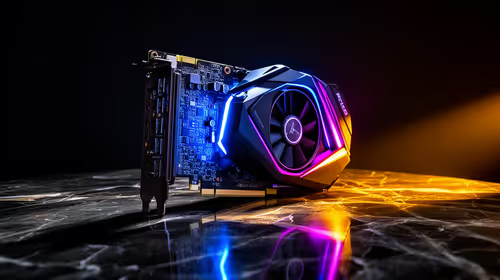
Mini PCs matter for coding, learning and light productivity - the core of a coding club. They do not suit heavy 3D rendering, demanding game development with large engines, or serious gaming, where the integrated graphics and modest cooling fall short. For those, a tower with a discrete GPU is needed.
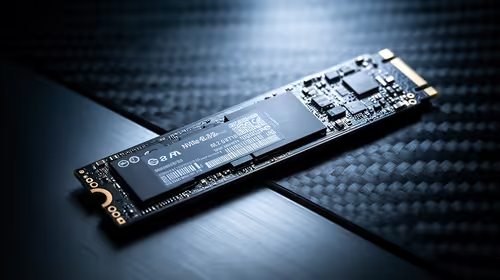
For most school coding projects, though, a mini PC with a modern CPU, 8GB to 16GB RAM and a 256GB to 512GB SSD is more than enough.
Spend Bands
A capable coding mini PC with 8GB to 16GB RAM and a 256GB to 512GB SSD runs R4,000 to R9,000. Higher-spec models with more RAM for heavier projects sit at R9,000 to R14,000.
FAQ
Are mini PCs good for teaching coding?
Yes. They run a full desktop OS and all standard coding tools in a compact, quiet, low-power box that fits classroom desks and costs less than a tower - ideal for a coding club on a budget.
What specs does a coding club mini PC need?
A modern CPU, 8GB to 16GB RAM and a 256GB to 512GB SSD cover coding, web development and learning comfortably. More RAM helps for heavier projects or running virtual machines.
Can a mini PC handle game development?
Light 2D or learning projects, yes. Heavy 3D engines and serious game development need a discrete GPU and better cooling than a mini PC offers - those require a proper tower.
coding club, choose mini PCs with 16GB RAM and an SSD - they run every standard coding tool quietly and cheaply, stretching a school budget across more machines.