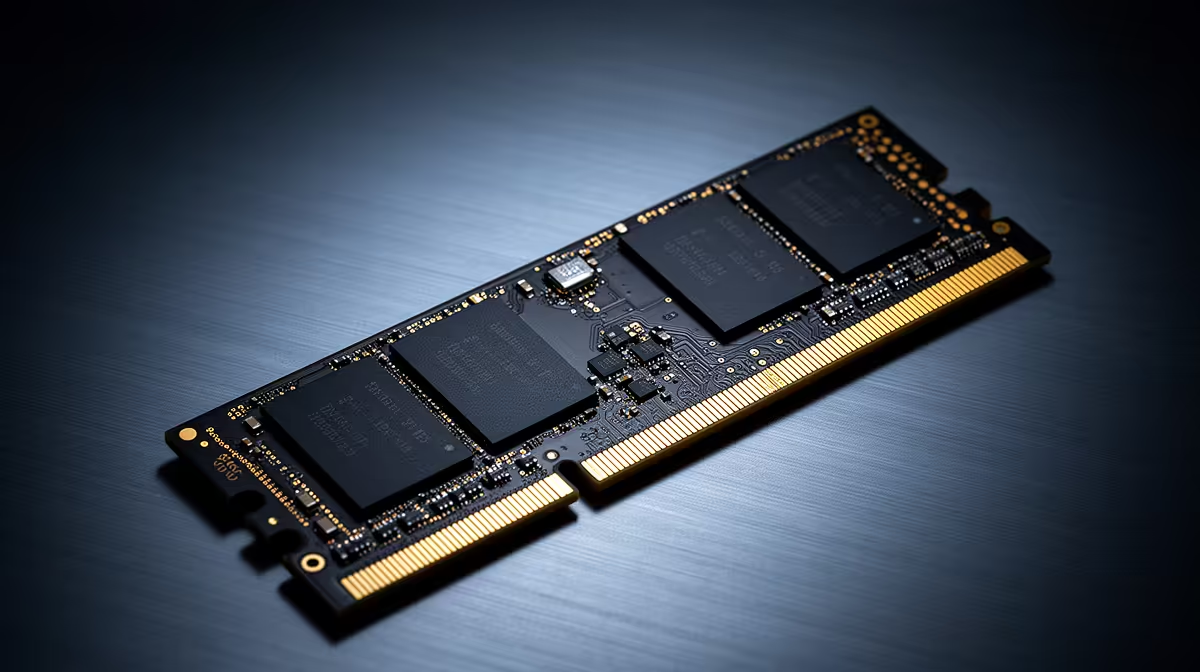
Selling spare RAM can make sense when it has no role in your current PC and the local used price is strong. Keep a module when it is a useful diagnostic part, belongs to a matched kit you still run, or would be costly to replace during a planned upgrade.
Quick Answer
Check recent completed local sales for the exact part number, then compare that value with what the memory could save you during troubleshooting or a rebuild. Sell complete matched kits with honest test evidence. Avoid splitting a pair unless buyers and pricing make the loss of kit integrity worthwhile.
Use current DDR5 memory specifications and popular memory kit configurations to describe capacity, speed and timings accurately. These live pages are product references, not proof of a used sale price.
Know What You Own
Photograph the label on every module. Record manufacturer, full part number, total kit capacity, module count, data rate, timings and voltage. State whether the sticks came from one retail kit.
Do not advertise an XMP or EXPO speed as guaranteed in every PC. Say which board, CPU and BIOS ran the profile, and provide the default JEDEC behaviour as well.
Test Before Listing
Run a long memory test with all modules in the recommended slots. Save the result and note the settings. Add a cold-boot check and a real workload that uses a large part of the capacity.
Inspect contacts and PCB edges. Clean dust with suitable methods and protect the modules in anti-static packaging. RAM posted loose in a bag can arrive damaged even when it left working.
Keep the Right Spare
A basic known-good module can help diagnose a no-boot system. A matched kit planned for another machine can save a later purchase. On the other hand, a small-capacity stick from a retired platform may have little practical use.
Think about the next board. DDR4 will not move into DDR5, and desktop DIMMs do not fit laptop SODIMM slots. Sell when the spare is stranded from your upgrade plan and the tested kit has a clear buyer.
Set an Honest Price
Use completed sales for the same capacity, speed and condition. Current asking prices can sit unsold. Account for any missing invoice, packaging or transferable warranty without inventing a premium from broader market talk.
A clear listing and proof of stability can protect both sides. The best time to sell is when the memory is tested, documented and surplus to a plan you have already made.
FAQ
Should I split a two-stick kit?
Keeping it together preserves the matched set and is easier to describe. Split only when the individual sale clearly works better.
Does XMP testing increase used value?
It gives useful evidence for one system. It cannot guarantee the profile on every CPU and motherboard.
Should I keep old DDR4 as a spare?
Keep it when you still maintain a DDR4 PC or need a diagnostic module. It has no use in a DDR5 slot.
Test and document every spare module, then sell the matched kit only after confirming it has no role in your next build.