Quick Answer
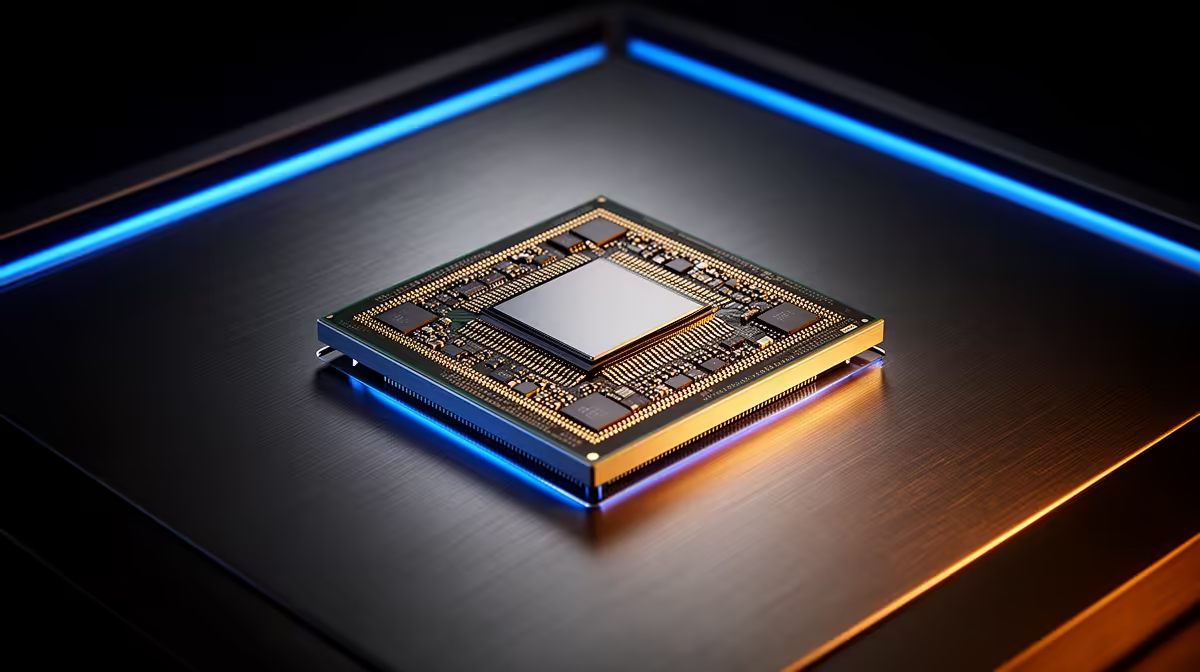
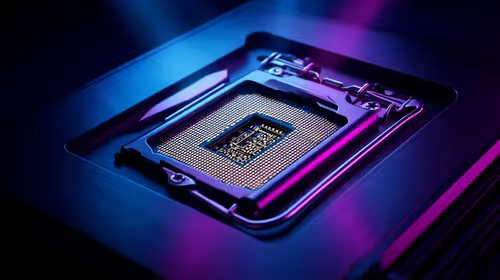
Pay more for the feature that changes daily use; skip premium extras that do not improve speed, comfort or reliability. A sensible SA shortlist compares AMD Ryzen 5 7600, Ryzen 7 7800X3D, Intel Core i5-14400F and Core i7-14700F and keeps spend around R3,000 to R9,500 unless the workload clearly needs more. Check 6 to 20 cores, 65 W to 253 W limits and 100-180 fps 1440p gaming targets with the right GPU before treating a higher tier as better.
Where the premium is visible
Start with South African buyers comparing local stock, warranty support and desk constraints. The useful filter is whether the cpu removes a delay, noise issue, heat limit, storage limit or frame-time problem you already notice. Compare core count, cache, platform cost, cooler need and GPU pairing, then reject anything that needs another unplanned purchase to work properly.
Write down the current CPU, GPU, case, monitor and storage size first. If the screen is 1080p 75 Hz, spend only where the upgrade will be visible.
Where buyers overpay
The trap is buying the highest boost clock while ignoring cooler and motherboard cost. Use the named examples as reference points, not a fixed script: AMD Ryzen 5 7600, Ryzen 7 7800X3D, Intel Core i5-14400F and Core i7-14700F. For cache versus power limits, cache usually helps gaming feel smoother. Higher limits are useful only when cooling can hold boost clocks without extra noise.
How to decide
Before checkout, confirm the motherboard slot, case clearance, power connector, cooler space or screen input that applies to the purchase. Keep one future upgrade in mind, because replacing two parts later costs more than buying the right baseline now.
FAQ
What is the safest cpu choice for this use case?
The safest choice is the balanced tier that meets 6 to 20 cores, 65 W to 253 W limits and 100-180 fps 1440p gaming targets with the right GPU. In SA, also check local warranty handling and stock clarity before paying extra for a premium label.
When should I spend more?
Spend more when the upgrade changes a measurable result: higher stable fps, shorter exports, quieter fans, more VM space or better 144 Hz consistency. Do not pay more only because a spec sounds newer.
What should I check before buying?
Check compatibility, physical fit, connector needs and the real rand price gap. For shared homes, campuses and small offices, also check noise, desk space and service access.
Buyer check
Match the cpu against your current case, motherboard, monitor and power supply, then choose the option that fixes one clear bottleneck.