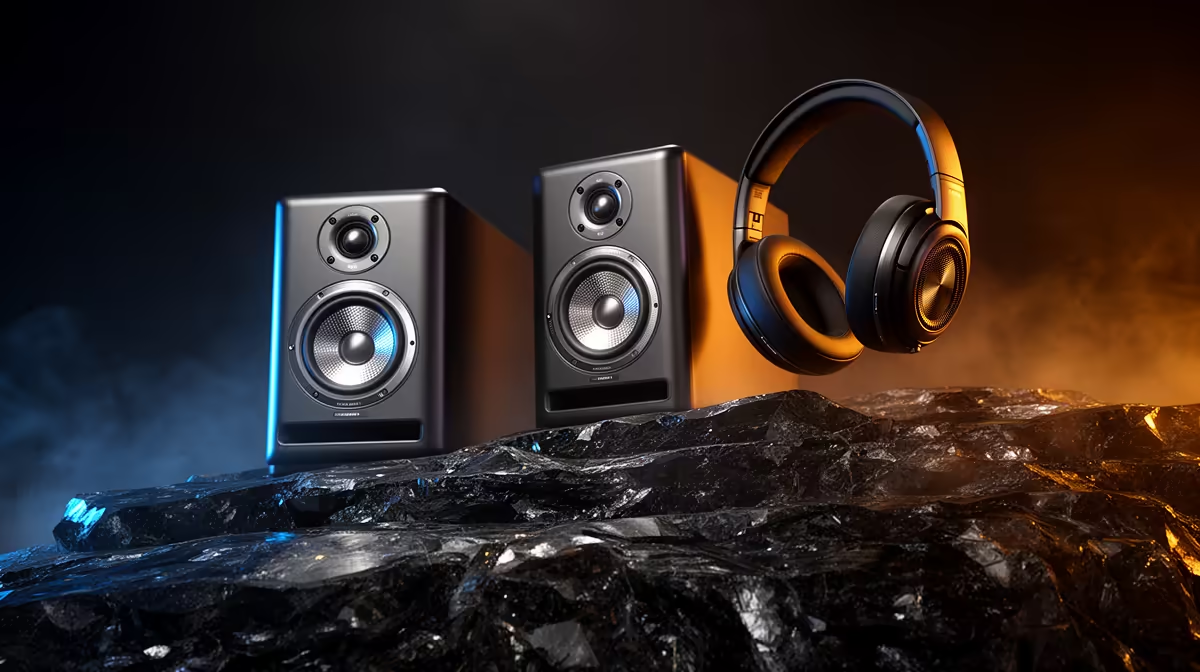
Two creators chasing the same clean mix can end up with wildly different results based on one choice: whether they trust speakers or trust their ears through a cup. Studio monitors versus headphones is not a question of which is better, it is a question of which one tells you the truth about your audio. Monitors are near-field speakers built to reveal flaws; many headphones are tuned to flatter. Knowing the difference saves you from mixing a track that falls apart the moment it leaves your room.
Quick Answer
Studio monitors are near-field speakers engineered for a flat, uncoloured response so every decision reflects what is really in the mix. Consumer headphones often add a flattering bass and treble lift that hides problems. For reliable mixing you want a flat reference, whether that is a pair of monitors or genuine studio headphones, not gaming or lifestyle cans.
What Each Tool Is Actually For
A studio monitor reproduces sound without trying to make it pleasant. The whole design goal is a flat frequency response, so a harsh midrange or a muddy low end shows up clearly and you fix it at the source. Monitors also let your ears hear the natural interaction of left and right channels in the room, which is how most listeners eventually hear your work on speakers.
Headphones isolate you from the room entirely. That isolation is their strength and their weakness. You catch fine detail like a faint click or a breath that a speaker might blur, but you lose the sense of space and the way bass behaves in a real room. Many popular headphones, especially gaming and lifestyle models, boost bass and treble to sound exciting, which is the opposite of what a mix reference should do.
When Monitors Win and When Headphones Win
Monitors are the better primary reference when your room allows it. Even modest acoustic treatment, a rug, curtains and a soft surface behind your desk, tames the worst reflections and lets a flat speaker do its job. You hear stereo width and low end the way an audience will.
Headphones earn their place in three situations. First, when your room is untreated or you cannot play sound out loud, headphones bypass the room's problems. Second, for detailed editing, removing noise, tightening edits and spotting tiny artefacts. Third, as a cross-check: mixing on monitors then verifying on headphones, and vice versa, catches issues neither reveals alone. The pros that translate everywhere usually check a mix on both plus a cheap reference device.
Building a Reliable Listening Setup
Start with one honest reference and add the second later. If your space is shared, in a flat or a res room where loud monitors annoy neighbours, begin with flat-response studio headphones. If you have a controllable room, a pair of near-field monitors plus light treatment is the stronger foundation. An audio interface sits between either choice and your computer, giving you clean conversion and a proper headphone output with enough power to drive studio cans correctly.
Crucially, learn whatever you buy. A flat reference only helps once you know how your music should sound on it, which comes from listening to tracks you know well on the same gear. To compare flat headsets and studio-grade cans side by side, the headphones and headsets selection at Evetech lays out options across price points so you can find a genuinely flat reference rather than a bass-heavy lifestyle model. If you want a quick read on what local creators are buying, the models currently topping the headset charts are a fast shortlist before you decide.
Frequently Asked Questions
Are studio monitors better than headphones for mixing?
Neither is universally better. Monitors reveal stereo width and how bass behaves in a room, while headphones isolate detail. The professional approach uses both, mixing primarily on one and cross-checking on the other to make sure the result translates.
Can I use gaming headphones for music production?
You can hear your work on them, but most gaming headphones boost bass and treble to sound exciting, which hides mix problems. For accurate decisions, choose flat-response studio headphones instead, then keep the gaming pair for play.
Do I need an audio interface for studio monitors or headphones?
For serious work, yes. An interface gives clean digital-to-analogue conversion and a headphone output powerful enough to drive studio cans properly. It also lets you connect monitors and a microphone through one device.
Why do my mixes sound wrong on other speakers?
Usually because your reference coloured the sound, so you compensated in the wrong direction. A flat monitor or flat studio headphone, plus learning how known tracks sound on it, is what makes your mixes translate to phones, car speakers and earbuds.
What is near-field and why does it matter?
Near-field monitors are designed to sit close to you, roughly an arm's length away, so you hear the speakers far more than the room's reflections. That reduces how much an untreated room distorts your judgement, which is why they suit home and bedroom studios.