


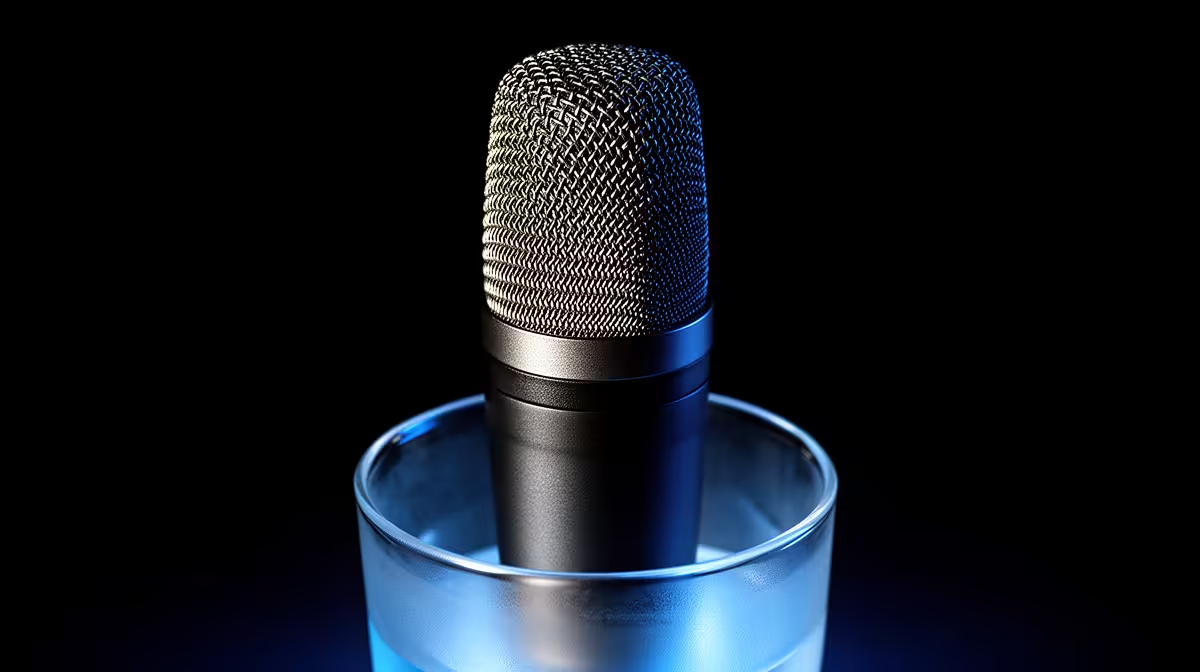
Your gaming room is never quiet. A PC fan spins at 1,200 RPM, the mechanical keyboard clatters, and a passing taxi rattles the window. A supercardioid dynamic microphone addresses all of that through two stacked mechanisms: a capsule that is inherently insensitive to quiet ambient sources, and a pickup pattern so tight it simply refuses to listen to most of the room.
Quick Answer
A supercardioid dynamic mic does not fully block background noise, but it rejects most of it. The dynamic capsule cuts ambient sensitivity by roughly 10 to 20dB and the narrow 115-degree front pattern dismisses side noise. Speak close, around 5 to 10cm, and most room noise disappears from the recording.
🎯 What the Supercardioid Pattern Actually Rejects
Cardioid is the standard directional shape. Supercardioid tightens it further. Where a cardioid mic accepts sound across roughly 130 degrees at the front, a supercardioid narrows that to about 115 degrees. The sides of the room, from roughly 45 degrees outward, fall into a deep rejection zone. That is where keyboards, fans, and most ambient conversation live relative to a front-facing mic on a boom arm.
A mechanical keyboard slightly off to one side drops substantially in the mix. A CPU cooler spinning behind and to the left becomes a non-issue. What the pattern cannot help is sound directly behind the capsule, because supercardioid retains a small rear lobe. Keep that in mind when positioning: point the back of the mic away from monitor speakers.
🔧 Why the Dynamic Capsule Adds Another Layer
The pickup pattern and the capsule type are separate noise-rejection tools that work together. A dynamic capsule moves a physical coil through a magnetic field rather than reading tiny electrical changes the way a condenser does. That mechanism is far less sensitive to quiet, distant sounds.
Fan noise, air conditioning hum, and faint ambient conversation all sit below the threshold where a dynamic capsule cares. A condenser would pick them up cleanly because condenser capsules are designed to capture exactly that kind of low-level detail. Your voice at 10cm is loud. Your PC fan at 50cm is quiet. The dynamic capsule treats those two very differently, and that asymmetry is the whole point.
Together, the supercardioid pattern and the dynamic capsule cut ambient noise by a combined 10 to 20dB on the main sources, enough to make a noisy room sound clean on a recording.
⚡ Getting the Most From the Pattern
Distance is the variable most creators underestimate. Speaking at 5 to 10cm places your voice well above the noise floor that the tight pattern cannot fully exclude. At 30cm the gap narrows and the room creeps back in.
Speak straight into the front axis, not across it. Moving off-axis by 20 degrees drops your level noticeably while side rejection stays constant. That combination thins the voice without cutting the noise. If residual noise remains, layering AI suppression on top of a supercardioid dynamic trims the rest effectively without full acoustic treatment.
Frequently Asked Questions
Does a supercardioid mic block all room noise?
No. It rejects most off-axis sound through its tight 115-degree front acceptance zone, and the dynamic capsule ignores quiet ambient sources below voice level. Noise that falls directly in front of the mic travels straight through. Close mic technique, around 5 to 10cm, keeps your voice above whatever the pattern cannot reject.
How much quieter is a dynamic capsule compared to a condenser?
In a typical gaming room, a dynamic capsule captures ambient fan and PC noise roughly 10 to 20dB quieter than a condenser under the same conditions. Condensers are optimised for sensitivity, which makes them an awkward choice in any space with background hum or constant desk noise.
Why combine a supercardioid pattern with a dynamic capsule for gaming rooms?
The pattern handles directional rejection, ignoring sources from the sides and rear. The dynamic capsule handles sensitivity rejection, ignoring quiet ambient sources at any angle. Both mechanisms stack independently, which is why supercardioid dynamics suit noisy, untreated SA gaming setups so well.
Should I speak close to a supercardioid microphone?
Yes. Positioning at 5 to 10cm ensures your voice sits well above the noise floor and gives the capsule a strong direct signal. Moving further back reduces the signal-to-noise ratio and lets room sound compete with the voice even with a tight pattern and insensitive capsule.
Can software noise suppression help on top of the microphone's rejection?
Absolutely. AI suppression layered over a supercardioid dynamic trims residual hiss and fan noise by a further 10 to 15dB. The mic reduces the bulk and the software handles the remainder. That combination suits South African streamers who want clean audio without full room treatment.
Ready to cut your room noise without treating your walls? Browse the dynamic microphone range built for South African streamers and find the supercardioid option that fits your setup and your budget.










