


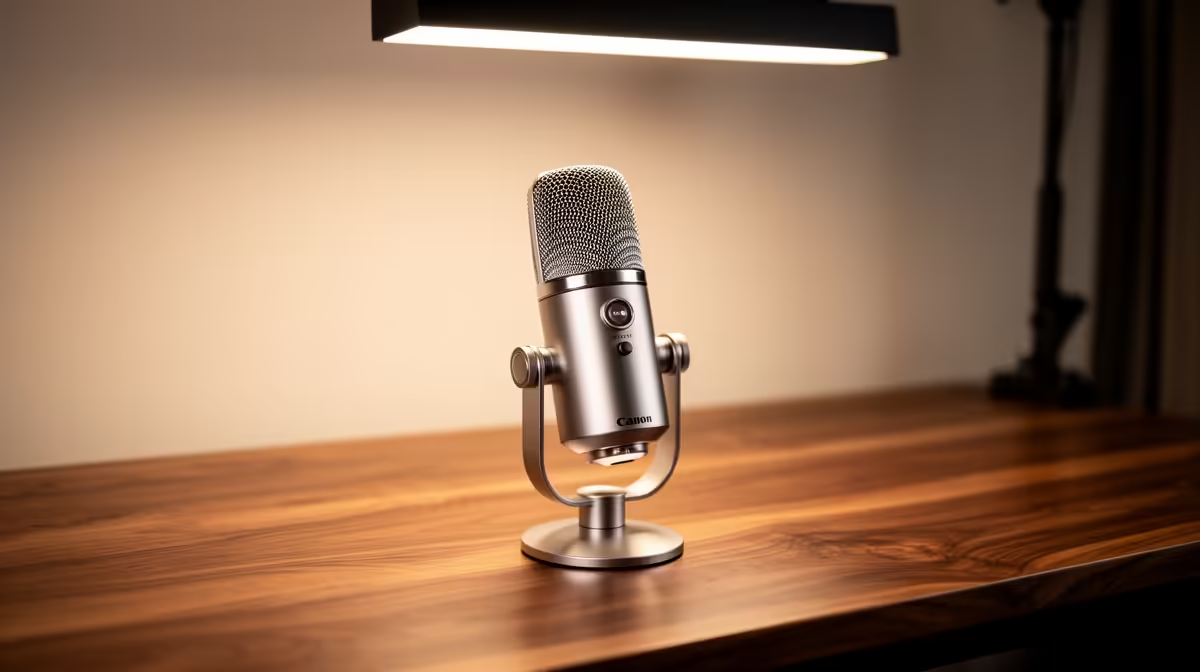
Every microphone has a shape. That shape is the zone of space it actually listens to, and for streamers who record in noisy rooms, that zone determines whether the stream sounds like a broadcast or a bedroom. A supercardioid pickup pattern draws a tighter listening zone than a standard cardioid, and the narrower the zone, the less of the room bleeds into the voice.
Quick Answer
A supercardioid pickup pattern captures sound in a tight front zone of about 115 degrees, narrower than a standard cardioid. Streamers favour it because it rejects keyboard clatter, fan noise and roommate audio from the sides while keeping the voice at the front sharp and clean.
🎯 Understanding the Pattern Shape
Cardioid, the most common directional pattern, draws a heart shape: broad at the front, narrow at the rear, with significant sensitivity roughly 130 degrees either side of centre. Supercardioid sharpens that. The front lobe narrows to about 115 degrees, rejecting sound that arrives between 115 and about 150 degrees from centre far more aggressively.
That rejection zone is where most desk noise lives. A keyboard placed slightly to the left, a USB fan to the right, or a secondary monitor speaker off to one side all fall into those side rejection angles. The supercardioid pattern treats them differently to your voice arriving straight from the front.
One trade-off worth knowing: supercardioid gains tighter sides at the cost of a small rear lobe. A loud monitor speaker sitting directly behind the capsule can introduce bleed. Keep rear-facing speakers off that axis, or angle the mic slightly, and the issue disappears.
⚡ Why Streamers Specifically Benefit
Gaming rooms are acoustically hostile. Hard floors, bare desk surfaces, and a PC tower running full tilt create an environment that general-purpose microphones record faithfully, including everything you do not want. A supercardioid's tight front acceptance means a mechanical keyboard at your sides contributes far less to the channel than it would through a cardioid.
The pattern handles shared spaces well too. In a South African home where a sibling or flatmate moves around while you stream, their voice arriving from 120 degrees off-axis is attenuated meaningfully. It drops enough to become background texture rather than a clear second voice on the recording.
🔧 On-Axis Technique and Placement
The narrower the pattern, the more placement discipline matters. The correct position is close, within 5 to 15cm, and directly on-axis with the capsule front.
Moving off-axis by 20 to 30 degrees on a supercardioid drops pickup level noticeably. That is an advantage if the off-axis source is noise, and a disadvantage if your head turns frequently during gameplay. Streamers who sit still and speak consistently forward get maximum benefit from the tight pattern.
A boom arm that holds the mic at mouth height and keeps it steady is practically essential here. Repositioning mid-session changes the on-axis angle and shifts the recording character. Lock the arm, confirm the position, and leave it for the session.
Frequently Asked Questions
What angle does a supercardioid pickup pattern cover?
Supercardioid captures a tight front zone of about 115 degrees, compared to around 130 degrees for a standard cardioid. That narrower window gives stronger rejection of sounds arriving from the sides, which is the main reason streamers choose it for noisy, untreated spaces.
Why do streamers prefer the supercardioid pattern?
The narrow front focus means keyboards, fans, and off-axis roommate noise fall into a rejection zone. A cardioid picks up more of the room because its front lobe is wider. In a typical SA gaming setup where voice needs to dominate, supercardioid gives a better signal-to-noise ratio without touching any software.
Will a supercardioid microphone pick up sound from behind?
Yes, slightly. Supercardioid retains a small rear lobe that a standard cardioid largely eliminates. It is small enough to be irrelevant for most setups, but a loud subwoofer directly behind the capsule can introduce bleed. Angling the mic so its back faces a quieter part of the room solves this.
How is a supercardioid pattern different from a standard cardioid?
A supercardioid has a tighter front acceptance angle, about 115 degrees versus 130, and a small rear lobe where cardioid has near-zero sensitivity. In practice, supercardioid rejects the sides better and is slightly less forgiving of off-axis placement, while cardioid is wider and more tolerant of head movement.
Is a supercardioid pattern a good choice for untreated South African rooms?
Generally yes. The tight side rejection of roughly 10 to 15dB makes a real difference in a bedroom with bare walls and hard surfaces. Pair it with close mic technique and the noise reduction approaches what basic acoustic treatment would deliver, without any foam panels or extra expense.
Ready to shut the room out of your stream? Browse the supercardioid microphone range at Evetech and find the pattern that keeps your voice front and centre while your gaming room stays out of the broadcast.










